

CoreWeave Inc. stocks have been trading down by -4.75 percent amid reports of slowing AI cloud demand and margin pressures.
Key Takeaways For CRWV Traders
- Shares of CRWV dropped 12% after news that its co-founders sold $3.3B of stock since the 2025 IPO, raising fresh questions about leverage and credit risk.
- Morgan Stanley kept CRWV at equal-weight but slashed its price target to $70 from $99, pointing to financing uncertainty despite strong neocloud execution.
- Roughly $52B in loans and lease obligations now define the CoreWeave story, with distressed debt pricing flagging default and dilution risk.
- Volatile, Wallstreetbets-driven trading has pushed CRWV up or down around 4–5% premarket on multiple days, amplifying short-term swings.
- Sectorwide jitters in AI and neo-cloud, combined with insider selling at CoreWeave, keep traders on edge and focused on the balance sheet.
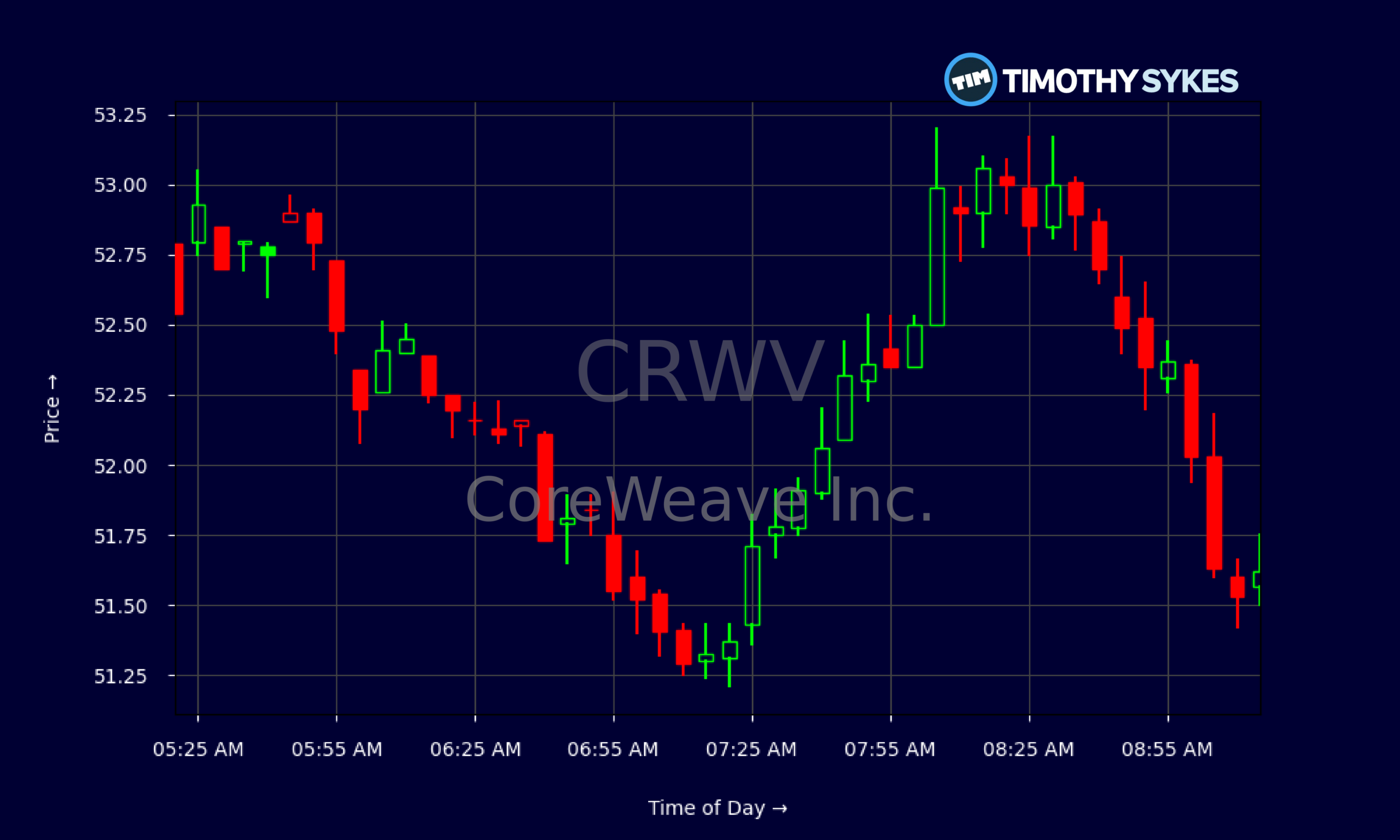
Live Update At 09:19:22 EDT: On Monday, October 26, 2026 CoreWeave Inc. stock [NASDAQ: CRWV] is trending down by -4.75%! Discover the key drivers behind this movement as well as our expert analysis in the detailed breakdown below.
Quick Financial Overview
For active traders, CRWV is a classic high-growth, high-risk setup. CoreWeave generated about $5.13B in revenue over the trailing period, with a huge 90.6% gross margin. That means CRWV keeps most of each dollar of sales after direct costs. But the story changes fast once you move down the income statement.
Despite strong top-line growth and $1.92B in EBITDA, CoreWeave still posted a net loss of $626M and negative profit margins. Heavy interest expense and operating costs are eating into that fat gross margin. Return on equity sits deeply negative, reflecting how little earnings support there is for the current market value.
More Breaking News
On the chart, CRWV has broken hard from the mid-$80s and $90s earlier in the month down into the mid-$50s, a sharp multi-day drawdown. Recent daily closes slid from $88–$90 levels to about $54.24, showing persistent selling pressure. Intraday, CRWV is now chopping around the low-$50s with tight five-minute ranges, signaling a consolidation phase after the dump. For traders, that combination of deteriorating trend and heavy volatility demands disciplined risk management and clear levels.
Why Traders Are Watching CRWV’s Debt And Insider Selling
CoreWeave Inc. is supposed to be one of the big winners of the AI build-out. CRWV has “explosive revenue growth” and a massive AI GPU backlog, according to recent coverage. Demand does not look like the problem. The problem is how the company is funding that demand.
CRWV sits on roughly $52B of loans and lease obligations, with net interest expense so high that its debt is reportedly trading at distressed levels. For equity traders, that is a flashing red light. It means the bond market is already pricing in meaningful default and dilution risk. When credit starts to doubt you, the common stock usually follows.
That tension — huge backlog versus strained balance sheet — is now the core of the CRWV trade. Morgan Stanley just confirmed this shift in focus. The firm reiterated an equal-weight rating but cut its price target on CoreWeave to $70 from $99, explicitly citing financing uncertainty around deploying contracted capacity. Translation: the AI opportunity is real, but funding the build-out is no longer a slam dunk.
Layer on insider behavior and sentiment gets even heavier. Reports show CoreWeave’s three co-founders have sold about $3.3B of stock since the March 2025 IPO, including $2.4B in 2026 alone. The stock dropped 12% on that headline and was down more than 5% premarket around those reports. Traders read that as leadership taking chips off the table while leverage stays high. That is not the alignment most longer-term holders like to see.
At the same time, CRWV has become a favored Wallstreetbets name. We have seen 5.9% pops one day, followed by 3.9% premarket dips the next; 5% premarket drops tied to broader meme-tech pullbacks; and short-lived bounces of 1–4% in early trading with other retail-favorite tickers. For day traders, that’s opportunity. For anyone else, it’s noise that can easily bury the fundamental story.
Conclusion
Put it all together and CRWV is trading like a leveraged AI rocket ship with a cracked fuel tank. CoreWeave still shows strong execution, a leading neocloud position, and a big GPU backlog. But the balance sheet is heavy, with about $52B in obligations, weak interest coverage, and debt trading at stressed levels. That backdrop explains why Morgan Stanley cut its CoreWeave price target to $70 even while keeping the equal-weight rating.
The price action backs up the concern. CRWV has cascaded from the high-$80s and $90s down into the mid-$50s, triggered in part by headlines that the co-founders sold $3.3B in stock since 2025. That insider selling, combined with sector jitters in AI and neo-cloud, has turned CoreWeave into a battleground ticker. Sharp premarket gaps, Wallstreetbets chatter, and fast intraday reversals keep traders glued to Level 2.
For active traders studying CRWV, the key is to respect both sides of the story — real AI demand and real credit risk. This content is for educational and research purposes only, but the trading mindset still applies. As Tim Sykes likes to remind students, “The market doesn’t care about your opinions, only your risk management.” As millionaire penny stock trader and teacher Tim Sykes says, “Cut losses quickly, let profits ride, and don’t overtrade.”. In a name like CoreWeave, CRWV traders who survive will be the ones who cut losses fast, size down into the volatility, and let the chart — not the hype — drive their decisions.
This is stock news, not investment advice. Timothy Sykes News delivers real-time stock market news focused on key catalysts driving short-term price movements. Our content is tailored for active traders and investors seeking to capitalize on rapid price fluctuations, particularly in volatile sectors like penny stocks. Readers come to us for detailed coverage on earnings reports, mergers, FDA approvals, new contracts, and unusual trading volumes that can trigger significant short-term price action. Some users utilize our news to explain sudden stock movements, while others rely on it for diligent research into potential investment opportunities.
Dive deeper into the world of trading with Timothy Sykes, renowned for his expertise in penny stocks. Explore his top picks and discover the strategies that have propelled him to success with these articles:
- Penny Stocks Trading Guide
- Best Penny Stocks Under $1 to Buy Today
- Top 8 Penny Stocks to Watch on Robinhood
Once you’ve got some stocks on watch, elevate your trading game with StocksToTrade the ultimate platform for traders. With specialized tools for swing and day trading, StocksToTrade will guide you through the market’s twists and turns.
Dig into StocksToTrade’s watchlists here:



Leave a reply