

Rivian Automotive Inc. stocks have been trading up by 10.4 percent following upbeat production outlook and bullish analyst upgrades.
Key Takeaways Traders Need To Know
- RIVN beat Q3 expectations with adjusted EPS of -$0.48 versus -$0.65 consensus and revenue of $2.155B versus $2.0B, showing tighter execution and stronger top-line momentum.
- The company issued FY26 guidance for adjusted EBITDA of -$1.85B to -$1.75B and deliveries of 67,000–70,000 units, signaling rising volumes but ongoing losses.
- Rivian is acquiring Third Dimension AI to bring AI-powered 3D simulation in-house for driver-assistance and future self-driving and robotaxi programs.
- Jefferies upgraded RIVN to Buy from Hold with a $17 price target after a roughly 30% pullback, citing stronger Q3 order conversion and Rivian’s positioning in the $45K–$55K EV segment.
- Cantor Fitzgerald cut its Rivian price target to $16 from $19 but kept a Neutral rating, even as RIVN beat Q3 revenue, raised FY26 guidance, and leaned into autonomy and lower-priced trims.
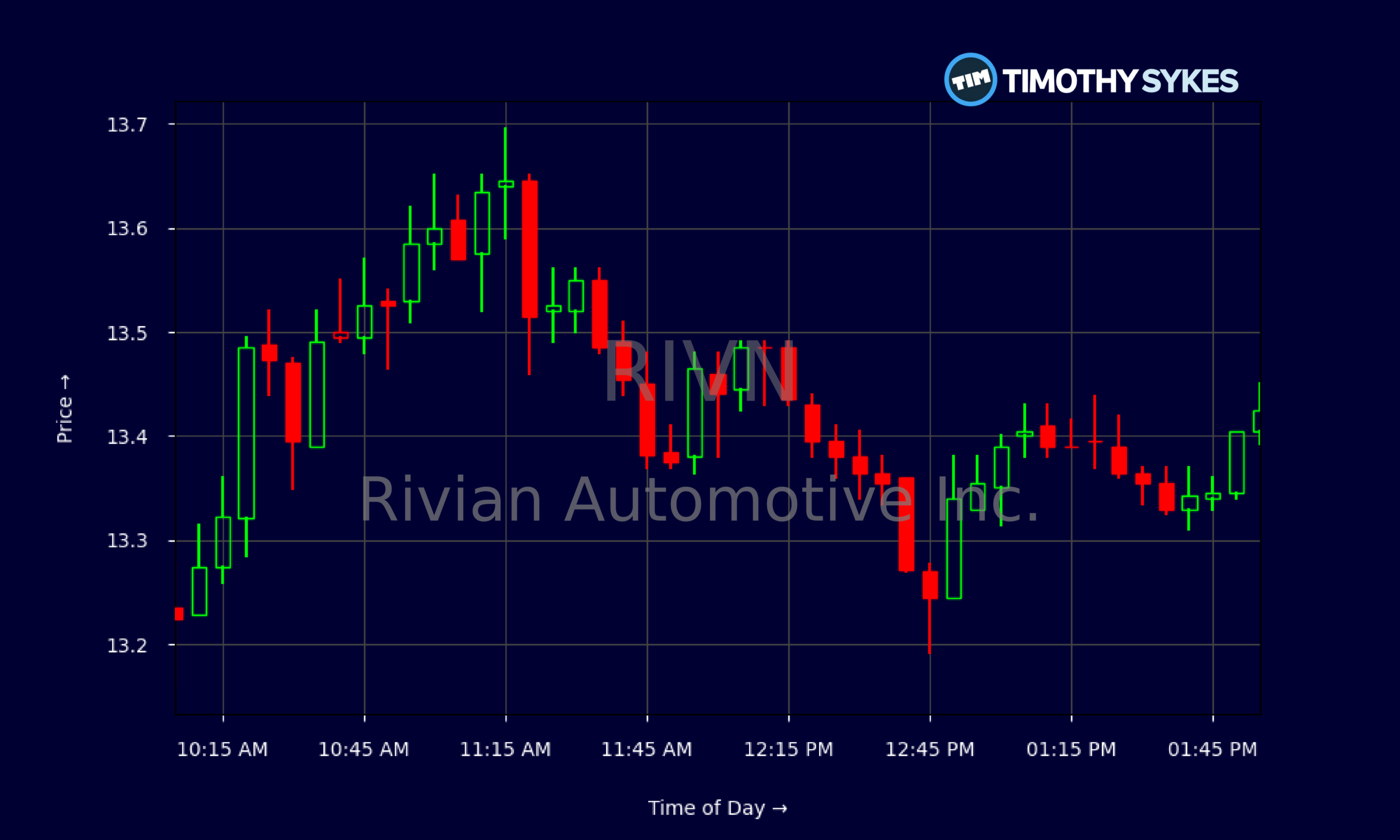
Live Update At 14:02:58 EST: On Monday, November 02, 2026 Rivian Automotive Inc. stock [NASDAQ: RIVN] is trending up by 10.4%! Discover the key drivers behind this movement as well as our expert analysis in the detailed breakdown below.
Quick Financial Overview
RIVN’s latest quarter gives traders a clearer picture of a high‑growth name still fighting its way toward profitability. Rivian reported Q3 revenue of about $2.155B–$2.16B, ahead of the $2.0B consensus and up sharply from $1.56B a year ago. That lines up with the broader revenue base of roughly $5.39B over the last year.
Losses remain heavy, but they are narrowing. Adjusted EPS landed at -$0.48 versus both a -$0.65 consensus and a deeper loss a year back. On a full‑company view, EBIT margin sits near -50.1% and EBITDA margin around -36.2%, so RIVN is still burning a lot of cash to grow. Return on equity is deeply negative, near -58.5%, which tells traders the current business model has not yet earned its cost of capital.
On the balance sheet, Rivian shows cash and short‑term investments of about $5.50B and a current ratio around 2.1, giving RIVN breathing room to keep scaling. Total debt to equity near 1.01 and long‑term debt of roughly $4.45B mean leverage is meaningful but not extreme for a capital‑intensive automaker still in build‑out mode.
More Breaking News
The chart backs up the story. Over the last several sessions, RIVN has climbed from closes around $11.43–$12.16 to roughly $13.43, a clear upswing. Intraday five‑minute candles show steady grinding action between $13.20 and $13.50, with dip buys near $13.30 finding support. For active traders, that’s a classic short‑term uptrend off a base, supported by improving fundamentals but still vulnerable to any negative headlines.
Why Traders Are Watching RIVN Right Now
This is the type of setup momentum traders on timothysykes.com live for: cleaner numbers, clear catalysts, and a chart starting to wake up. RIVN’s Q3 beat on both revenue and earnings is the core driver. When a beaten‑down growth name surprises to the upside, shorts get nervous and sidelined bulls suddenly pay attention.
Rivian’s FY26 guidance is the next piece of the puzzle. Management is talking about adjusted EBITDA still negative, between -$1.85B and -$1.75B, but paired with 67,000–70,000 vehicles delivered. That combo tells traders exactly what this story is right now: scale is coming, profits are not here yet. For RIVN, the game is to prove that higher volumes and better mix eventually close that gap before the cash cushion shrinks too far.
Wall Street’s reaction adds fuel. Jefferies upgraded RIVN from Hold to Buy with a $17 price target after roughly a 30% share pullback, calling out stronger‑than‑expected Q3 order conversion and Rivian’s spot in the $45K–$55K EV band. That upgrade telegraphs that, at lower prices, some analysts now see better risk‑reward. At the same time, Cantor Fitzgerald trimmed its Rivian target to $16 and stayed Neutral, even while acknowledging the Q3 revenue beat and higher FY26 guidance. For traders, that split view is gold — it leaves room for sentiment to shift if execution keeps improving.
On the tech side, Rivian’s acquisition of Third Dimension AI is a big tell about where RIVN wants to win. By pulling an AI‑powered 3D spatial simulation platform in‑house, the company is doubling down on driver‑assistance, autonomy, and future robotaxi ambitions. That is a long‑dated story, not a scalp trade, but it helps frame RIVN as more than a hardware OEM.
Layer on the broader data: another article confirms the same Third Dimension AI deal, and consensus commentary notes RIVN’s autonomy platform as a key part of its long‑term vision. Couple that with an after‑hours pop of about 5.5% when the Q3 results hit, and you have a name where news, numbers, and tape action are finally pointing in the same direction — at least for now.
Conclusion
For active traders, RIVN sits at an important crossroads. The stock is bouncing off lows, the Q3 revenue beat to roughly $2.15B shows real demand, and the adjusted loss of -$0.48 per share is shrinking faster than many expected. Yet Rivian’s FY26 guide for adjusted EBITDA deep in the red and deliveries under 70,000 units reminds everyone this is still a long road.
Rivian’s move to acquire Third Dimension AI reinforces that long game. It tells traders that Rivian Automotive Inc. wants to be an autonomy and software story, not just another EV maker fighting on price. Combine that with a Jefferies upgrade to Buy at $17, a trimmed but still respectable $16 target from Cantor, and RIVN’s improved cash position, and you have a name that can attract momentum when the tape is strong — and punish late chasers when sentiment flips.
This is where discipline matters. RIVN has the volatility, the news flow, and the liquidity that day traders and swing traders hunt. But it also has deep losses, negative margins, and heavy capital needs that can turn any rally into a trap.
As Tim Sykes likes to say, “The market doesn’t care about your opinions, it cares about your discipline.” As millionaire penny stock trader and teacher Tim Sykes says, “Embrace the journey, the ups and downs; each mistake is a lesson to improve your strategy.”. With RIVN, that means respecting the trend, watching guidance and cash burn every quarter, and cutting losses fast if the story or the chart breaks. All analysis here is for educational and research purposes only, but the lessons in how RIVN trades are very real for anyone serious about learning this game.
This is stock news, not investment advice. Timothy Sykes News delivers real-time stock market news focused on key catalysts driving short-term price movements. Our content is tailored for active traders and investors seeking to capitalize on rapid price fluctuations, particularly in volatile sectors like penny stocks. Readers come to us for detailed coverage on earnings reports, mergers, FDA approvals, new contracts, and unusual trading volumes that can trigger significant short-term price action. Some users utilize our news to explain sudden stock movements, while others rely on it for diligent research into potential investment opportunities.
Dive deeper into the world of trading with Timothy Sykes, renowned for his expertise in penny stocks. Explore his top picks and discover the strategies that have propelled him to success with these articles:
- Penny Stocks Trading Guide
- Best Penny Stocks Under $1 to Buy Today
- Top 8 Penny Stocks to Watch on Robinhood
Once you’ve got some stocks on watch, elevate your trading game with StocksToTrade the ultimate platform for traders. With specialized tools for swing and day trading, StocksToTrade will guide you through the market’s twists and turns.
Dig into StocksToTrade’s watchlists here:





Leave a reply