

Wendy’s Company (The) stocks have been trading up by 15.16 percent amid upbeat sentiment on stronger franchise-driven growth prospects.
Key Takeaways
- UBS cut its price target on Wendy’s from $8 to $6.50 while keeping a Neutral rating on WEN.
- Street consensus on WEN stays at Hold, with a mean target of $7.18 versus a current price near $6.30.
- Wendy’s will release Q3 2026 results on 2026/11/05, followed by a conference call and webcast.
- Management will post Q3 presentation materials and a replay on its investor relations site, giving traders plenty to study.
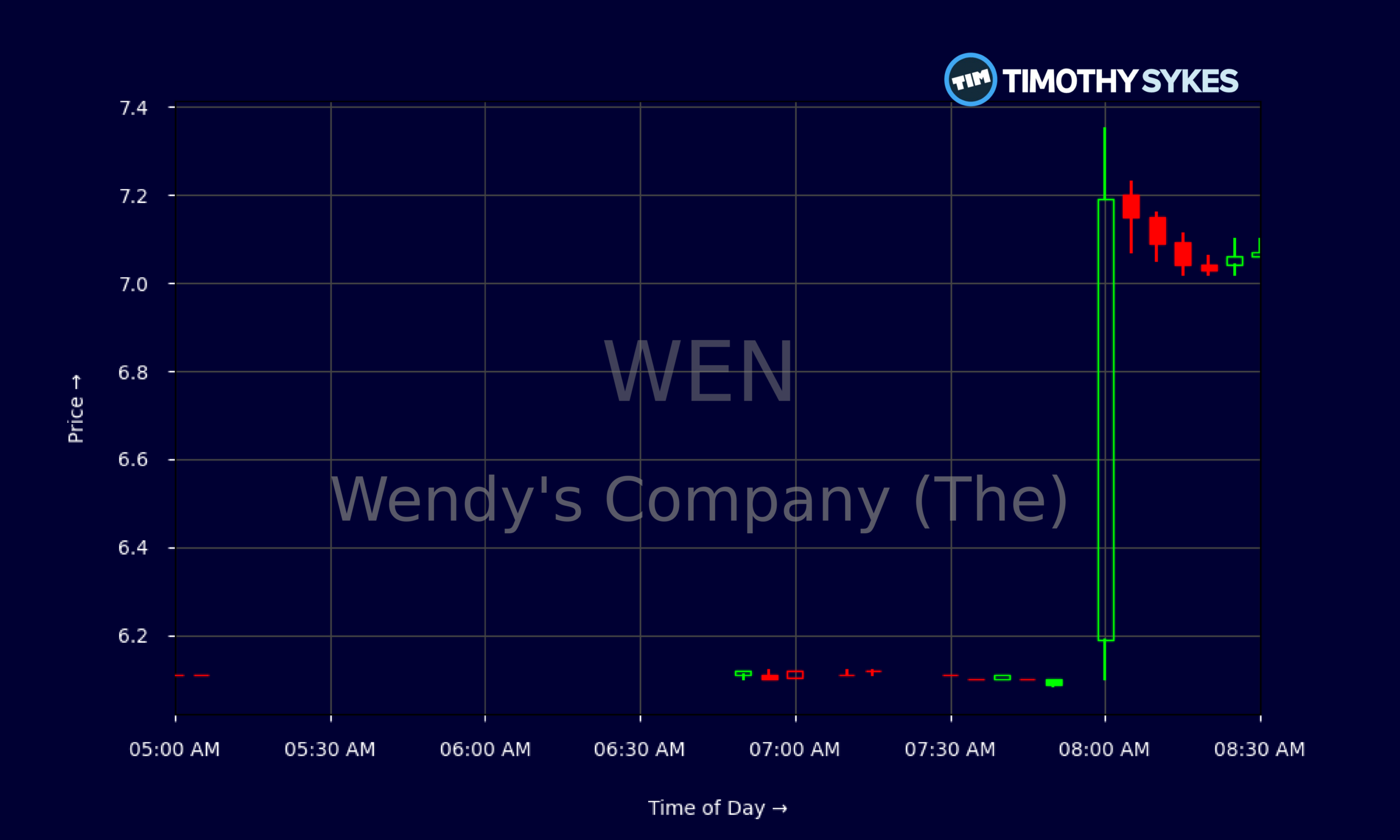
Live Update At 08:32:41 EDT: On Wednesday, October 28, 2026 Wendy’s Company (The) stock [NASDAQ: WEN] is trending up by 15.16%! Discover the key drivers behind this movement as well as our expert analysis in the detailed breakdown below.
Quick Financial Overview
Wendy’s Company (The), trading as WEN, sits in that tricky zone where the fundamentals are decent, but the market has low patience. The stock has drifted from about $6.70 to the $6.10–$6.20 area over the past couple of weeks, showing a slow bleed rather than a blow‑up. Daily ranges are tight, with recent lows near $6.00, telling traders this is a grind‑down, not a panic.
Under the hood, WEN is still a cash machine. Revenue runs around $2.18B a year, with a fat 53.1% gross margin and EBITDA margin above 20%. An 11.5x P/E and roughly 0.5x price‑to‑sales put Wendy’s in “cheap for a brand name” territory. Free cash flow of about $81.0M last quarter backs a dividend near $0.28 a share, or roughly a 4.6% yield around current prices.
More Breaking News
The flip side is leverage. WEN posts a total debt‑to‑equity ratio above 30 and long‑term liabilities that dwarf its modest $120.5M equity base. Return on equity looks huge, but that’s largely the math of debt and buybacks. For active traders, that mix means WEN can trend sharply when sentiment shifts, up or down.
Why Traders Are Watching WEN Into Q3 Earnings
WEN is drawing attention now because the news flow and the chart are finally lining up. UBS just cut its price target on Wendy’s from $8 to $6.50 and stuck with a Neutral stance. At the same time, the broader analyst crowd still pegs WEN at a Hold with an average target of $7.18, while shares change hands around $6.30. That gap says it all: the Street still sees upside, but conviction is fading.
On the tape, Wendy’s has been slipping from the mid‑$6s, with recent closes clustering between $6.10 and $6.30. Support around $6.00 has held so far. For short‑term traders, that level is the obvious line in the sand. A crack below opens room toward prior lows, while a bounce off that zone gives a clean risk‑reward setup.
Pre‑market action shows WEN can still move when volume hits. One recent early session saw the stock spike from roughly $6.20 to above $7.00 in minutes, then churn around $7.10–$7.20. That kind of intraday range tells momentum traders this isn’t a dead ticker; it just needs a catalyst.
That catalyst is likely the Q3 2026 earnings release on 2026/11/05. Wendy’s will host a conference call and webcast, plus share deck materials and a replay online. For WEN, that event either validates UBS’s lower $6.50 target or gives the bulls ammo to push back toward the $7s. Traders should be locked in on same‑store trends, margin commentary, and any tone shift on the dividend or leverage.
Conclusion
Right now, WEN sits where cautious Wall Street models meet a nervous tape. UBS trimming its target to $6.50 while staying Neutral signals that big money does not expect a dramatic WEN rebound without fresh proof. The Hold consensus and $7.18 mean target show there is still respect for the Wendy’s brand, just not a lot of urgency to pay up for it.
For short‑term traders, that hesitation can be an edge. WEN’s valuation is compressed, its dividend yield is high for a consumer name, and the business throws off solid free cash flow. At the same time, the heavy debt load and sliding share price keep the pressure on management to deliver when Q3 hits on 2026/11/05. If Wendy’s numbers disappoint, the $6.00 area may not hold. If results surprise to the upside or guidance sounds stronger, a snap back toward the mid‑$7s becomes a real scenario.
The key is to treat WEN like any other setup: define risk, watch volume, and react to the data, not the story. As Tim Sykes likes to say, “Discipline beats conviction every time — the chart doesn’t care how much you love a stock.” As millionaire penny stock trader and teacher Tim Sykes says, “Cut losses quickly, let profits ride, and don’t overtrade.”. For traders stalking Wendy’s into earnings, that mindset matters more than any price target on a bank report.
This is stock news, not investment advice. Timothy Sykes News delivers real-time stock market news focused on key catalysts driving short-term price movements. Our content is tailored for active traders and investors seeking to capitalize on rapid price fluctuations, particularly in volatile sectors like penny stocks. Readers come to us for detailed coverage on earnings reports, mergers, FDA approvals, new contracts, and unusual trading volumes that can trigger significant short-term price action. Some users utilize our news to explain sudden stock movements, while others rely on it for diligent research into potential investment opportunities.
Dive deeper into the world of trading with Timothy Sykes, renowned for his expertise in penny stocks. Explore his top picks and discover the strategies that have propelled him to success with these articles:
- Penny Stocks Trading Guide
- Best Penny Stocks Under $1 to Buy Today
- Top 8 Penny Stocks to Watch on Robinhood
Once you’ve got some stocks on watch, elevate your trading game with StocksToTrade the ultimate platform for traders. With specialized tools for swing and day trading, StocksToTrade will guide you through the market’s twists and turns.
Dig into StocksToTrade’s watchlists here:





Leave a reply