

Space Exploration Technologies Corp. stocks have been trading up by 8.1 percent after securing a major multi-launch government contract.
Key Takeaways Traders Need To Know
- SpaceX is exploring about $40B in financing to buy Nvidia AI chips, signaling a massive push into AI infrastructure alongside rockets and Starlink.
- Shares of SPCX bounced after the company agreed to buy Grain Management’s nationwide 800 MHz low‑band spectrum portfolio, a key building block for Starlink Mobile as a U.S. carrier.
- RBC reiterated an Outperform on newly public SPCX with a $225 target, pointing to aggressive growth plans, Starlink spectrum gains, and speculation around a future Tesla tie‑up.
- Starlink Mobile, delivered through Veon brands like Kyivstar and Banglalink, has already touched more than 11 million users in off‑grid areas across Ukraine, Kazakhstan, and Bangladesh.
- SPCX dropped about 10% after reports that Starlink and Starshield links to Ukrainian drones are being throttled, spotlighting rising political and military‑use scrutiny.
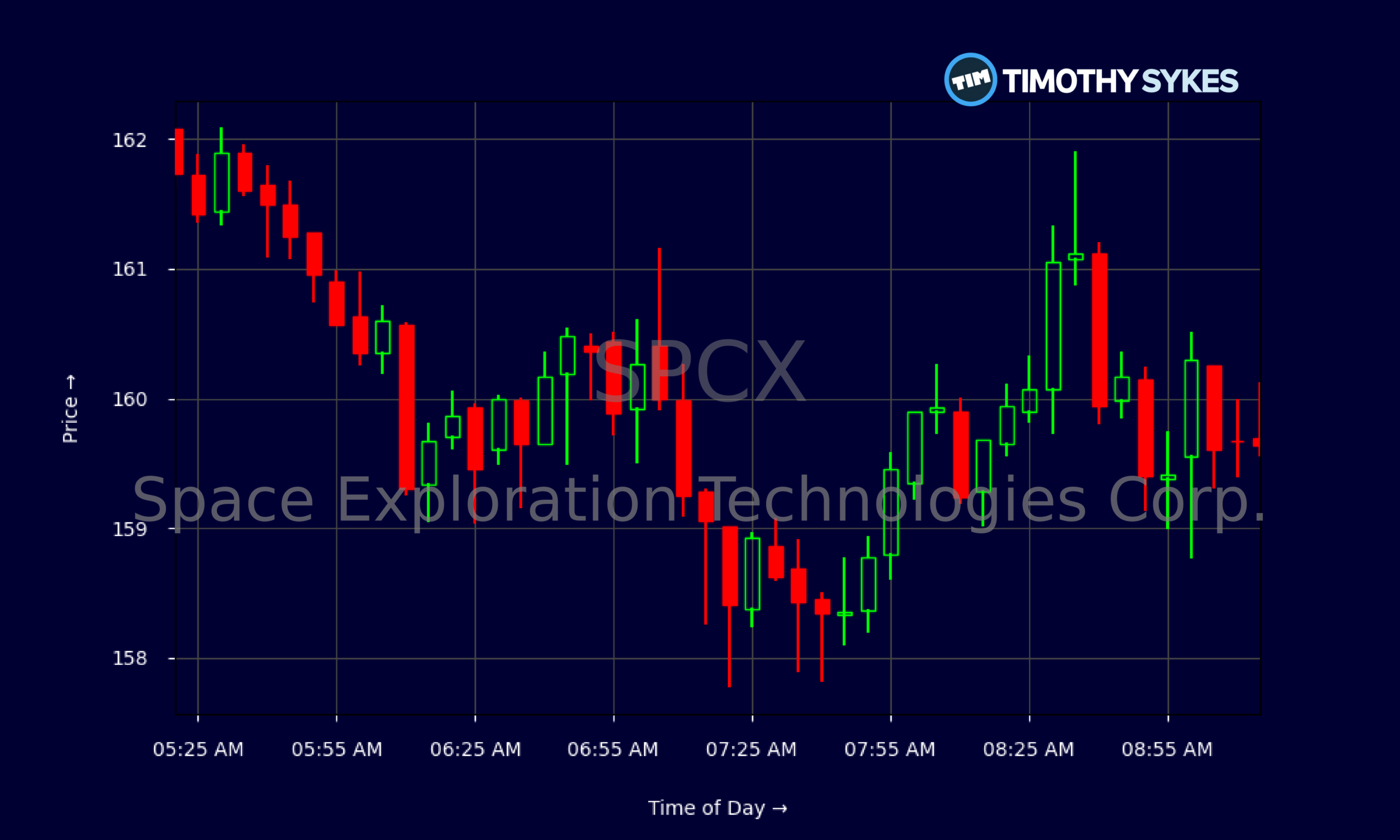
Live Update At 09:18:39 EDT: On Wednesday, October 21, 2026 Space Exploration Technologies Corp. stock [NASDAQ: SPCX] is trending up by 8.1%! Discover the key drivers behind this movement as well as our expert analysis in the detailed breakdown below.
Quick Financial Overview
SPCX has been trading like a high‑beta growth story on a rocky path. Over the recent multi‑week stretch, the stock slid from the mid‑$160s to the high‑$140s, with the latest close near $147–$148. That is a sizable pullback from early‑month highs above $170, telling traders the uptrend has stalled and supply is hitting every bounce.
On the intraday tape, SPCX has been chopping tightly between roughly $158 and $162 in pre‑market and early trading, a classic consolidation zone after a sharp drop. For short‑term traders, that narrow $4 range is a battleground: a break above $162 suggests dip‑buyers are regaining control, while a crack under $158 opens the door back toward recent closing lows.
More Breaking News
Fundamentally, SPCX is still a cash‑burning growth machine. Revenue for the latest quarter ran about $7.8B, but the company posted a net loss of roughly $541M and a pretax margin around ‑38.3%. Free cash flow was deeply negative at about ‑$16.8B as SPCX poured money into satellites, rockets, and new infrastructure. At the same time, SPCX sits on more than $93B in cash, with enterprise value around $1.95T and a rich price‑to‑sales ratio near 176.4. For traders, this is a pure growth premium: expensive on today’s numbers, priced for huge future scale.
Why Traders Are Watching SPCX Right Now
SPCX is in the middle of a major narrative shift. This is no longer just a launch and satellite story. The company is leaning hard into AI and mobile, and the tape is reacting to every headline.
First, the AI push. SPCX is exploring roughly $40B in financing to buy Nvidia chips, with about $10B in bank loans and another $30B in investment‑grade debt led by Apollo, targeting a closing in 2027. That is hyperscaler‑level capex. S&P Global even groups SpaceX with Amazon, Microsoft, Alphabet, Oracle, and Meta in a forecast calling for more than $7T in combined AI and data‑center spending from 2025–2030. For traders, that scale tells you two things: potential for massive future revenue streams, but also rising leverage and complexity on the balance sheet. The stock dipped slightly intraday on the financing headlines, showing the market respects the execution risk even while buying the long‑term story.
Second, the spectrum land grab. SPCX shares pushed higher after the company agreed to buy Grain Management’s nationwide 800 MHz low‑band spectrum portfolio and up to 14 MHz of nationwide 800 MHz spectrum, which Elon Musk labeled the last key piece for full U.S. phone coverage. Low‑band spectrum travels far and penetrates buildings, and when you pair that with Starlink’s satellite constellation, SPCX gets a hybrid network that can reach both dense cities and dead zones. Multiple reports now frame this deal as transformative, positioning Starlink Mobile as a credible U.S. carrier, not just a niche satellite add‑on. That kind of recurring telecom revenue is exactly what momentum traders in SPCX are betting on.
Third, proof of traction. Starlink Mobile, via Veon’s Kyivstar, Beeline, and Banglalink networks, has already connected more than 11 million Veon customers at least once in no‑coverage areas across Ukraine, Kazakhstan, and Bangladesh. That is early but real adoption, showing the direct‑to‑device model can scale globally, not only in the U.S.
The main red flag: geopolitics. SPCX dropped about 10% after reports that Starlink and Starshield links to Ukrainian drones are being throttled at high speeds inside Ukraine, the first public throttling episode since the IPO. Service elsewhere remains normal, but traders now see that defense‑related decisions can move the stock fast. Policy headlines just became a new volatility driver in SPCX.
Conclusion
SPCX sits at the intersection of three powerful themes: AI infrastructure, global mobile coverage, and geopolitics. The stock’s recent slide from above $170 into the high‑$140s shows what happens when rich expectations meet headline risk. But the core story is still aggressive growth. SPCX is taking on about $40B in new financing to build an AI compute empire, spending tens of billions in capex, and stitching together nationwide low‑band spectrum with its Starlink satellites to go after U.S. carrier economics.
For active traders, SPCX is a classic high‑reward, high‑volatility ticker. The chart says we are in consolidation after a sharp drop, with the $158–$162 band acting as a short‑term decision zone. A strong Q3 update — which RBC expects, backing SPCX with an Outperform and a $225 target — could reset that range higher if management showcases progress on Starship launches, Starlink approvals, and spectrum rollouts. At the same time, the Ukraine throttling episode proves that political risk can hit SPCX quickly and hard.
This makes discipline non‑negotiable. As Tim Sykes likes to hammer home, “The patterns repeat, but the results are only there for traders who cut losses quickly and never marry a stock.” As millionaire penny stock trader and teacher Tim Sykes, says, “Small gains add up over time; focus on building wealth gradually, not chasing jackpots.”, a reminder that even with a story stock like SPCX, smart trading is about consistently managing risk and sizing, not swinging for home runs on every move. SPCX offers huge momentum potential, but it is best treated as a trading vehicle, not a hope trade. Use the story for context, the news for catalysts, and the chart for entries and exits — and always respect your risk. This article is for educational and research purposes only and is not investment advice.
This is stock news, not investment advice. Timothy Sykes News delivers real-time stock market news focused on key catalysts driving short-term price movements. Our content is tailored for active traders and investors seeking to capitalize on rapid price fluctuations, particularly in volatile sectors like penny stocks. Readers come to us for detailed coverage on earnings reports, mergers, FDA approvals, new contracts, and unusual trading volumes that can trigger significant short-term price action. Some users utilize our news to explain sudden stock movements, while others rely on it for diligent research into potential investment opportunities.
Dive deeper into the world of trading with Timothy Sykes, renowned for his expertise in penny stocks. Explore his top picks and discover the strategies that have propelled him to success with these articles:
- Penny Stocks Trading Guide
- Best Penny Stocks Under $1 to Buy Today
- Top 8 Penny Stocks to Watch on Robinhood
Once you’ve got some stocks on watch, elevate your trading game with StocksToTrade the ultimate platform for traders. With specialized tools for swing and day trading, StocksToTrade will guide you through the market’s twists and turns.
Dig into StocksToTrade’s watchlists here:





Leave a reply