

Rocket Companies Inc. stocks have been trading up by 5.58 percent amid upbeat sentiment on strengthening U.S. housing and mortgage demand.
Key Takeaways
- Rocket Mortgage, part of Rocket Companies, will be first among major U.S. lenders to adopt VantageScore 4.0 as its preferred credit model for eligible GSE and VA loans, targeting more approvals and lower scoring costs.
- Multiple Wall Street firms recently trimmed RKT price targets into the $15–$17 range but kept Overweight, Outperform, or Buy ratings, signaling moderated expectations rather than a bearish turn.
- Keefe Bruyette says 30-year mortgage rates near 6.95% are crushing purchase and refi volumes, yet still calls Rocket Companies an Outperform thanks to its servicing-heavy model and perceived risk/reward setup.
- Redfin, now under Rocket Companies, shows sellers outnumbering buyers by roughly 63%, with record-low demand but strong leverage for qualified buyers, especially across the Sun Belt.
- Fresh Redfin data owned by Rocket Companies shows U.S. home prices still edging up about 0.25% month over month and roughly 3.7–3.8% year over year, even as conditions shift toward a pronounced buyer’s market.
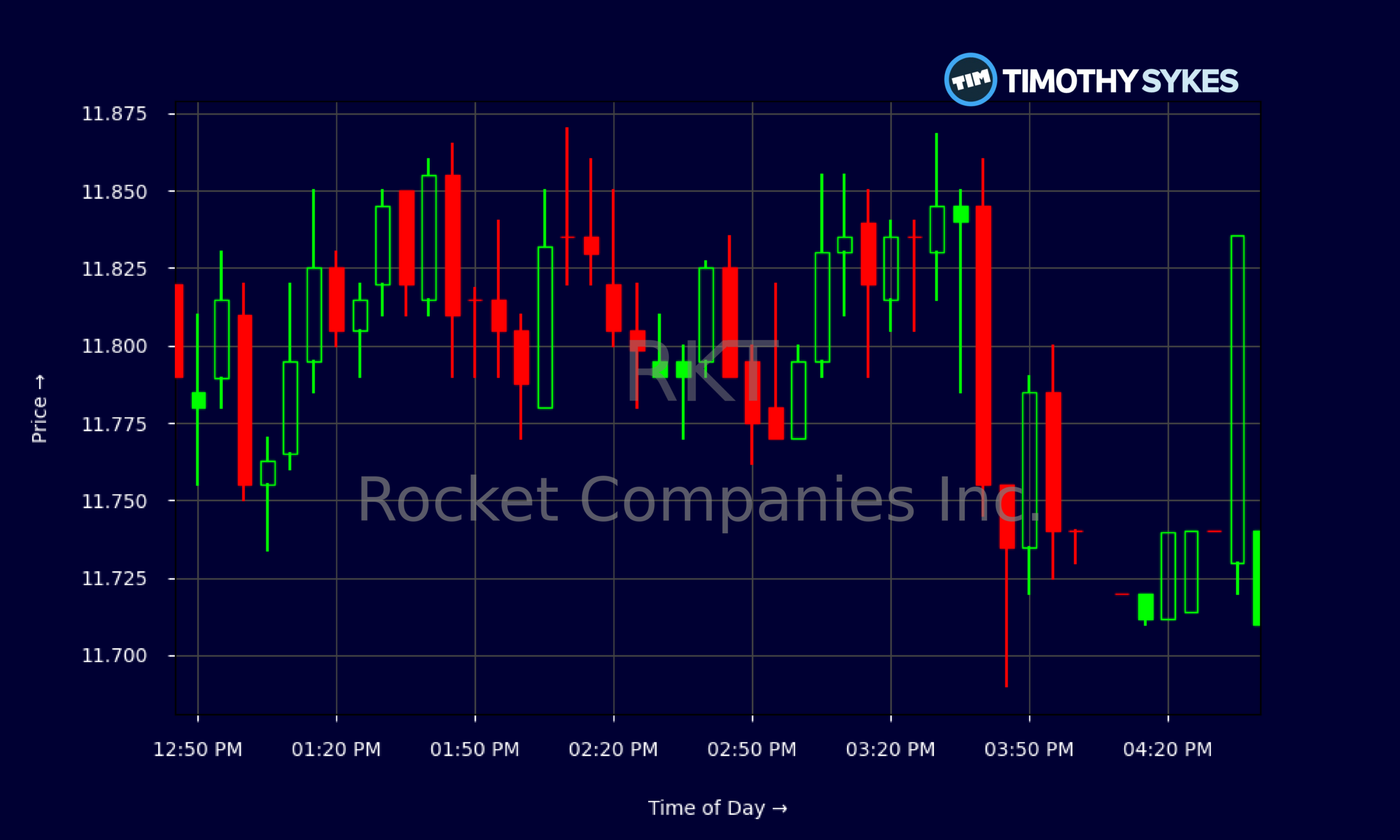
Live Update At 16:47:19 EDT: On Thursday, October 22, 2026 Rocket Companies Inc. stock [NYSE: RKT] is trending up by 5.58%! Discover the key drivers behind this movement as well as our expert analysis in the detailed breakdown below.
Quick Financial Overview
RKT has been grinding higher in October trading, not sprinting. The stock bounced from around $10.53 on 2026/10/14 to roughly $11.74 by 2026/10/22, a solid near-12% rebound over just a few sessions. The daily chart shows a classic stair-step pattern: pullbacks toward $10.70–$11.00 have been getting bought, with higher lows building a short-term uptrend.
Intraday on 2026/10/22, RKT opened near $11.18 and pushed steadily to the $11.80 area, then held that zone into the close. That tells traders there was real demand all day, not just a morning spike. Volume is not shown here, but the tight, rising 5‑minute candles around $11.70–$11.85 suggest controlled, trend-style buying rather than chaotic churn.
More Breaking News
Fundamentally, Rocket Companies generated about $6.26B in revenue over the trailing period, yet trades at a rich price/earnings ratio above 52 and a price/sales near 3.6. Profit margins are slim, with net margin slightly above 5%. Debt is meaningful, with total debt to equity at 1.16 and leverage around 2.6, but return on equity is positive at roughly 3%. For traders, that mix screams “sentiment and cycle stock” — RKT tends to move more on housing and rate expectations than on current earnings power alone.
Why Traders Are Watching RKT Right Now
The biggest story around RKT is strategic, not just technical. Rocket Mortgage, the core unit of Rocket Companies, is about to be the first major U.S. home lender to adopt VantageScore 4.0 as its preferred credit scoring model for all eligible loans sold to Fannie Mae, Freddie Mac, and the VA. Internal testing showed more clients get approved and many qualify for better pricing, while Rocket’s own scoring costs go down.
For a mortgage name in a slow market, that is playing offense. RKT is trying to grow its addressable borrower pool at a time when 30‑year mortgage rates near 6.95% are hammering purchase and refi volumes. Keefe Bruyette still tags Rocket Companies with an Outperform rating, calling out the servicing-heavy model as a relative bright spot. Servicing fees tend to be steadier than origination, which matters when transaction volumes weaken.
At the same time, Redfin — now fully under Rocket Companies — is giving RKT a powerful data and marketing engine. Redfin reports that sellers outnumber buyers by about 63%, the biggest gap in more than a decade, with buyer demand at record lows but inventory at the highest level since 2020. Yet home prices are still drifting higher around 0.25% month over month and nearly 3.8% year over year, the fastest annual growth since mid‑2025.
For active traders, that backdrop sets up a clear narrative: macro headwinds on volume, but stable collateral values and a company leaning hard into tech and data. This is exactly the sort of story the market can re-rate quickly when rates or sentiment move.
Conclusion
Wall Street is sending a consistent message on Rocket Companies and RKT. Barclays cut its target from $17 to $15 and still says Overweight. Morgan Stanley went from $19 to $16, again with an Overweight rating. Keefe Bruyette trimmed from $19 to $17 but stuck with Outperform. StoneX slid from $19 to $16 and left its Buy call in place while guiding Q3 revenue and EBITDA toward the low end of company expectations.
That cluster of target cuts with bullish ratings tells traders expectations are being reset, not abandoned. Analysts recognize the pain from high rates and softer housing, but they also see RKT’s platform — VantageScore 4.0 adoption, servicing scale, and Redfin data — as real strategic assets when the cycle eventually turns.
For short‑term chart traders, RKT’s recent move off the $10.50s into the high‑$11s creates a tradable trend with clear risk levels below $11 and resistance in the $12s. For longer‑term swing traders, the focus is on how Rocket Companies navigates the current buyer’s market while keeping margins intact.
As Tim Sykes likes to say, “The market rewards prepared traders, not hopeful gamblers.” As millionaire penny stock trader and teacher Tim Sykes says, “It’s better to go home at zero than to go home in the red.”. With RKT, that means respecting the macro headwinds, studying how price reacts to every rate headline, and using the data from Rocket Companies and Redfin as a roadmap — not a guarantee — for your next trading plan. This article is for educational and research purposes only and is not investment advice.
This is stock news, not investment advice. Timothy Sykes News delivers real-time stock market news focused on key catalysts driving short-term price movements. Our content is tailored for active traders and investors seeking to capitalize on rapid price fluctuations, particularly in volatile sectors like penny stocks. Readers come to us for detailed coverage on earnings reports, mergers, FDA approvals, new contracts, and unusual trading volumes that can trigger significant short-term price action. Some users utilize our news to explain sudden stock movements, while others rely on it for diligent research into potential investment opportunities.
Dive deeper into the world of trading with Timothy Sykes, renowned for his expertise in penny stocks. Explore his top picks and discover the strategies that have propelled him to success with these articles:
- Penny Stocks Trading Guide
- Best Penny Stocks Under $1 to Buy Today
- Top 8 Penny Stocks to Watch on Robinhood
Once you’ve got some stocks on watch, elevate your trading game with StocksToTrade the ultimate platform for traders. With specialized tools for swing and day trading, StocksToTrade will guide you through the market’s twists and turns.
Dig into StocksToTrade’s watchlists here:





Leave a reply