

Oracle Corporation stocks have been trading down by -4.33 percent amid concerns over weakening enterprise software demand and cloud competition.
Key Takeaways
- Massive $20B Oracle capital raise pairs $10B in new common stock with $10B in senior notes, pointing to higher dilution and leverage just as sentiment turns cautious.
- Heavily discounted $10B Oracle secondary offering at $116 per share, roughly 11% below the prior $130.67 close, signals weak near-term demand and weighs on ORCL’s tape.
- Equity deal and follow‑on news knocked ORCL more than 9% lower, extending a pullback that already had the stock under pressure alongside a soft tech sector.
- High‑coupon Oracle notes, paying about 7.0%–8.65% out to 2046, lift funding costs even as management leaves “general corporate purposes” broad and open‑ended.
- Oracle Health’s large data breach and ongoing legal review add operational and reputational risk right as ORCL leans harder on public markets for cash.
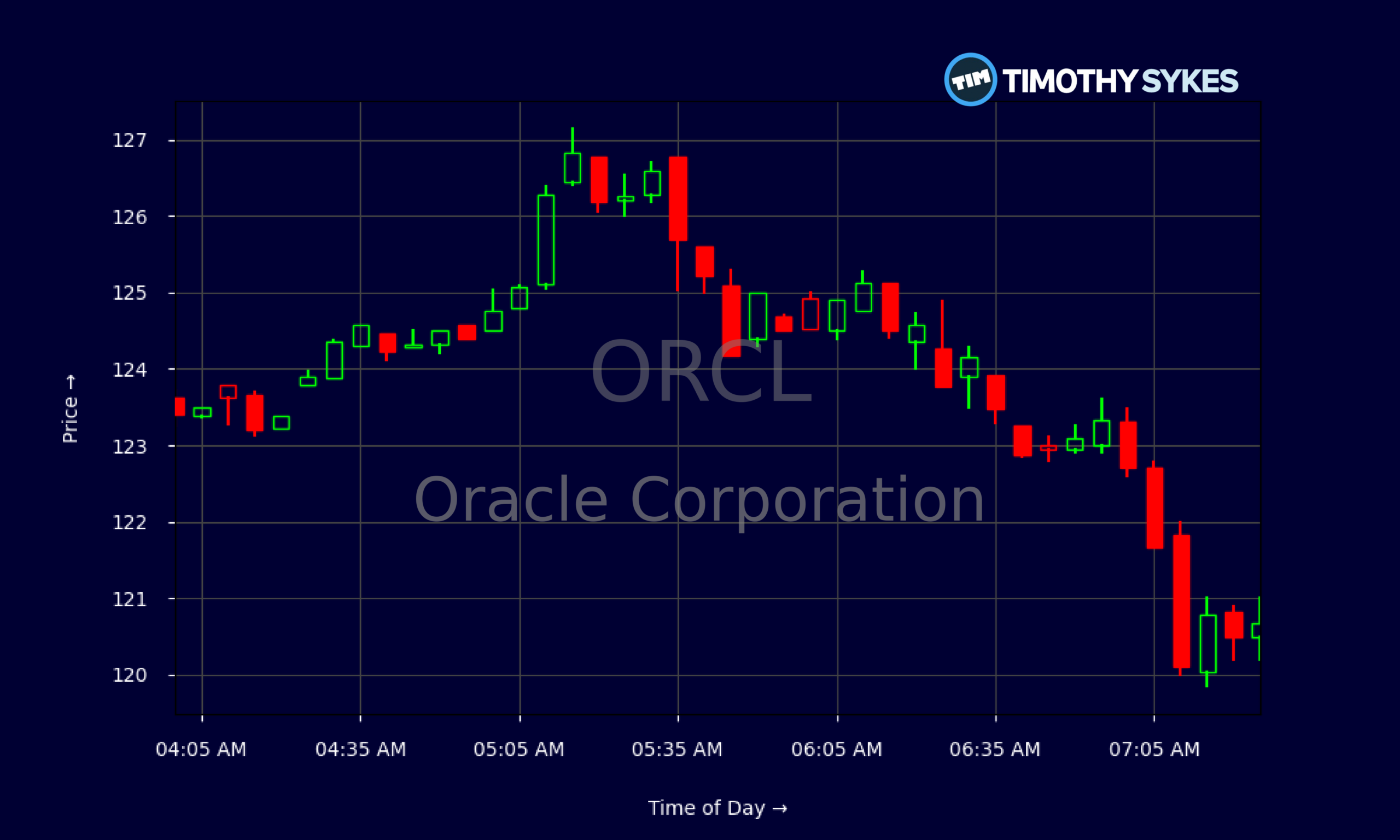
Live Update At 07:32:51 EST: On Wednesday, November 04, 2026 Oracle Corporation stock [NYSE: ORCL] is trending down by -4.33%! Discover the key drivers behind this movement as well as our expert analysis in the detailed breakdown below.
Quick Financial Overview
ORCL has been trading like a fast drop on a rollercoaster. In mid‑October, Oracle stock was grinding near the high-$130s to mid-$140s, with a close of $143.20 on 2026/10/13 and a spike to $148.48 on 2026/10/28. That strength has faded. By 2026/10/30, ORCL closed at $130.67, and the selling accelerated around the capital raise, with a further slide to $119.22 on 2026/11/02 before a rebound to $126.19 on 2026/11/03.
Intraday action shows ORCL stuck in a tight, choppy pre‑market band around $123–$126, with repeated failures to hold moves above $126.80. That tells short‑term traders the offering overhang is real; every pop is meeting supply. Yet Oracle Corporation’s fundamentals still show a high‑margin software and cloud machine. Gross margin near 96% and EBITDA margin above 50% reflect strong pricing power. Revenue sits around $67.36B with low‑double‑digit multi‑year growth, while a P/E near 22 and price‑to‑sales around 6 put ORCL in a premium tech bucket.
More Breaking News
The flip side: leverage is heavy. Total debt‑to‑equity of about 2.5 and a leverage ratio near 4.9 mean ORCL is already geared. The new raise adds fuel to that debate.
Why Traders Are Watching ORCL’s Capital Raise
Traders are locked on ORCL because this is not a small, routine deal. Oracle Corporation is moving to sell $10B in common stock and another $10B in senior notes at the same time, lifting total planned proceeds to about $20B. For an already leveraged balance sheet, that’s a big swing. The stock side alone means real dilution, and the bond piece adds long‑dated obligations that sit on the company for decades.
The equity offering terms tell you how the market feels right now. ORCL is pricing the $10B secondary at $116 per share, roughly an 11% discount to the prior Friday close of $130.67. You do not give that kind of discount when demand is roaring. You do it when you need to clear a huge block and buyers want a cushion. That discounted print often becomes a magnet. Many traders will see $116 as the “true” reference level and fade spikes back toward the $120s until the new supply is absorbed.
On the debt side, Oracle Corporation is paying up. The company’s $10B in notes come with coupons around 7.0%–8.65% across maturities from 2029 through 2046. That’s expensive money for a mega‑cap tech name and a clear sign that the rate backdrop and company risk profile are biting. Management’s broad “general corporate purposes” language—capex, debt repayment, deals, dividends, and buybacks—offers flexibility but no tight story for traders to hang onto.
All of this plays out against the wider AI and cloud arms race. Truist sees Microsoft’s main AI peers running negative free cash flow under heavy infrastructure build‑outs, indirectly flagging ORCL as one of the pressured names. Add headlines about Larry Ellison’s net worth plunging as AI data‑center spending and rising debt spook the market, and the narrative around Oracle Corporation shifts from “steady compounder” to “capital‑intensive racer.”
Layer on the Oracle Health data breach—touching sensitive hospital records and now under law‑firm scrutiny—and ORCL carries legal and reputational overhangs right as it asks markets for more cash. For momentum traders, this is a textbook “headline‑driven, liquidity‑heavy” name where sharp bounces and rug pulls can both show up on the same day.
Conclusion
For active traders, ORCL has flipped from quiet large‑cap to live‑wire story stock. The share price drop—more than 5% on the initial $10B stock‑offering headline and over 9% once the dust settled—shows how sharply sentiment turned on Oracle Corporation once dilution and higher leverage hit the tape. The $116 deal price now hangs over every intraday bounce, while the 7%–8.65% coupons on the new notes remind the market that capital is no longer cheap.
At the same time, underlying ORCL fundamentals are not falling apart. Margins stay thick, cash generation from operations is solid, and the AI data‑center push could support long‑term growth if management executes. But in the near term, traders are paying more attention to balance‑sheet risk, sector‑wide tech weakness, and headline risk from the Oracle Health breach than to long‑dated AI promises.
This is where discipline matters. ORCL’s volatility around the raise is a live classroom for everything the Tim Sykes community drills into new traders: respect dilution, track key levels, and never fall in love with a story stock. As millionaire penny stock trader and teacher Tim Sykes, says, “It’s better to go home at zero than to go home in the red.”. As Tim says, “Patterns repeat because human nature doesn’t change—your edge is recognizing the setup and cutting losses fast when you’re wrong.” Oracle Corporation is giving traders a fresh pattern to study. How you trade it is up to you, but the lessons are right on the screen.
This is stock news, not investment advice. Timothy Sykes News delivers real-time stock market news focused on key catalysts driving short-term price movements. Our content is tailored for active traders and investors seeking to capitalize on rapid price fluctuations, particularly in volatile sectors like penny stocks. Readers come to us for detailed coverage on earnings reports, mergers, FDA approvals, new contracts, and unusual trading volumes that can trigger significant short-term price action. Some users utilize our news to explain sudden stock movements, while others rely on it for diligent research into potential investment opportunities.
Dive deeper into the world of trading with Timothy Sykes, renowned for his expertise in penny stocks. Explore his top picks and discover the strategies that have propelled him to success with these articles:
- Penny Stocks Trading Guide
- Best Penny Stocks Under $1 to Buy Today
- Top 8 Penny Stocks to Watch on Robinhood
Once you’ve got some stocks on watch, elevate your trading game with StocksToTrade the ultimate platform for traders. With specialized tools for swing and day trading, StocksToTrade will guide you through the market’s twists and turns.
Dig into StocksToTrade’s watchlists here:




Leave a reply