

Methanex Corporation stocks have been trading up by 13.73 percent amid bullish sentiment on rising global methanol demand.
Key Takeaways
- Q3 2026 earnings blowout, with adjusted EPS and revenue topping estimates on strong methanol pricing and record North American output.
- Management flagged even higher realized methanol prices and EBITDA in Q4 despite idling capacity in New Zealand and Trinidad.
- Board approved a Normal Course Issuer Bid to repurchase up to 3.87 million shares, or 5% of the float, through 2027/11/03.
- CIBC and UBS raised MEOH price targets to $77 and $74, respectively, while maintaining bullish ratings.
- 2026 guidance calls for 9.0M tons of methanol and 0.3M tons of ammonia production, underscoring confidence in operations.
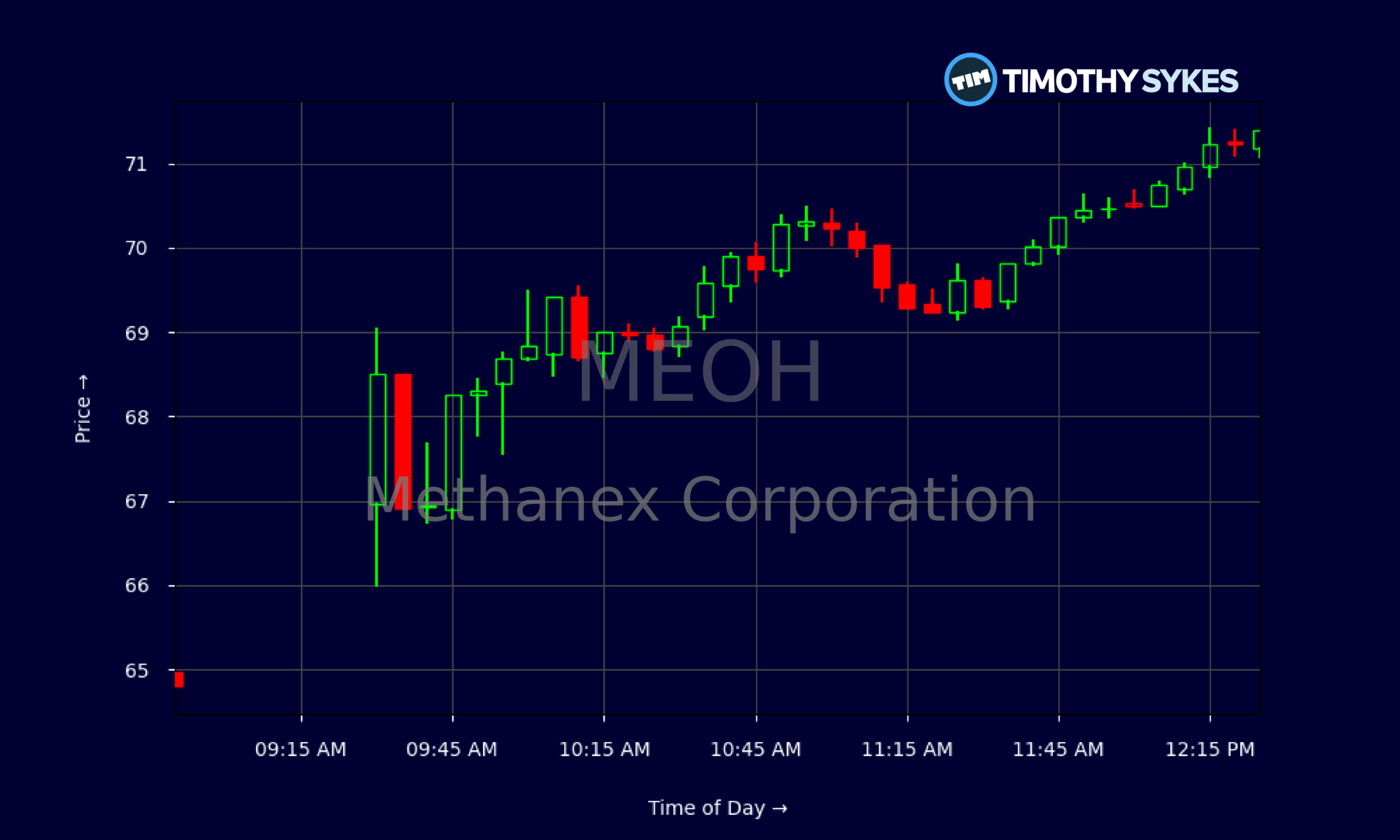
Live Update At 12:32:14 EDT: On Friday, October 30, 2026 Methanex Corporation stock [NASDAQ: MEOH] is trending up by 13.73%! Discover the key drivers behind this movement as well as our expert analysis in the detailed breakdown below.
Quick Financial Overview
MEOH has been trading like a name with momentum behind it. Over the last several sessions, Methanex stock has climbed from the low $60s to around $71, with a sharp jump on 2026/10/30 after earnings. That close near the high of the day tells traders there was real buying demand into the bell, not just a one‑and‑done spike.
Intraday, MEOH held above $69 for most of the session and pushed steadily toward $71+. That kind of tight, upward 5‑minute tape often signals institutions stepping in rather than random noise. For short‑term traders, it’s a classic earnings‑gap‑and‑grind pattern.
Under the hood, Methanex generated about $3.59B in revenue over the last year, with a solid 28.6% gross margin and 23.6% EBITDA margin. That combination of size and margin gives MEOH real earnings power when pricing swings in its favor. A price‑to‑sales ratio near 1.15 and price‑to‑cash‑flow around 3.8 suggest the market is not paying a wild premium for this cash machine.
More Breaking News
Balance‑sheet ratios back up the story. A current ratio of 2.1 and quick ratio of 1.2 show Methanex can handle near‑term obligations, while leverage is meaningful but manageable. For traders, that means upside exposure to methanol cycles without staring at a distressed‑debt chart.
Why Traders Are Watching MEOH Right Now
The latest quarter flipped a switch for MEOH. Methanex reported Q3 2026 adjusted EPS of $3.69 versus $2.86 expected and revenue of $1.39B versus $1.30B. That is not a soft beat — it is a statement quarter. The driver was simple: strong methanol pricing, tight global supply tied to Middle East conflict disruptions, and record North American production.
When a commodity‑linked name like Methanex overdelivers like this, traders pay attention to two questions: how repeatable is it, and how is management using the cash? On the first, management didn’t flinch. They pointed to even higher realized methanol prices and EBITDA in Q4, and issued 2026 guidance for 9.0M tons of methanol and 0.3M tons of ammonia. That tells the market they expect demand and pricing support to stick around.
On capital allocation, MEOH stepped on the gas. The company approved a Normal Course Issuer Bid to repurchase and cancel up to 3.87 million shares, or 5% of the float, from 2026/11/04 through 2027/11/03. That kind of buyback, combined with strong free cash flow of roughly $731M in the latest quarter, sends a clear message: Methanex believes its stock is attractive and its balance sheet is strong enough to support returns while it deleverages through bond redemptions.
Analysts lined up behind the move. CIBC Capital Markets raised its MEOH price target to $77 and kept an outperform rating, citing 8–9% higher 2026–2027 EBITDA expectations. UBS boosted its target to $74 and reiterated a Buy, while the broader consensus sits overweight around $69.36. For active traders, that cluster of targets above the current price acts like a roadmap for where big money thinks fair value sits if the methanol cycle stays tight.
Conclusion
For active traders who live on momentum, catalysts, and liquidity, MEOH just checked every box. Methanex crushed Q3 2026 expectations, is guiding to stronger Q4 EBITDA, and laid out robust 2026 production plans. The tape confirms the story: a clean push from the low $60s to the low $70s, with buyers supporting the move all day instead of fading it.
At the same time, Methanex is not just riding the methanol cycle; it is reshaping its equity story. A 5% Normal Course Issuer Bid, meaningful bond redemptions, and steady dividends around a 1.2% yield show a deliberate tilt toward shareholder returns and balance‑sheet discipline. MEOH is using this pricing window to strengthen its foundation, not just celebrate a hot quarter.
That does not mean the trade is risk‑free. Methanex is idling capacity in New Zealand and Trinidad, and its leverage is still real. If methanol prices crack or Middle East supply normalizes, the wind at its back can flip quickly. This is exactly why rule‑based discipline matters. As millionaire penny stock trader and teacher Tim Sykes, says, “There is always another play around the corner; don’t chase just because you feel FOMO.” In a fast-moving ticker like MEOH, that mindset keeps traders from forcing entries just because the chart looks strong in the moment.
Tim Sykes loves to remind traders, “Cut losses quickly, it’s the closest thing to a holy grail in trading.” MEOH is offering a powerful setup backed by hard numbers, but the same rule applies: build your plan, respect your risk, and let the market prove you right — or get out fast when it doesn’t.
This is stock news, not investment advice. Timothy Sykes News delivers real-time stock market news focused on key catalysts driving short-term price movements. Our content is tailored for active traders and investors seeking to capitalize on rapid price fluctuations, particularly in volatile sectors like penny stocks. Readers come to us for detailed coverage on earnings reports, mergers, FDA approvals, new contracts, and unusual trading volumes that can trigger significant short-term price action. Some users utilize our news to explain sudden stock movements, while others rely on it for diligent research into potential investment opportunities.
Dive deeper into the world of trading with Timothy Sykes, renowned for his expertise in penny stocks. Explore his top picks and discover the strategies that have propelled him to success with these articles:
- Penny Stocks Trading Guide
- Best Penny Stocks Under $1 to Buy Today
- Top 8 Penny Stocks to Watch on Robinhood
Once you’ve got some stocks on watch, elevate your trading game with StocksToTrade the ultimate platform for traders. With specialized tools for swing and day trading, StocksToTrade will guide you through the market’s twists and turns.
Dig into StocksToTrade’s watchlists here:





Leave a reply