

Dick’s Sporting Goods Inc stocks have been trading up by 4.11 percent after strong quarterly earnings beat investor expectations.
Key Takeaways
- Senior insiders at Dick’s Sporting Goods bought about $3.7M of stock around $130, a strong confidence signal that Smart Insider labeled its pick of the week.
- Truist cut its DKS price target to $128 from $135 and kept a Hold rating, flagging footwear demand risks, higher gas prices, and tougher comparisons into 2027.
- The company filed a shelf registration to issue various securities, boosting financial flexibility for operations, debt repayment, buybacks, and acquisitions.
- Johnson Fistel launched a probe into claims DKS misrepresented outdoor-segment demand and inventory, allegedly forcing liquidation and hurting profitability.
- DKS plans to hire roughly 11,000 seasonal workers across Dick’s and Foot Locker banners for 2026, signaling expectations for strong holiday traffic.
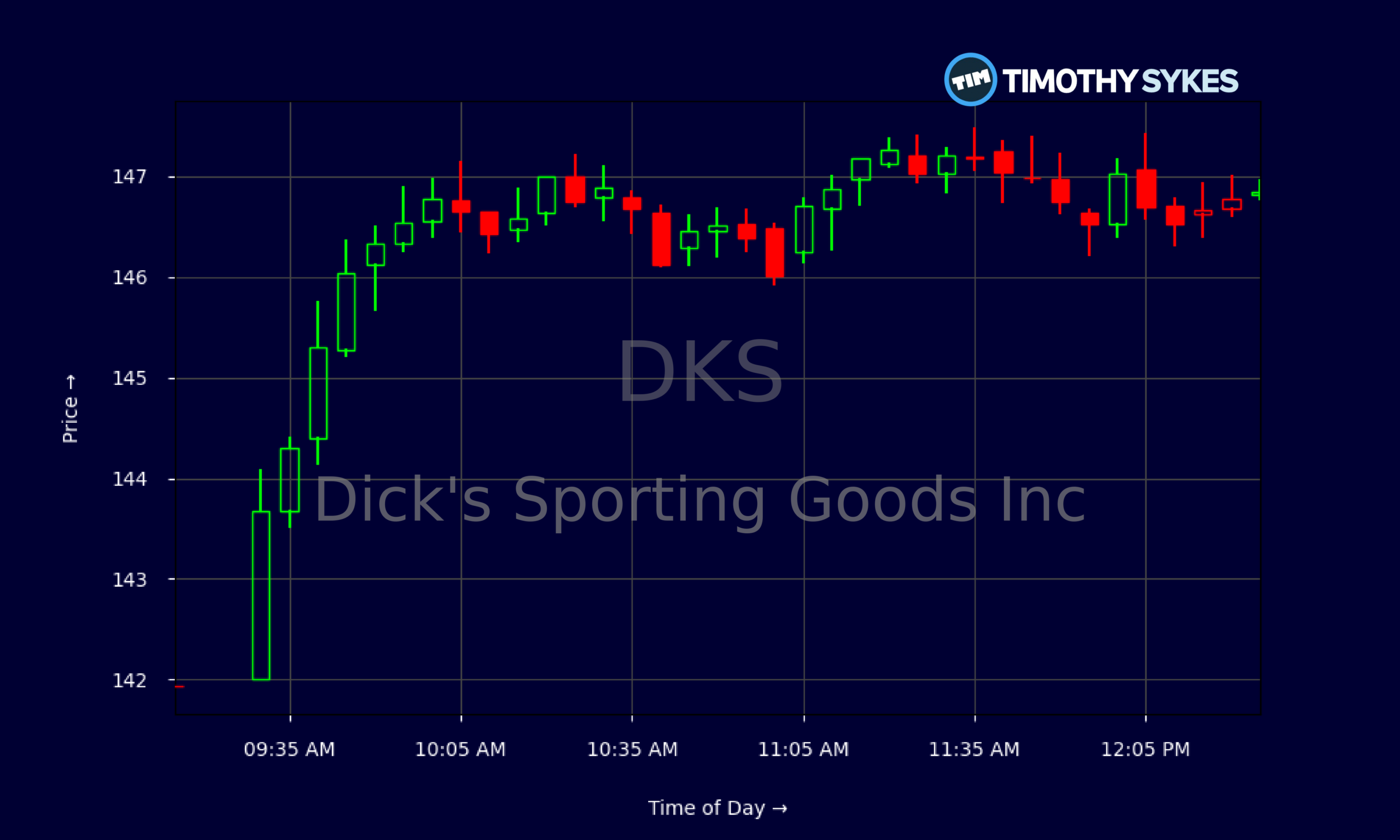
Live Update At 12:32:33 EDT: On Friday, October 16, 2026 Dick’s Sporting Goods Inc stock [NYSE: DKS] is trending up by 4.11%! Discover the key drivers behind this movement as well as our expert analysis in the detailed breakdown below.
Quick Financial Overview
DKS has been grinding higher on the daily chart. From 2026/09/21 around $121 at the open to 2026/10/16 near $146.63 at the close, the stock has logged a steady uptrend with only brief pullbacks. That’s a roughly 20%+ move in under a month, not a parabolic spike, but a controlled staircase that momentum traders like.
Intraday on 2026/10/16, Dick’s Sporting Goods traded in a tight band between about $142 at the open and a high near $147.47, with most five‑minute candles clustering around $146–$147. That sideways action after a multi‑week run suggests consolidation rather than immediate exhaustion. Dips toward $145 kept getting bought.
Fundamentally, DKS is not trading like a hype story. A price‑to‑earnings ratio around 15 and a price‑to‑sales near 0.57, on roughly $17.2B in annual revenue, point to a modest valuation for a retailer generating a 32.1% gross margin and about 5.9% EBIT margin. Returns on equity are robust, topping 30% on some measures, while return on assets is solid too.
More Breaking News
Leverage exists — total debt to equity of 1.39 and a quick ratio of 0.3 — but interest coverage of 25.8 times keeps it manageable. DKS throws off strong cash flow, with recent quarterly operating cash flow of roughly $515.8M and free cash flow over $133M. For active traders, that combo of rising price, tight consolidations, and sturdy cash generation supports a constructive, though not risk‑free, backdrop.
Why Traders Are Watching DKS Now
DKS is sitting at the crossroads of bullish insider signals and rising fundamental questions, and that tension is exactly what short‑term traders look for.
On the bullish side, multiple senior insiders at Dick’s Sporting Goods — including the vice chair and three non‑executive directors — bought about $3.7M of stock around $130. Smart Insider even called DKS its “pick of the week.” When board‑level players put millions of personal capital to work above $120, traders pay attention. That kind of insider buying often suggests management believes the current earnings power and growth pipeline are underappreciated.
The Foot Locker banners that DKS owns are also getting a visibility boost. Foot Locker became the New York Knicks’ official athletic footwear retailer under a multiyear deal. Think in‑arena retail, team‑store space, pop‑ups, contests, LED signage, and integration into the Knicks’ app and digital channels. This partnership is unlikely to swing next quarter’s earnings by itself, but it deepens brand presence in one of basketball’s most visible markets.
At the same time, DKS is leaning into digital experimentation. The company is part of Meta’s push around VR glasses, smart‑glasses, and the Muse AI shopping agent. Integrating Dick’s Sporting Goods into conversational commerce flows won’t change the model overnight, yet it gives DKS optional upside if AI‑driven shopping scales.
Offsetting that optimism, Truist just trimmed its DKS target to $128, keeping a Hold rating. The firm calls out softer athletic footwear demand, exposure to pressured categories via Foot Locker, higher gas prices, heavier discounting, and tough 2027 first‑half comparisons. For traders, that means rallies into the $140s–$150s may meet resistance as the market weighs margin pressure against growth initiatives.
Add in a new shelf registration — allowing Dick’s Sporting Goods to issue securities for operations, debt paydown, buybacks, or deals — and traders have another variable. A shelf boosts flexibility but also leaves the door open for future dilution if DKS taps equity markets instead of debt or cash.
Conclusion
Right now, DKS is a real‑time case study in why active traders track news flow as closely as price action. On one side, you have insiders buying millions of dollars’ worth of Dick’s Sporting Goods stock, a fresh Knicks–Foot Locker partnership, expanding ties with Meta’s AI and hardware ecosystem, and a plan to hire about 11,000 seasonal workers in 2026 across Dick’s and Foot Locker banners — a clear signal that management expects heavy holiday traffic.
On the other side, DKS faces a formal derivative‑style investigation by Johnson Fistel over alleged misstatements around outdoor‑segment demand and inventory. Truist’s price‑target cut to $128 and its cautious tone on footwear demand, higher gas prices, and promotional intensity add another layer of risk. The new shelf registration gives Dick’s Sporting Goods flexibility, but traders must watch how any future issuance is structured.
For DKS, the tape is still bullish, with price consolidating after a strong run and fundamentals that look reasonable for a mature retailer generating solid cash. But headlines can shift that setup fast. As Tim Sykes loves to remind traders, “The market doesn’t care about your opinion, just your preparation — react to price and news, don’t predict.” As millionaire penny stock trader and teacher Tim Sykes says, “Consistency is key in trading; don’t let emotions dictate your trades.”. For Dick’s Sporting Goods, that means mapping key levels on the chart, tracking every new filing and headline, and staying disciplined enough to cut losses quickly if this mixed story breaks the wrong way.
This is stock news, not investment advice. Timothy Sykes News delivers real-time stock market news focused on key catalysts driving short-term price movements. Our content is tailored for active traders and investors seeking to capitalize on rapid price fluctuations, particularly in volatile sectors like penny stocks. Readers come to us for detailed coverage on earnings reports, mergers, FDA approvals, new contracts, and unusual trading volumes that can trigger significant short-term price action. Some users utilize our news to explain sudden stock movements, while others rely on it for diligent research into potential investment opportunities.
Dive deeper into the world of trading with Timothy Sykes, renowned for his expertise in penny stocks. Explore his top picks and discover the strategies that have propelled him to success with these articles:
- Penny Stocks Trading Guide
- Best Penny Stocks Under $1 to Buy Today
- Top 8 Penny Stocks to Watch on Robinhood
Once you’ve got some stocks on watch, elevate your trading game with StocksToTrade the ultimate platform for traders. With specialized tools for swing and day trading, StocksToTrade will guide you through the market’s twists and turns.
Dig into StocksToTrade’s watchlists here:





Leave a reply