

CoreWeave Inc. stocks have been trading down by -3.98 percent amid concerns over rising AI infrastructure costs and competition.
Key Takeaways
- CoreWeave shares fell 12% after reports that its three co-founders have sold $3.3B of stock since the March 2025 IPO, including $2.4B in 2026, raising concerns about insider confidence and overhang.
- The large insider sales have heightened worries about CoreWeave’s debt load and credit risk amid a broader rotation out of high-growth tech.
- CoreWeave is under scrutiny after a sharp sell-off in the prior week, with traders watching for broader AI and neo-cloud sector jitters.
- The stock was recently down 3.9% premarket after a 5.9% rise in the prior session, with the move occurring in the context of Wallstreetbets-driven trading.
- Several Wallstreetbets-favored stocks, including CoreWeave, are rebounding modestly in premarket trading after sharp declines, with gains ranging from about 1% to 4%.
Live Update At 07:47:19 EDT: On Tuesday, October 20, 2026 CoreWeave Inc. stock [NASDAQ: CRWV] is trending down by -3.98%! Discover the key drivers behind this movement as well as our expert analysis in the detailed breakdown below.
Quick Financial Overview
CRWV, the ticker for CoreWeave, has gone from market darling to high‑risk trading vehicle in a hurry. The daily chart shows a clear downtrend: from a recent close near $90, CRWV has slid into the low $60s, with the latest close around $61 after multiple failed bounces. That is a steep drawdown in a short window, which tells traders one thing — momentum has shifted to the downside.
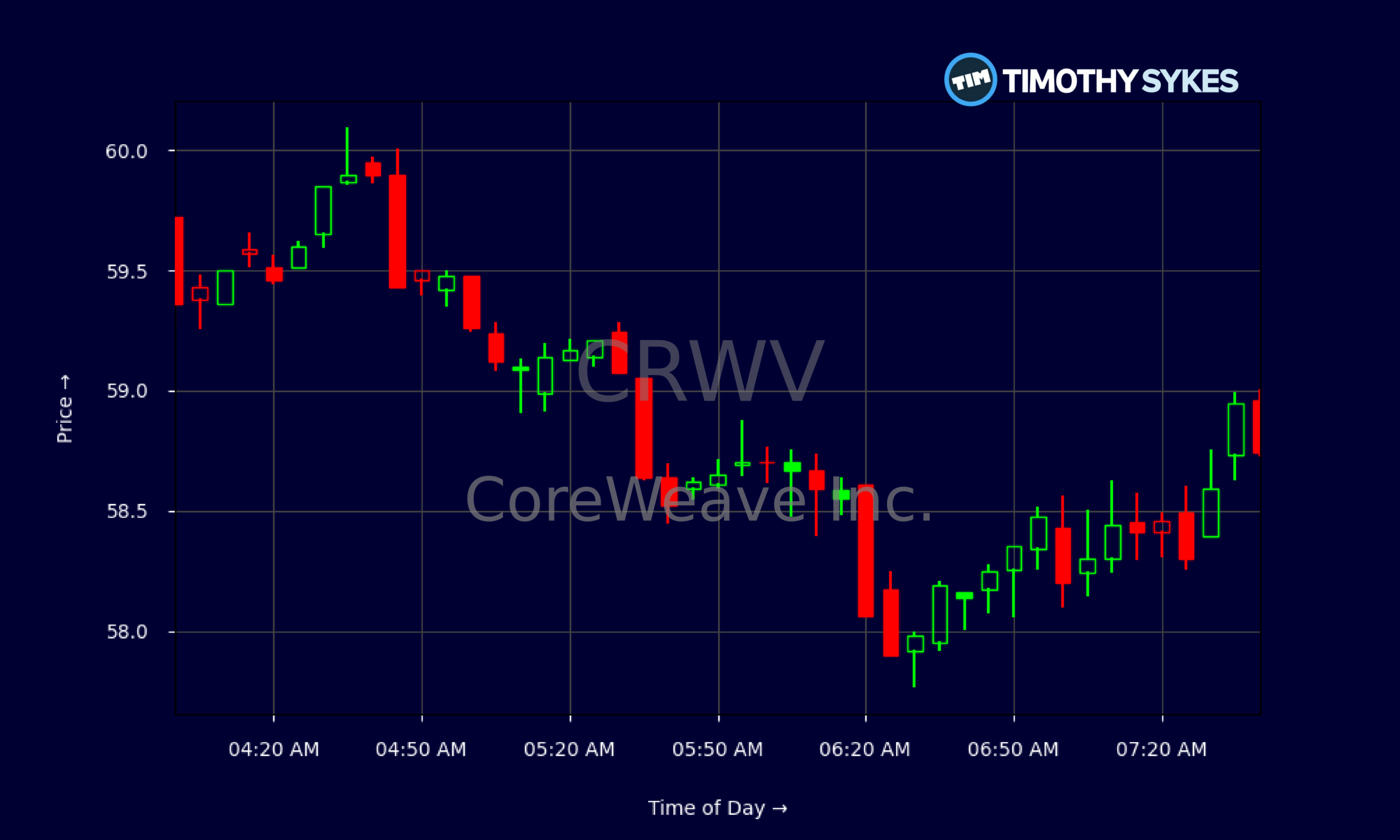
The intraday tape backs it up. Pre‑market prints cluster around $58–$59, showing heavy selling pressure below prior closes. For day traders, that gap zone between the high $50s and low $60s is now a key battlefield.
Fundamentally, CoreWeave is a classic high‑growth, high‑leverage AI infrastructure story. Revenue over the last period is about $5.13B, and gross margin is an eye‑popping 90.6%, but CRWV is still losing money. Net income sits at about -$626M, and profit margins are firmly negative. The company is plowing cash into data centers and hardware, which pushes free cash flow to roughly -$5.74B.
More Breaking News
Debt is the big shadow. Total debt to equity is 3.29, leverage ratio is 15.3, and the current ratio is just 0.5. That means CoreWeave relies heavily on borrowing while holding relatively thin short‑term liquidity. For traders, this combo — rapid revenue growth, huge capex, big losses, and heavy leverage — sets up a classic boom‑and‑bust trading profile.
Why Traders Are Watching CRWV Now
CoreWeave and its CRWV ticker are front and center because of one headline number: $3.3B. That is how much stock the three co‑founders have sold since the March 2025 IPO, including $2.4B in 2026 alone. When insiders unload that much, that fast, traders pay attention. The market did not shrug this off — CRWV dropped roughly 12% in the wake of the reports, a powerful one‑day move for a large AI name.
The selling does not happen in a vacuum. CoreWeave’s debt load and credit risk were already on the radar. The balance sheet shows over $27.5B in long‑term debt and more than $7.5B in current debt and capital lease obligations. Pair that with negative earnings and negative free cash flow, and traders start asking a hard question: are insiders bailing before the financing window tightens?
News flow ties that question directly to price action. Before the 12% collapse, CRWV was already down more than 5% premarket as the insider‑sale headlines hit. As the day wore on and more details filtered through, selling accelerated. At the same time, the market has been rotating out of high‑growth tech, especially richly valued AI and “neo‑cloud” names. That macro backdrop makes CoreWeave’s balance sheet look even heavier.
Now CRWV is under active scrutiny. Recent notes frame CoreWeave as a tell for the entire AI‑infrastructure space. When traders worry about AI multiples compressing or credit conditions tightening, CRWV gets hit. And yet, pockets of speculative flow remain. Wallstreetbets‑style trading has pushed the stock up 5.9% in one session, only to see it drop 3.9% premarket the next morning. More recently, CoreWeave has tagged along with modest 1%–4% rebounds across other retail‑favorite tech names. To active traders, this mix of macro fear, insider selling, and social‑media‑driven pops is exactly what fuels big intraday ranges — if you respect the risk.
Conclusion
For CRWV and CoreWeave, the story right now is tension between huge AI potential and mounting balance‑sheet and insider‑trust questions. On one side, the company prints strong revenue growth, very high gross margins, and big spending on infrastructure that could support future scale. On the other, CoreWeave burns cash, carries heavy leverage, and now faces a massive perceived overhang from $3.3B in founder sales since 2025.
The chart shows how that tension resolves in the short term. CRWV has broken down from the $80–$90 area into the low $60s, with pre‑market trading in the high $50s. Each bounce has been sold into. For momentum traders, that means CRWV is now a short‑term “trade the trend” name, not a blind dip‑buy. The key levels are simple: prior support near $60 and overhead resistance in the mid‑$60s and then $70.
Wallstreetbets‑driven swings add another layer of danger and opportunity. Fast spikes on social buzz, followed by equally fast dumps, will trap anyone who does not manage risk. As Tim Sykes likes to hammer home, “This content is for educational and research purposes only, but rule number one never changes — cut losses quickly.” As millionaire penny stock trader and teacher Tim Sykes says, “The goal is not to win every trade but to protect your capital and keep moving forward.” For CoreWeave and the CRWV ticker, that rule matters more than ever in this kind of high‑volatility, headline‑driven tape.
This is stock news, not investment advice. Timothy Sykes News delivers real-time stock market news focused on key catalysts driving short-term price movements. Our content is tailored for active traders and investors seeking to capitalize on rapid price fluctuations, particularly in volatile sectors like penny stocks. Readers come to us for detailed coverage on earnings reports, mergers, FDA approvals, new contracts, and unusual trading volumes that can trigger significant short-term price action. Some users utilize our news to explain sudden stock movements, while others rely on it for diligent research into potential investment opportunities.
Dive deeper into the world of trading with Timothy Sykes, renowned for his expertise in penny stocks. Explore his top picks and discover the strategies that have propelled him to success with these articles:
- Penny Stocks Trading Guide
- Best Penny Stocks Under $1 to Buy Today
- Top 8 Penny Stocks to Watch on Robinhood
Once you’ve got some stocks on watch, elevate your trading game with StocksToTrade the ultimate platform for traders. With specialized tools for swing and day trading, StocksToTrade will guide you through the market’s twists and turns.
Dig into StocksToTrade’s watchlists here:





Leave a reply