

XIAO-I Corporation stocks have been trading up by 25.0 percent after upbeat AI partnership news boosted investor optimism.
Key Takeaways
- Shares of AIXI have run from roughly $1.20 to near $3.00 this month, showing classic low-float momentum action with sharp spikes and deep pullbacks.
- Intraday trading in AIXI shows wild 5-minute swings above 20%, signaling heavy day-trader focus and thin liquidity.
- XIAO-I Corporation posts about $12.3M in revenue but carries negative equity and heavy liabilities, pointing to financial stress beneath the price action.
- With a price-to-sales ratio around 0.02, AIXI trades cheaply on revenue, but the weak balance sheet keeps this firmly in high-risk territory.
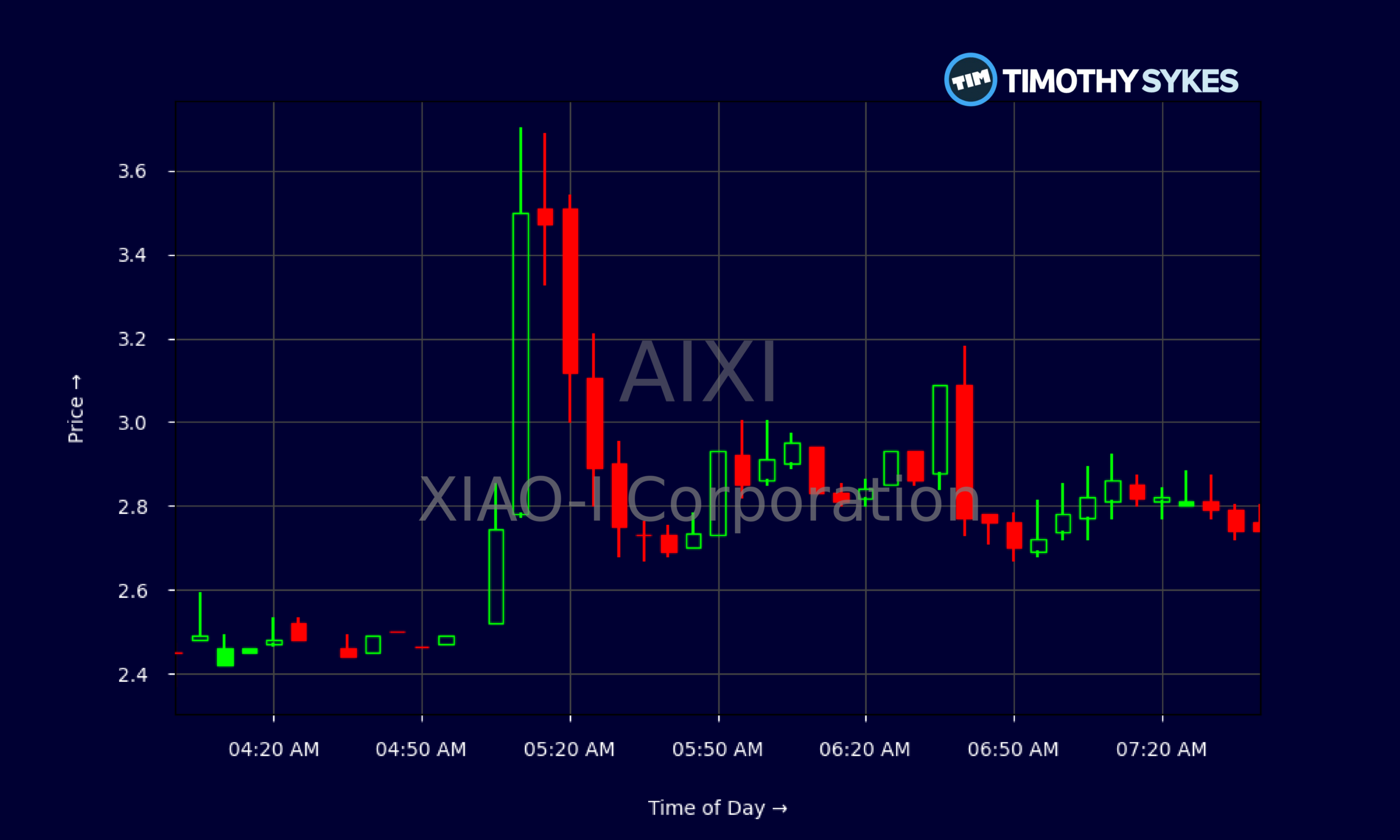
Live Update At 07:47:43 EDT: On Tuesday, October 20, 2026 XIAO-I Corporation stock [NASDAQ: AIXI] is trending up by 25.0%! Discover the key drivers behind this movement as well as our expert analysis in the detailed breakdown below.
Quick Financial Overview
AIXI, the U.S.-listed shares of XIAO-I Corporation, is trading like a textbook speculative AI small-cap. On the daily chart, AIXI has climbed from about $1.20 at the start of the period to recent closes in the low $2 range, with intraday highs pushing near $3 and even above. That’s more than a 100% move in weeks, with multiple big-range days where the stock traded from the $1s into the $3s and back.
Financially, XIAO-I Corporation reports revenue of roughly $12.3M on an enterprise value around $44.8M. That gives AIXI a price-to-sales multiple near 0.02, which is tiny for an AI-themed name. But the balance sheet tells a tougher story. Total assets sit near $15.9M, while total liabilities top $120.7M. Common stock equity is deeply negative at about -$100.6M, with retained earnings of roughly -$226.6M. Working capital is also heavily negative.
More Breaking News
For traders, that mix means AIXI is not a balance-sheet safety play. It’s a momentum vehicle tied to sentiment around XIAO-I Corporation and the broader AI space, where liquidity and hype can overpower fundamentals in the short term.
Why Traders Are Watching AIXI’s Volatile Price Swings
AIXI has become a classic battleground for short-term traders who thrive on volatility. The recent daily candles show repeated moves where the stock gaps up, rips, then fades hard. One session opened near $2.06, spiked above $3.20, then closed around $2.40. Another day saw AIXI trade from the low $3s up toward $3.76 and then wash out below $2.80 before bouncing. That is the kind of action where disciplined traders can do well — or blow up — in a single morning.
On the intraday 5-minute chart, the story is the same but zoomed in. AIXI ran from roughly $2.50 in premarket up toward $3.70 within minutes, then cracked back toward $3.00 and $2.80, with constant $0.20–$0.40 swings. For a sub-$3 stock, those are huge percentage moves. This tells you liquidity is thin, algos are active, and smaller orders can push price around.
From a technical standpoint, the $2.00 area has emerged as a rough pivot on the recent daily chart, with AIXI repeatedly bouncing above that zone after selloffs. The $3.20–$3.70 band stands out as a short-term resistance zone, where prior spikes have stalled. Traders watching XIAO-I Corporation are tracking those levels for potential breakouts or failed moves.
Because AIXI trades with a low price, AI theme, and heavy volatility, it fits the pattern many small-cap day traders on platforms like StocksToTrade scan for daily. The key is not falling in love with the story; this is about reading the tape, respecting risk, and letting the chart, not hope, guide the trade.
Conclusion
AIXI sits in a dangerous but potentially lucrative corner of the market. XIAO-I Corporation brings in real revenue in the low eight figures, yet the balance sheet is deeply upside down, with negative equity, heavy current liabilities, and negative retained earnings. On paper, AIXI looks distressed. In the market, though, AIXI trades like a momentum rocket tied to the broader excitement around AI and Chinese tech.
That disconnect between fundamentals and price action is exactly why experienced traders track names like AIXI. When the stock runs from $1.30 to above $3 in days, the chart becomes the primary tool. Risk management has to come first. Chasing spikes without a plan in a name like XIAO-I Corporation usually ends the same way — trapped at the top while smarter money sells into strength.
For newer traders studying AIXI, focus on the behavior: big gaps, wide intraday ranges, failed breakouts, and support around prior lows. Map your levels, size small, and be willing to walk away. As millionaire penny stock trader and teacher Tim Sykes, says, “Cut losses quickly, let profits ride, and don’t overtrade.”. As Tim Sykes likes to say, “The market rewards discipline, not hope.” AIXI is giving a live-fire lesson in that rule every day it’s on the scanner.
This is stock news, not investment advice. Timothy Sykes News delivers real-time stock market news focused on key catalysts driving short-term price movements. Our content is tailored for active traders and investors seeking to capitalize on rapid price fluctuations, particularly in volatile sectors like penny stocks. Readers come to us for detailed coverage on earnings reports, mergers, FDA approvals, new contracts, and unusual trading volumes that can trigger significant short-term price action. Some users utilize our news to explain sudden stock movements, while others rely on it for diligent research into potential investment opportunities.
Dive deeper into the world of trading with Timothy Sykes, renowned for his expertise in penny stocks. Explore his top picks and discover the strategies that have propelled him to success with these articles:
- Penny Stocks Trading Guide
- Best Penny Stocks Under $1 to Buy Today
- Top 8 Penny Stocks to Watch on Robinhood
Once you’ve got some stocks on watch, elevate your trading game with StocksToTrade the ultimate platform for traders. With specialized tools for swing and day trading, StocksToTrade will guide you through the market’s twists and turns.
Dig into StocksToTrade’s watchlists here:



Leave a reply