

Waste Connections Inc. stocks have been trading up by 8.93 percent following strong earnings and upbeat growth guidance.
Key Takeaways
- Q3 adjusted EPS of $1.58 topped expectations near $1.52–$1.54, with $2.64B revenue, a 34% adjusted EBITDA margin, and better landfill volumes driving Waste Connections’ operating strength.
- Full-year 2026 revenue outlook inched up to about $10.09B, above prior guidance but a touch under Street hopes around $10.14B, signaling steady but not explosive growth.
- The company raised its regular quarterly dividend 10% to $0.385 per share and plans annual October reviews, underscoring confidence in recurring cash flow.
- Major Wall Street firms cut WCN price targets but kept Strong Buy, Outperform, or Overweight ratings, pointing to resilient pricing and attractive valuations in solid waste.
- Deutsche Bank remains bullish on Waste Connections and sector peers, arguing strong pricing and improving volumes should offset diesel fuel headwinds, with EBITDA the key metric to track.
Live Update At 12:32:52 EDT: On Thursday, October 22, 2026 Waste Connections Inc. stock [NYSE: WCN] is trending up by 8.93%! Discover the key drivers behind this movement as well as our expert analysis in the detailed breakdown below.
Quick Financial Overview
WCN has been grinding higher for weeks, then exploded on the latest numbers. The stock climbed from around $155 in early 2026/09 to roughly $183 by 2026/10/22, a powerful uptrend for a defensive name. That’s not meme-stock crazy, but for a steady waste operator like Waste Connections, it’s a real move.
Earnings back it up. WCN delivered Q3 EPS of $1.58, beating consensus near $1.52–$1.54, on revenue of $2.64B versus about $2.61B expected. A 34% adjusted EBITDA margin and improving landfill volumes show pricing power is real, not just accounting noise.
On the balance sheet, Waste Connections runs with leverage but not recklessly. Total debt-to-equity sits near 1.22 and interest coverage around 7.7, enough cushion for a cyclical hit. Profitability is solid, with EBITDA margin near 27.7% and net margin over 10%. The P/E near 38 and price-to-sales around 2.8 tell traders WCN is a quality, premium-priced story. That usually means dips, not crashes, when sentiment cools.
More Breaking News
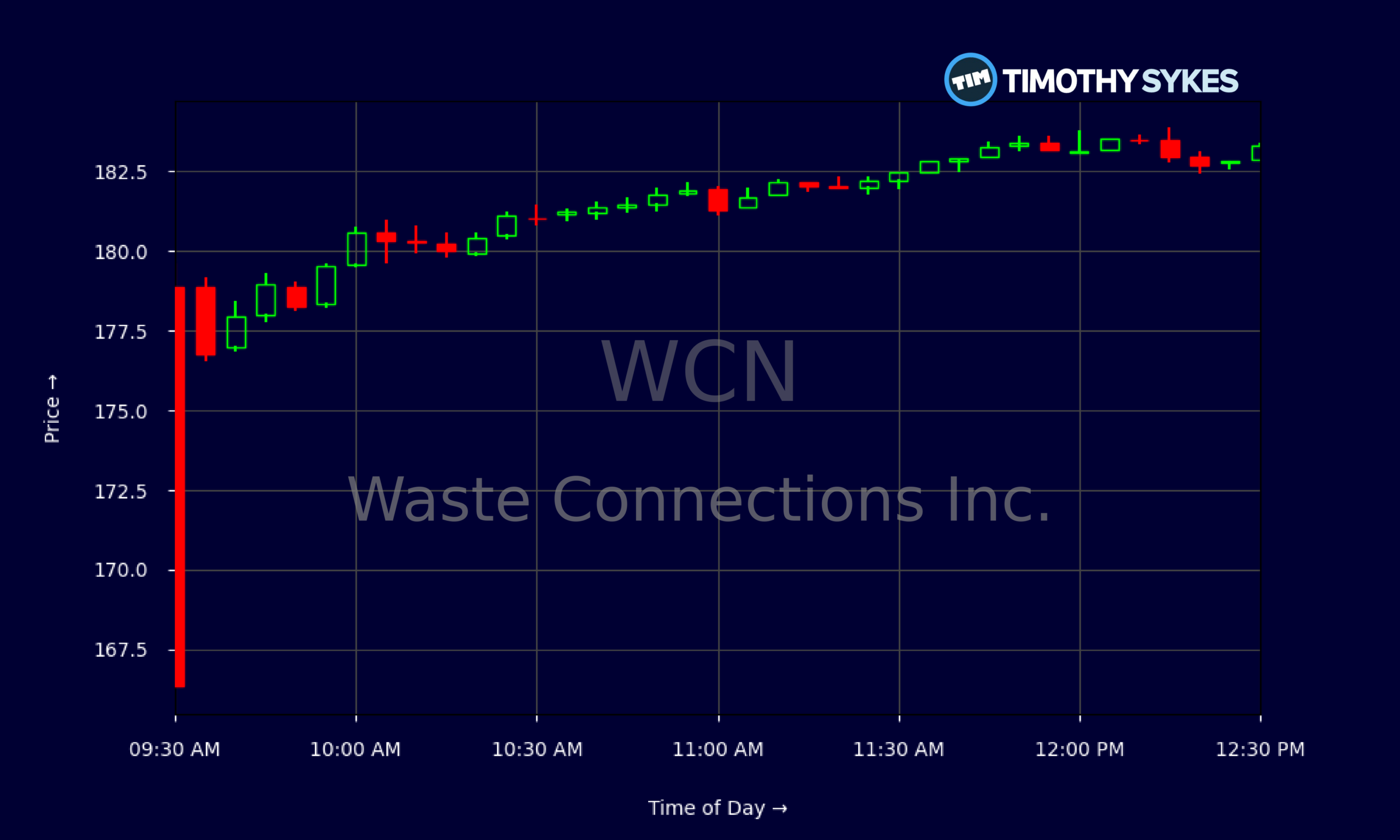
Intraday, WCN’s 5‑minute chart around the earnings move shows a clean gap and hold above $180, with tight consolidation between $181 and $183. For active traders, that kind of controlled strength often signals institutions are in control rather than day-trader froth.
Why Traders Are Watching WCN Right Now
Waste Connections is giving traders a classic “steady compounder with momentum” setup. Q3 adjusted EPS of $1.58 and $2.64B in revenue not only beat expectations, they advanced nicely from last year’s $1.44 EPS and $2.46B revenue. That year-over-year growth matters because WCN is not a tiny high-flyer; it’s a large waste operator that usually moves in inches, not miles.
Guidance is the second pillar of the current move. Waste Connections nudged its 2026 revenue outlook up to about $10.09B, above its prior guide and, in one key report, even above Street consensus. Other commentary pegs that same $10.09B just shy of roughly $10.14B expected, which explains why the stock dipped a bit in after-hours trading on 2026/10/21. Expectations were high; the print was good, not perfect.
For disciplined traders, that slight disconnect between strong fundamentals and lukewarm immediate reaction can be opportunity. WCN signaled at least $1.4B in double-digit growth adjusted free cash flow and continues to target solid EBITDA and net income, while still funding capex to expand the business. That’s a rare mix: growth, cash, and reinvestment.
The dividend move is a third catalyst. Waste Connections lifted its quarterly dividend 10% to $0.385 per share and aims to review it every October. WCN is clearly telling the market its cash engine is durable. For swing traders, ex-dividend dates and dividend hikes often create repeatable patterns — short-term pullbacks into ex-date, then grind higher as income-focused money rotates in.
Analyst action around WCN also shapes the tape. Raymond James, Scotiabank, BMO Capital, Morgan Stanley, and JPMorgan all trimmed price targets but kept bullish ratings like Strong Buy, Outperform, and Overweight. That’s classic fine-tuning, not a thesis break. The message: pricing is strong, volumes are mixed, diesel is a headwind, but the Waste Connections story still works.
Deutsche Bank’s positive stance on WCN alongside Waste Management and Republic Services adds a sector tailwind. When the whole group is seen as fundamentally sound, pullbacks in any one name tend to be short-lived, especially in a low-beta operator like Waste Connections.
Conclusion
For traders who like clean stories backed by real numbers, WCN is checking a lot of boxes. Waste Connections just beat Q3 expectations, raised its 2026 revenue outlook to about $10.09B, and confirmed a business that throws off serious cash — over $430M of free cash flow last quarter alone. At the same time, the company boosted its dividend 10% to $0.385 and set the tone for regular October hikes.
Yes, some firms cut their price targets on WCN, and guidance did not blow the roof off Street estimates in every model. That’s exactly why the after-hours reaction was muted. But across Raymond James, Scotiabank, BMO Capital, Morgan Stanley, JPMorgan, and Deutsche Bank, the core call stays the same: Waste Connections is a high-quality, defensive grower with resilient pricing and solid EBITDA.
Active traders should treat WCN like any momentum name in a crowded field — respect the trend, respect the premiums, and never marry the stock. As Tim Sykes likes to say, “The market doesn’t care about your opinion, only your discipline — cut losses quickly and focus on patterns that actually repeat.” As millionaire penny stock trader and teacher Tim Sykes says, “Embrace the journey, the ups and downs; each mistake is a lesson to improve your strategy.”. With WCN, the pattern right now is steady execution, guided growth, and a rising dividend. The job for traders is to map that narrative onto the chart and trade the levels, not the hype.
This is stock news, not investment advice. Timothy Sykes News delivers real-time stock market news focused on key catalysts driving short-term price movements. Our content is tailored for active traders and investors seeking to capitalize on rapid price fluctuations, particularly in volatile sectors like penny stocks. Readers come to us for detailed coverage on earnings reports, mergers, FDA approvals, new contracts, and unusual trading volumes that can trigger significant short-term price action. Some users utilize our news to explain sudden stock movements, while others rely on it for diligent research into potential investment opportunities.
Dive deeper into the world of trading with Timothy Sykes, renowned for his expertise in penny stocks. Explore his top picks and discover the strategies that have propelled him to success with these articles:
- Penny Stocks Trading Guide
- Best Penny Stocks Under $1 to Buy Today
- Top 8 Penny Stocks to Watch on Robinhood
Once you’ve got some stocks on watch, elevate your trading game with StocksToTrade the ultimate platform for traders. With specialized tools for swing and day trading, StocksToTrade will guide you through the market’s twists and turns.
Dig into StocksToTrade’s watchlists here:





Leave a reply