

Strategy Inc stocks have been trading up by 7.57 percent following news of a transformative, margin-boosting strategic partnership.
Key Takeaways For Active Traders
- Management at MicroStrategy (MSTR) kept building its bitcoin stack, adding 250 BTC and 267 BTC in separate buys for a combined $43.6M, pushing holdings to about 848,517 BTC tied to roughly $64.02B in spend.
- Liquidity at MSTR remains sizable, with USD reserves near $4.8B and hundreds of millions in cash, even after stock repurchases, bitcoin buys, and preferred dividend payments this month.
- The board at MicroStrategy boosted its digital credit securities repurchase authorization to $3B, with $1.16B still unused, and the stock popped around 2% in premarket trading on that headline.
- Clear Street, Cantor Fitzgerald, and Barclays all lifted price targets on MSTR to $211, $208, and $175, backing bullish ratings and pointing to balance-sheet flexibility and sector strength.
- Strategy Inc sold about 125,000 MSTR shares via its ATM for $21M, then recycled that capital plus $0.5M in cash into 250 BTC, while keeping large ATM and buyback firepower in reserve.
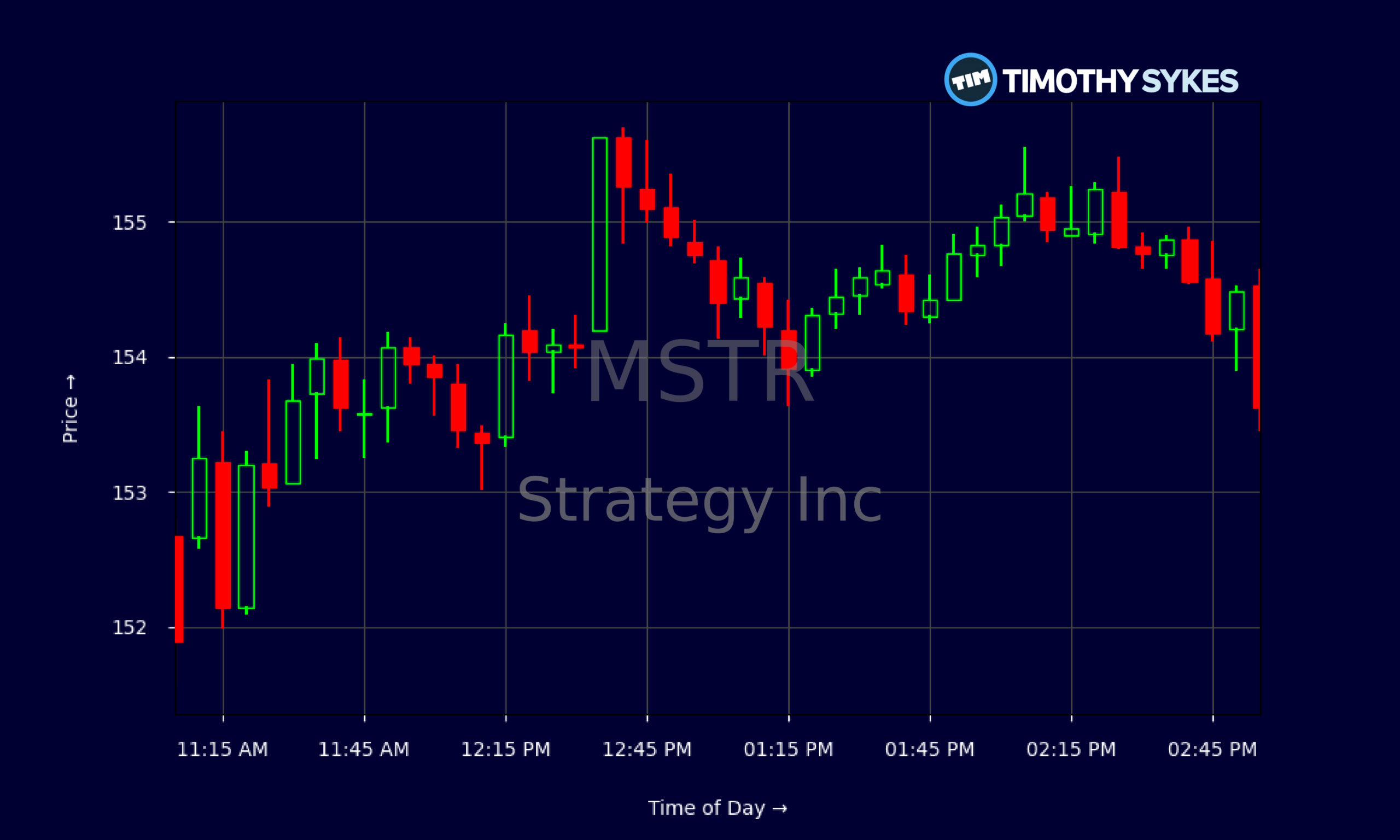
Live Update At 15:02:21 EDT: On Wednesday, October 21, 2026 Strategy Inc stock [NASDAQ: MSTR] is trending up by 7.57%! Discover the key drivers behind this movement as well as our expert analysis in the detailed breakdown below.
Quick Financial Overview
MSTR trades like a leveraged bitcoin tracker with a software company attached, and the recent tape backs that up. Over the past several weeks, the stock has chopped between roughly $152 and $170, closing near $153.49 most recently after bouncing from an intraday low around $143.93. That kind of $10 intraday range shows why MSTR is a day-trader favorite — it moves.
Zoom in to the 5‑minute action and you see a steady intraday trend higher from the mid‑$140s at the open toward the mid‑$150s before a late-day fade, classic momentum with controlled pullbacks. Liquidity is solid, and the price held above morning lows all session, hinting at dip buyers supporting the name.
More Breaking News
Fundamentals tell a different story. MicroStrategy’s core software business is modest, with about $477.2M in annual revenue and a high gross margin near 67.6%, but headline earnings are deeply negative thanks to its bitcoin-centered capital structure and special items. A sky‑high price‑to‑sales ratio above 130 shows traders are not paying for software; they are paying for MSTR’s 848,000‑plus BTC exposure and capital strategy. For short-term trading, price reacts more to bitcoin and balance-sheet headlines than to traditional earnings metrics.
Why Traders Are Watching MSTR’s Aggressive Bitcoin And Buyback Moves
MicroStrategy has doubled down again on its role as a corporate bitcoin whale, and traders are locked in. In mid‑October, MSTR disclosed two new bitcoin batches: 250 coins for $21.5M at an average $86,194, and 267 coins for $22.1M at about $82,900. That takes its total stack to roughly 848,517 BTC, with around $64.02B spent. For active traders, that sheer size means MSTR is now a high‑beta proxy on every major bitcoin swing.
At the same time, the balance sheet shows this is not a reckless, all‑in gamble. Strategy reported USD reserves around $4.88B with $640.5M in deployable cash as of 2026/10/11, and a week later still had $4.83B in reserves and $447.3M in cash after dropping $193.1M on stock buybacks, paying $45.5M in preferred dividends, and spending small amounts on additional BTC. MSTR is clearly managing two levers at once: accumulate bitcoin and actively support the equity and preferred complex.
The board’s move to lift its digital credit securities repurchase program from $2B to $3B, leaving $1.16B of authorization unused as of 2026/10/18, is a loud confidence signal. Traders noticed — MSTR shares traded about 2% higher premarket on that headline. Analyst desks are lining up on the bullish side too. Clear Street raised its target to $211, citing improved financing flexibility and room to drive bitcoin‑per‑share growth. Cantor Fitzgerald bumped its target to $208, and Barclays raised to $175, all keeping bullish ratings on MSTR.
Add in Strategy Inc’s sale of roughly 125,000 MSTR shares via its ATM for $21M — immediately recycled into 250 BTC while still holding large unused ATM and buyback capacity — and you see the playbook. Slight dilution near term, more bitcoin per share over time, and aggressive use of capital tools. For traders, that mix can fuel sharp sentiment swings both ways.
Conclusion
MSTR remains one of the purest high‑octane trading vehicles tied to bitcoin on the U.S. market. The company has turned its balance sheet into a leveraged BTC machine, with more than 848,000 coins on the books and billions in USD reserves and cash to keep playing offense. Recent moves — from topping up the bitcoin stack to expanding a $3B digital securities buyback plan with $1.16B still ready to deploy — show MicroStrategy’s management leaning into volatility, not hiding from it.
On the tape, MSTR’s wide daily ranges and responsive intraday trends give short‑term traders plenty of opportunity. In the background, analyst target hikes from Clear Street, Cantor Fitzgerald, and Barclays underline a rare thing in this market: consistent Street support for a controversial strategy. Upcoming earnings and shareholder communications add more catalysts that can spark big gaps and trend days in either direction.
Traders still need to respect the risk. MSTR’s fundamentals are dominated by bitcoin price and complex financing, not traditional software earnings. As Tim Sykes likes to remind students, “Risk management isn’t optional — it’s your only real edge.” As millionaire penny stock trader and teacher Tim Sykes, says, “It’s not about how much money you make; it’s about how much money you keep.” For MicroStrategy, that means mapping BTC levels, tracking capital moves, and being ready to cut losses fast when the momentum turns. This article is for educational and research purposes only and is not investment advice.
This is stock news, not investment advice. Timothy Sykes News delivers real-time stock market news focused on key catalysts driving short-term price movements. Our content is tailored for active traders and investors seeking to capitalize on rapid price fluctuations, particularly in volatile sectors like penny stocks. Readers come to us for detailed coverage on earnings reports, mergers, FDA approvals, new contracts, and unusual trading volumes that can trigger significant short-term price action. Some users utilize our news to explain sudden stock movements, while others rely on it for diligent research into potential investment opportunities.
Dive deeper into the world of trading with Timothy Sykes, renowned for his expertise in penny stocks. Explore his top picks and discover the strategies that have propelled him to success with these articles:
- Penny Stocks Trading Guide
- Best Penny Stocks Under $1 to Buy Today
- Top 8 Penny Stocks to Watch on Robinhood
Once you’ve got some stocks on watch, elevate your trading game with StocksToTrade the ultimate platform for traders. With specialized tools for swing and day trading, StocksToTrade will guide you through the market’s twists and turns.
Dig into StocksToTrade’s watchlists here:





Leave a reply