

Stanley Black & Decker Inc. stocks have been trading up by 16.19 percent following upbeat demand and margin-improvement outlooks.
Key Takeaways Traders Need On SWK
- Wall Street is trimming price targets on Stanley Black & Decker, with Mizuho and Wells Fargo both nudging their numbers lower while leaning toward Hold or cautious Outperform stances.
- The company kept its quarterly dividend at $0.84 per share, signaling confidence in cash flow even as the macro backdrop stays choppy for tools and industrial names.
- DEWALT’s new Tool Connect Partner Network pushes SWK deeper into connected, data-driven jobsite tracking to tackle theft and improve fleet visibility.
- DEWALT’s DALE drilling robot, built with August Robotics, is racking up awards from TIME and Fast Company, spotlighting SWK’s push into high-tech data center construction.
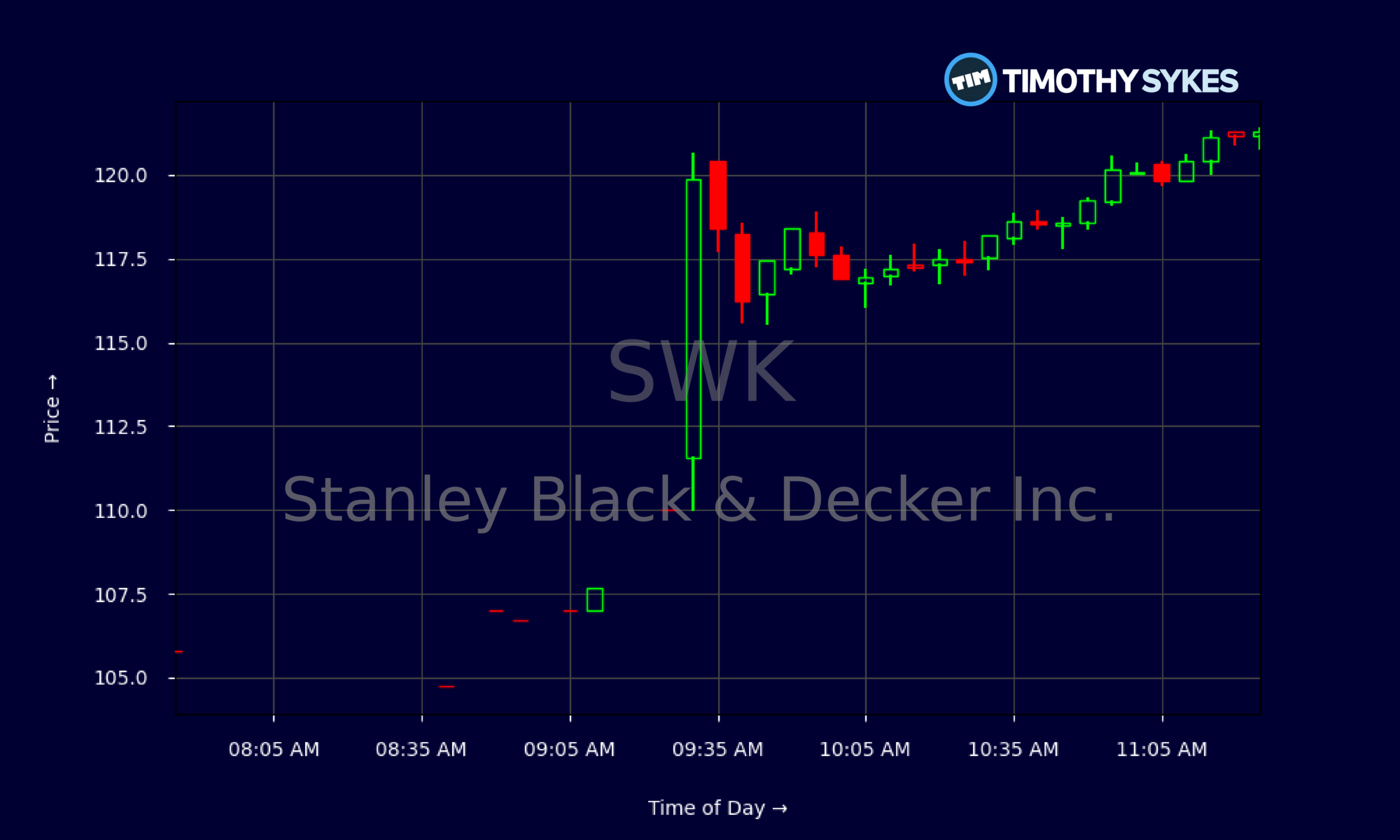
Live Update At 11:32:28 EST: On Wednesday, November 04, 2026 Stanley Black & Decker Inc. stock [NYSE: SWK] is trending up by 16.19%! Discover the key drivers behind this movement as well as our expert analysis in the detailed breakdown below.
Quick Financial Overview
SWK has been trading like a slow grind that suddenly hit a turbo button. Over the past few weeks, Stanley Black & Decker climbed from around $88–$95 into the low $100s, then ripped to a recent close near $121.55. That move put the stock above the average analyst target near $100, a key tell that momentum traders have taken control in the short term.
On the intraday tape, SWK shows a classic trend day. The stock opened near $111.56, briefly dipped, then stair-stepped higher into the $120s with shallow pullbacks. That intraday structure tells traders buyers were in charge all session, not just reacting to a single headline spike.
More Breaking News
Fundamentally, Stanley Black & Decker is still a turnaround and normalization story. Revenue over the last year sits around $15.1B, with a solid 49.3% gross margin but only a 7% EBIT margin and thin pretax margin at 1.8%. The headline P/E near 36.3 looks rich for an industrial, which explains the Hold ratings, but SWK is throwing off real cash — about $763.1M in operating cash flow and $698.2M in free cash flow last quarter. Debt is manageable with total debt-to-equity at 0.53 and a current ratio of 1.4, giving SWK some breathing room while it rebuilds margins.
Why Traders Are Watching SWK Right Now
The story around SWK is a tug-of-war between chart momentum and cautious Wall Street models. On the cautious side, Mizuho cut its Stanley Black & Decker price target from $110 to $105 while still tagging the stock as Outperform. That signals they see upside versus peers but are dialing back expectations ahead of Q3 earnings. Wells Fargo went even more conservative, trimming its target from $95 to $90 and reinforcing a Hold view consistent with the roughly $100 average target.
For active traders, that backdrop usually caps how far a re-rating run can stretch before numbers need to catch up. When a name like SWK trades above the consensus target, every disappointing datapoint becomes a potential “fade the rip” setup.
But SWK is not trading like a broken story. Management just reaffirmed the $0.84 quarterly dividend, payable 2026/12/22 to holders of record on 2026/12/01. That payout, roughly a 3%+ yield, tells the market Stanley Black & Decker believes its cash engine is stable enough to keep sending money back to shareholders.
On the growth and narrative side, the DEWALT brand is doing heavy lifting. The Tool Connect Partner Network — built with Geotab, Trackunit, and BoxLock — positions SWK inside what it calls the largest connected jobsite asset-tracking ecosystem. That is not just hardware; it hints at recurring software and data revenue. Then there is DALE, the autonomous downward drilling robot for data center construction, built with August Robotics. Getting named to TIME’s 2026 Best Inventions list and Fast Company’s Next Big Things in Tech puts Stanley Black & Decker in rare territory for a “tool company.” Add in the CRAFTSMAN holiday advent calendar and the St. Jude NASCAR partnership, and you see a company leaning on brand power and innovation, not just price cuts, to drive demand.
Conclusion
Right now SWK sits at an interesting crossroads for traders. On one hand, the stock has outrun the Street’s average target, fueled by a strong multi-day trend and a clean intraday breakout pattern. On the other, analysts like Mizuho and Wells Fargo are easing price targets and sticking with Hold-style language, effectively telling the market: “Prove it in the numbers.”
Under the hood, Stanley Black & Decker is showing progress. The latest quarter delivered solid operating income, positive net income, and hefty free cash flow helped by a business sale. Margins are still rebuilding, but a 49.3% gross margin leaves room to expand EBIT if restructuring sticks. The balance sheet is not pristine, yet the company is comfortable enough to keep that $0.84 dividend flowing, which often acts as a floor when volatility spikes.
The wild card is the innovation pipeline. DEWALT’s Tool Connect ecosystem and the award‑winning DALE robot show SWK reaching beyond traditional cyclical tools into connected, higher‑value solutions tied to data centers and digital jobsite management. That’s the kind of story that, if management sells it well at Baird’s 2026 Global Industrial Conference, can keep traders engaged even through pullbacks.
For active traders tracking SWK, this is textbook homework territory. As millionaire penny stock trader and teacher Tim Sykes, says, “Preparation plus patience leads to big profits.” As Tim Sykes likes to say, “The market rewards preparation, not hope — study the catalysts, study the chart, and always be ready to cut losses fast.” This article is for educational and research purposes only, but the setup around Stanley Black & Decker gives plenty for disciplined traders to study.
This is stock news, not investment advice. Timothy Sykes News delivers real-time stock market news focused on key catalysts driving short-term price movements. Our content is tailored for active traders and investors seeking to capitalize on rapid price fluctuations, particularly in volatile sectors like penny stocks. Readers come to us for detailed coverage on earnings reports, mergers, FDA approvals, new contracts, and unusual trading volumes that can trigger significant short-term price action. Some users utilize our news to explain sudden stock movements, while others rely on it for diligent research into potential investment opportunities.
Dive deeper into the world of trading with Timothy Sykes, renowned for his expertise in penny stocks. Explore his top picks and discover the strategies that have propelled him to success with these articles:
- Penny Stocks Trading Guide
- Best Penny Stocks Under $1 to Buy Today
- Top 8 Penny Stocks to Watch on Robinhood
Once you’ve got some stocks on watch, elevate your trading game with StocksToTrade the ultimate platform for traders. With specialized tools for swing and day trading, StocksToTrade will guide you through the market’s twists and turns.
Dig into StocksToTrade’s watchlists here:





Leave a reply