

Rivian Automotive Inc. stocks have been trading up by 5.68 percent amid upbeat sentiment on accelerating EV production and deliveries.
Key Takeaways For RIVN Traders
- Q3 revenue around $2.15–$2.16B topped the roughly $2.0B consensus, while RIVN’s adjusted loss of $0.48 per share beat expectations and year‑ago levels.
- Record Q3 production and deliveries rose about 45% year over year, with the R2 compact SUV finishing its first full sales quarter as Rivian’s best‑selling vehicle.
- FY26 guidance calls for 67,000–70,000 vehicle deliveries but adjusted EBITDA still deeply negative at about -$1.85B to -$1.75B, underscoring ongoing cash burn.
- Rivian is buying Third Dimension AI to speed up autonomy development with in‑house 3D simulation and synthetic data for driver‑assist and future robotaxi programs.
- A software‑defined vehicle platform co‑developed with Volkswagen Group Technologies and NXP is slated for 2027, reinforcing RIVN’s long‑term tech roadmap.
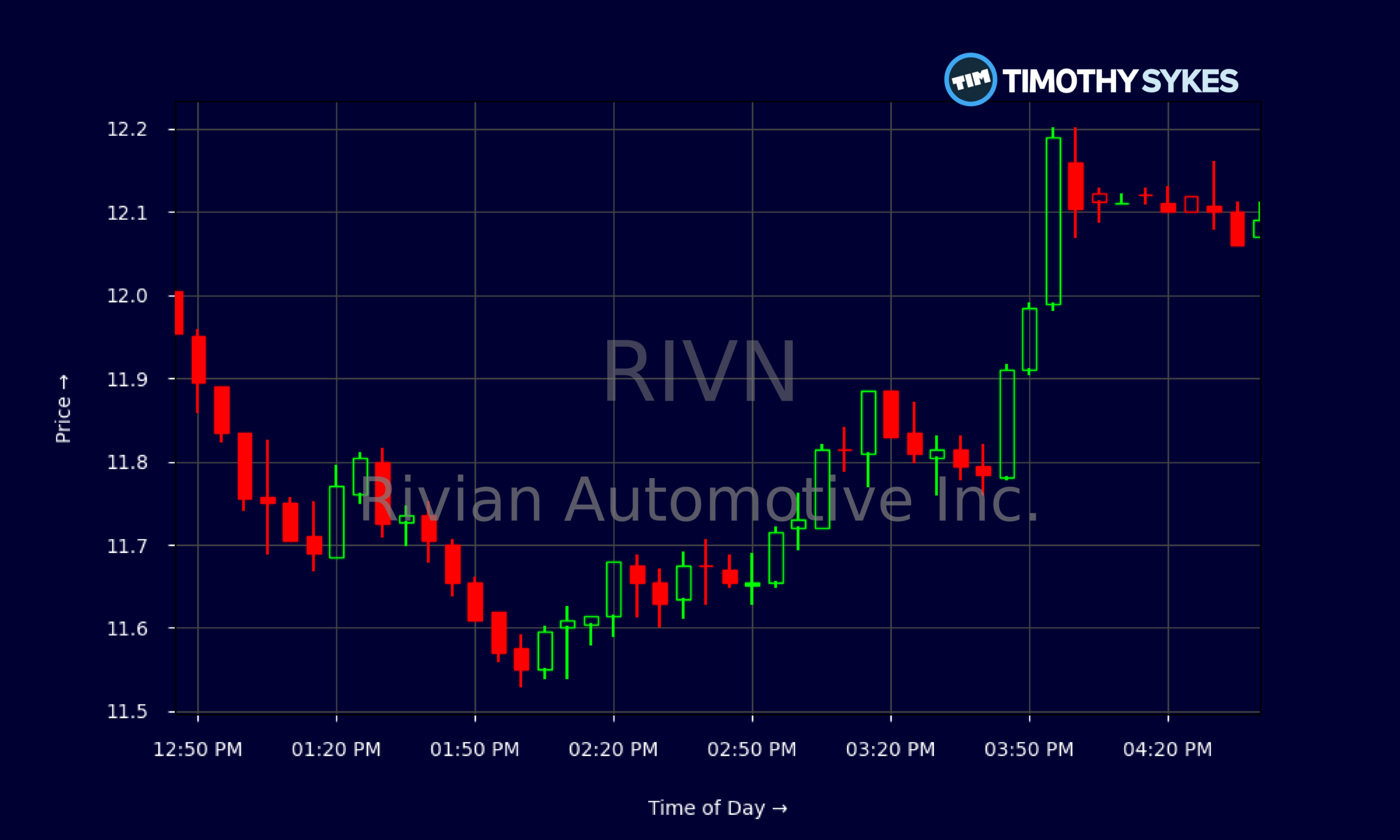
Live Update At 16:46:44 EDT: On Friday, October 30, 2026 Rivian Automotive Inc. stock [NASDAQ: RIVN] is trending up by 5.68%! Discover the key drivers behind this movement as well as our expert analysis in the detailed breakdown below.
Quick Financial Overview
RIVN just printed the kind of quarter that wakes up a sleepy tape. Rivian Automotive reported Q3 revenue of about $2.15–$2.16B, beating the roughly $2.0B Wall Street bar. On the bottom line, an adjusted loss of $0.48 per share beat expectations and improved from last year’s $0.65 loss. Traders noticed — RIVN traded up roughly 5.5% after hours on the release.
Under the hood, the business is still far from profitable. Profit margins are steeply negative, with EBIT margin near -50% and profit margin around -55%. Return on equity is deep in the red, showing that Rivian is still paying the price of scaling an auto business from scratch.
But cash strength matters. RIVN finished the quarter with about $3.5B in cash and roughly $5.5B in cash, equivalents, and short‑term investments, backed by a current ratio around 2.1. That gives Rivian Automotive some breathing room as it ramps the R2 platform and continues heavy R&D on autonomy and software.
More Breaking News
On the chart, RIVN has pulled back from mid‑October highs near $14.60 to close around $12.16 on 2026/10/30. The daily candles show a grinding downtrend followed by a short‑term bounce off the $11.40–$11.50 area. Intraday, the latest 5‑minute action shows a steady push from the low $11.70s up through $12.20, then consolidating just above $12.10 into the close — classic post‑news squeeze and hold. For active RIVN traders, that combo of improving numbers, strong volume, and higher lows sets up a battleground around the $12–$13 zone.
Why Traders Are Watching RIVN Right Now
RIVN is back on momentum screens because the story finally has both growth and a clearer tech angle. Rivian Automotive posted record Q3 production and deliveries, up about 45% year over year. That is not small, incremental progress — that is a scale move. Management also reaffirmed 2026 delivery guidance and highlighted that the R2, its smaller and more accessible SUV, just finished its first full quarter of sales and is already the company’s best‑selling model.
For traders, that matters more than any slide deck. It says demand is shifting toward the R2, which aligns with a broader EV trend: cheaper, smaller, and easier to build usually wins the volume game. If RIVN keeps leaning into the R2 mix, it can work down unit costs faster and give the margins a fighting chance.
At the same time, RIVN is pushing hard into autonomy and software. The acquisition of Third Dimension AI brings in‑house a 3D spatial simulation and synthetic data platform. In plain English, Rivian Automotive wants to test driver‑assist and future self‑driving systems in a virtual world at massive scale instead of relying only on costly real‑world miles. That can speed up development and cut some costs per feature iteration.
Add in the Volkswagen Group Technologies joint venture. RIVN and VW are co‑developing a zonal, software‑defined vehicle architecture using NXP’s S32K5 chips, with production targeted for 2027. This is not a quick win, but it tells traders that Rivian sees its edge in being an “AI‑defined EV” company, not just another hardware‑heavy truck maker. The more RIVN leans into software and data, the more leverage it has if volumes keep climbing.
There are side stories too. A Rivian delivery van spotted in Walmart+ branding hints at possible commercial demand, though nothing is confirmed. At the macro level, talk of tariff relief for North American auto production creates a slightly friendlier backdrop for RIVN’s U.S. manufacturing footprint. None of these are hard catalysts yet, but they feed the “optionality” narrative traders love during an up‑move.
Conclusion
For all the excitement, RIVN is still a work in progress — and traders need to treat it that way. Rivian Automotive is guiding to 67,000–70,000 vehicle deliveries in FY26, yet it still expects adjusted EBITDA losses between about -$1.85B and -$1.75B. The cash‑flow statement reinforces that reality: operating cash burn was roughly $758M in the latest quarter, with free cash flow around -$1.12B. Equity raises, like the recent $1.32B common stock issuance, remain part of the playbook.
That is why price action is so important here. RIVN’s recent bounce from the low $11s toward $12+ came on the back of real numbers: better‑than‑expected revenue, narrower losses, and a 45% jump in production and deliveries. If the stock holds above recent support and starts building higher lows, traders may lean into the idea that the worst of the execution risk is behind Rivian Automotive, at least for this phase of the ramp.
At the same time, the AI and autonomy push — from Third Dimension AI to the Volkswagen software‑defined platform — gives RIVN a story that can attract momentum money whenever tech narratives heat up. But price always comes first.
Tim Sykes loves to remind traders, “Patterns repeat, but only those who study them are ready.” As millionaire penny stock trader and teacher Tim Sykes, says, “There is always another play around the corner; don’t chase just because you feel FOMO.”. The RIVN setup is exactly that kind of test: a high‑growth EV name with improving numbers, big cash burn, and a chart trying to turn the corner. Study the trends, respect the risks, and let the price action, not the hype, guide your trading decisions.
This is stock news, not investment advice. Timothy Sykes News delivers real-time stock market news focused on key catalysts driving short-term price movements. Our content is tailored for active traders and investors seeking to capitalize on rapid price fluctuations, particularly in volatile sectors like penny stocks. Readers come to us for detailed coverage on earnings reports, mergers, FDA approvals, new contracts, and unusual trading volumes that can trigger significant short-term price action. Some users utilize our news to explain sudden stock movements, while others rely on it for diligent research into potential investment opportunities.
Dive deeper into the world of trading with Timothy Sykes, renowned for his expertise in penny stocks. Explore his top picks and discover the strategies that have propelled him to success with these articles:
- Penny Stocks Trading Guide
- Best Penny Stocks Under $1 to Buy Today
- Top 8 Penny Stocks to Watch on Robinhood
Once you’ve got some stocks on watch, elevate your trading game with StocksToTrade the ultimate platform for traders. With specialized tools for swing and day trading, StocksToTrade will guide you through the market’s twists and turns.
Dig into StocksToTrade’s watchlists here:





Leave a reply