

Regeneron Pharmaceuticals Inc. stocks have been trading up by 13.33 percent following strong positive sentiment around its latest drug developments.
What Traders Need To Know
- Nearly four-year C-POST data show Libtayo cuts risk of death by up to 37% and maintains disease-free survival in high-risk skin cancer, reinforcing Regeneron Pharmaceuticals Inc.’s oncology growth story.
- Canaccord lifted its REGN price target to $922 ahead of Q3, citing Dupixent strength and future C5 program catalysts, while flagging some Dupixent lifecycle risk.
- TD Cowen raised its REGN target to $980 on stronger Eylea HD demand projections into Q3 and Q4, signaling confidence in the core retinal franchise.
- A BARDA deal extension adds about $270M of Inmazeb Ebola supply revenue through 2031, giving REGN a longer runway of government-backed cash flows.
- A positive CHMP opinion for less frequent Libtayo dosing in the EU could support better adherence and incremental uptake if the European Commission signs off.
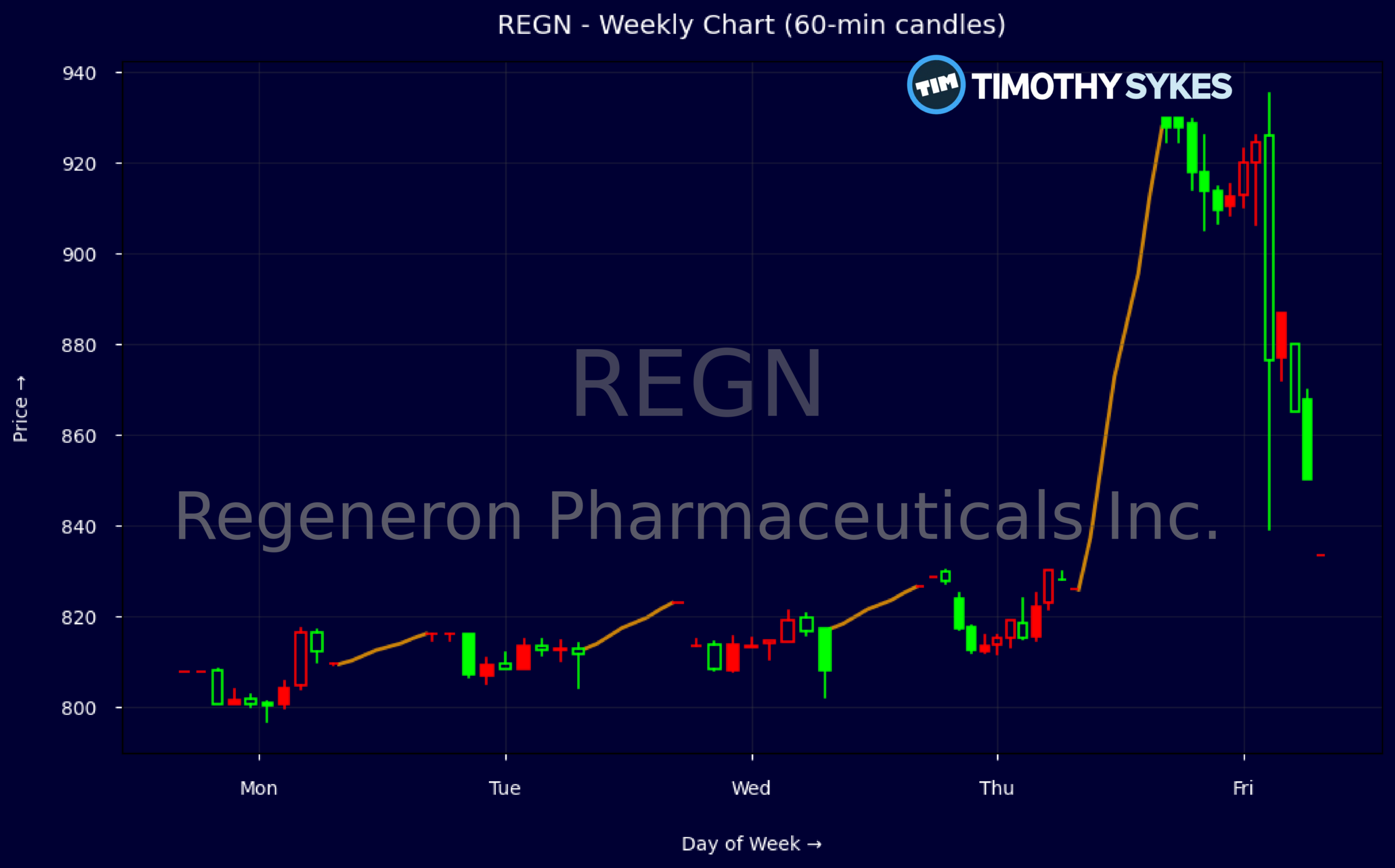
Weekly Update Oct 26 – Oct 30, 2026: On Friday, October 30, 2026 Regeneron Pharmaceuticals Inc. stock [NASDAQ: REGN] is trending up by 13.33%! Discover the key drivers behind this movement as well as our expert analysis in the detailed breakdown below.
Healthcare industry expert:
Analyst sentiment – positive
Regeneron sits in the top tier of large‑cap biotech on both profitability and balance sheet strength. EBIT margin above 30% and gross margin near 89% significantly exceed biotech averages, while mid‑teens ROE and ROIC confirm efficient capital deployment. Revenue growth in the mid‑single digits understates underlying momentum when adjusting for Eylea dynamics and collaboration accounting. Leverage is de minimis (D/E ~0.09, interest coverage ~95x), liquidity is strong (current ratio 3.3x), and robust free cash flow comfortably funds R&D, buybacks, and a nascent dividend.
Technically, the stock has broken from the low‑800s consolidation into a sharp upside extension, closing the week near $930 after a gap from the mid‑820s on strong volume, confirming a powerful bullish trend. Intraday 5‑minute action shows sustained bid support with shallow pullbacks, consistent with institutional accumulation rather than speculative spikes. For traders, $900 is the key actionable level: above it, dips toward $900–905 look buyable with a first upside objective at $960 and a protective stop near $880.
Recent Libtayo C‑POST survival data, the positive CHMP dosing opinion, and an extended BARDA Inmazeb contract all strengthen the durable, less‑cyclical part of the portfolio, while Street upgrades (targets clustered around $870–$980) reflect confidence in Dupixent, Eylea HD, and the C5 franchise. Versus Healthcare and Biotech benchmarks, Regeneron offers superior margins, lower risk, and a deeper late‑stage pipeline. I view risk‑reward as favorable, with a 12‑month fundamental value range of $975–$1,025 and near‑term support at $880 and resistance at $950–$960.
More Breaking News
Quick Financial Overview
Regeneron Pharmaceuticals Inc. is trading in a strong uptrend, with the weekly close jumping from the low $800s early in the week to about $930 by 2026/10/30. That push came after a powerful intraday move where REGN opened near $870 and ripped above $930, showing aggressive dip-buying and sustained demand into the close. Intraday 5‑minute candles show shallow pullbacks and higher lows through the session, a classic trend day structure that short‑term traders look for when momentum is real.
Under the hood, REGN’s fundamentals line up with that strength. Trailing revenue is about $14.34B, growing mid‑single to high‑single digits annually over 3–5 years, and the company converts that into a profit margin near 28%. An 88.6% gross margin and roughly 31% EBIT margin show strong pricing power and operating discipline, while a P/E near 18.5 and price‑to‑sales around 5 sit in a reasonable range for a profitable large‑cap biotech leader.
The balance sheet is another tailwind. Total debt to equity is only 0.09, current ratio is 3.3, and interest coverage is about 95.5, giving Regeneron Pharmaceuticals Inc. ample flexibility to fund R&D and buybacks. Return on equity around 14–18% and ROIC in the low‑ to mid‑teens indicate efficient use of capital. Cash flow is solid too: in the latest quarter, REGN generated about $813M in operating cash flow and $522M in free cash flow, even after heavy R&D and ongoing share repurchases.
Conclusion
Regeneron Pharmaceuticals Inc. is lining up multiple bullish catalysts at once, and the tape is responding. Libtayo’s nearly four‑year C‑POST data, showing an improved 37% reduction in risk of death and sustained disease‑free survival, strengthens confidence in REGN’s oncology platform beyond its ophthalmology and immunology base. The positive CHMP opinion for less frequent Libtayo dosing in Europe can further support adherence and volume over time if fully approved. On top of that, the BARDA extension for Inmazeb adds about $270M of contracted revenue through 2031, giving traders a clearer line of sight on a slice of future cash flows.
On the Street side, TD Cowen lifting its target to $980 on stronger Eylea HD demand and Canaccord moving to $922 on Dupixent and C5 program upside show that analysts largely agree with the bullish setup. The average overweight stance and mean targets in the high‑$800s support the idea of REGN as a high‑quality leader, even as one firm trims its target to keep valuation in check. For traders, the key is marrying that story with the price action: REGN has just broken into new high ground with strong intraday momentum, but it is also extended after a sharp run.
The risk/reward here favors disciplined tactics. Momentum traders may focus on intraday pullbacks toward prior support bands in the low‑$900s, while swing traders might wait for a tighter consolidation after this breakout to define risk more clearly. Pipeline execution, Dupixent lifecycle questions, and competitive pressure in retinal disease remain live risks that can hit the stock on any disappointment. As millionaire penny stock trader and teacher Tim Sykes, says, “It’s not about how much money you make; it’s about how much money you keep.”, a reminder that proper risk and trade management matter more than headline upside. As I tell my students, “Your edge in names like REGN doesn’t come from predicting the science; it comes from letting the news set the stage and then trading the levels with ruthless risk control.” This article is for educational and research purposes only.
This is stock news, not investment advice. Timothy Sykes News delivers real-time stock market news focused on key catalysts driving short-term price movements. Our content is tailored for active traders and investors seeking to capitalize on rapid price fluctuations, particularly in volatile sectors like penny stocks. Readers come to us for detailed coverage on earnings reports, mergers, FDA approvals, new contracts, and unusual trading volumes that can trigger significant short-term price action. Some users utilize our news to explain sudden stock movements, while others rely on it for diligent research into potential investment opportunities.
Dive deeper into the world of trading with Timothy Sykes, renowned for his expertise in penny stocks. Explore his top picks and discover the strategies that have propelled him to success with these articles:
- Penny Stocks Trading Guide
- Best Penny Stocks Under $1 to Buy Today
- Top 8 Penny Stocks to Watch on Robinhood
Once you’ve got some stocks on watch, elevate your trading game with StocksToTrade the ultimate platform for traders. With specialized tools for swing and day trading, StocksToTrade will guide you through the market’s twists and turns.
Dig into StocksToTrade’s watchlists here:





Leave a reply