

Regeneron Pharmaceuticals Inc. stocks have been trading up by 13.1 percent after positive trial data significantly boosted investor confidence.
Key Takeaways
- Nearly four-year C-POST data show adjuvant Libtayo cuts death risk in high‑risk skin cancer, with overall survival benefit improving from 14% to 37% and durable disease‑free survival.
- Canaccord lifted its REGN price target to $922 ahead of Q3, leaning on Dupixent strength and future C5 program catalysts, including a planned gMG launch in 2026/Q4.
- TD Cowen raised its REGN target to $980, citing stronger Eylea sales and a favorable shift toward higher‑dose Eylea HD as near‑term earnings fuel.
- A new BARDA/ASPR/HHS deal extends Inmazeb Ebola supply through 2031, adding about $270M in contracted revenue and reinforcing REGN’s infectious‑disease footing.
- The EMA’s CHMP backed a more convenient, every‑six‑weeks Libtayo dosing option in the EU, which should support broader use once the European Commission rules.
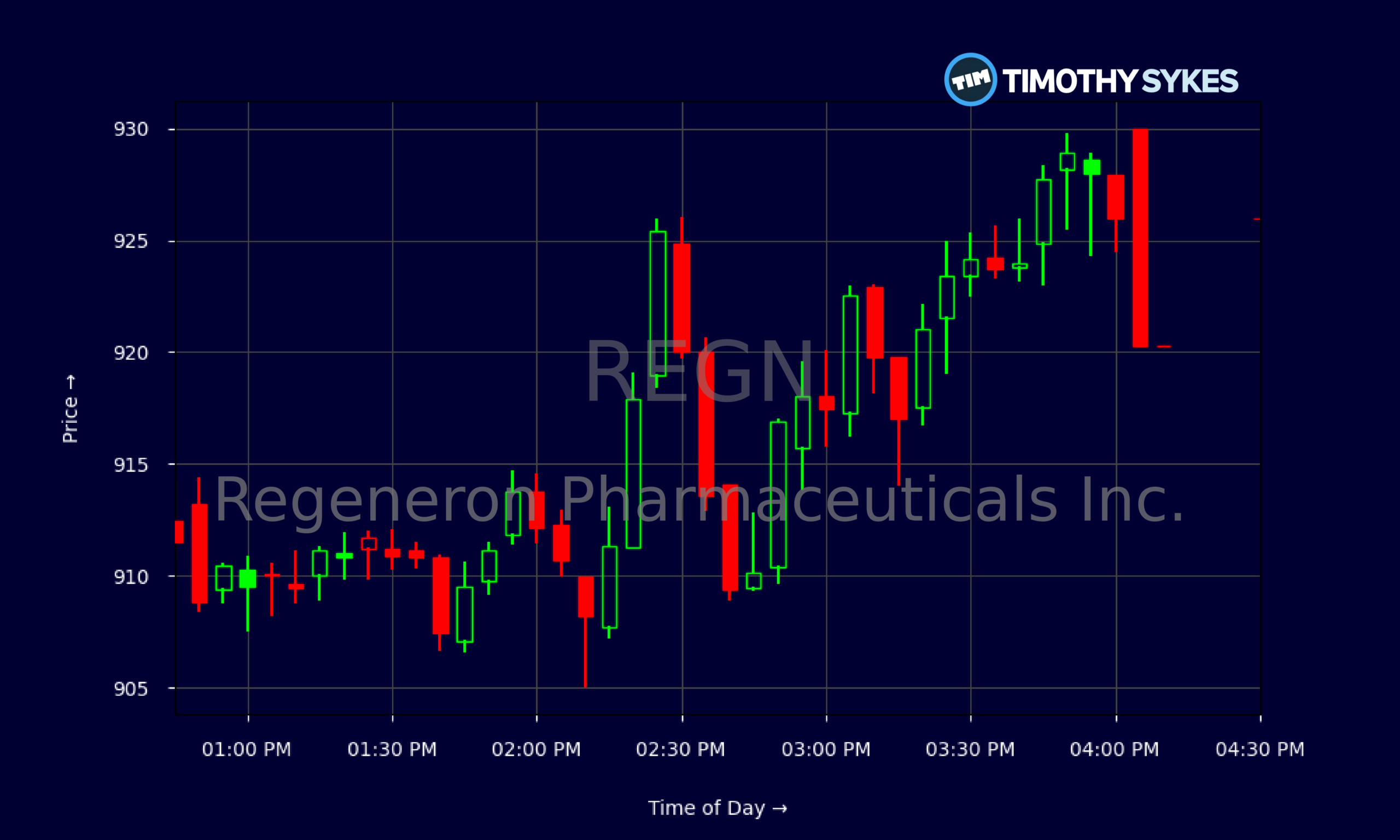
Live Update At 16:46:55 EDT: On Friday, October 30, 2026 Regeneron Pharmaceuticals Inc. stock [NASDAQ: REGN] is trending up by 13.1%! Discover the key drivers behind this movement as well as our expert analysis in the detailed breakdown below.
Quick Financial Overview
Regeneron Pharmaceuticals Inc. is trading like a steady freight train right now. Over the past few weeks, REGN has marched from the mid‑$730s to a recent close around $927.89, a powerful uptrend with only shallow pullbacks. For active traders, that rising staircase pattern shows strong dip buying and tight risk‑reward on intraday pullbacks.
Zoom into the 5‑minute chart and you see REGN holding above $900 for most of the session, with early volatility up to $935.35 and a firm close near the highs. That intraday action signals aggressive support every time the stock tried to fade, a classic momentum profile ahead of catalysts.
More Breaking News
Under the hood, the fundamentals back the move. REGN prints roughly $14.34B in annual revenue with fat 88.6% gross margins and about 30.6% EBIT margin. A price‑to‑earnings ratio near 18.5 is not cheap, but for a high‑moat biotech with strong pipelines, it is reasonable. The balance sheet is clean, with total debt to equity at just 0.09 and a current ratio of 3.3, giving REGN plenty of flexibility to weather shocks and keep funding R&D. For traders, that mix of technical strength and financial quality creates a backdrop where positive news can move the stock fast.
Why Traders Are Watching REGN Now
The core catalyst powering REGN right now is one word: Libtayo. Regeneron just posted nearly four‑year follow‑up from the Phase 3 C‑POST trial in high‑risk cutaneous squamous cell carcinoma. As adjuvant therapy after surgery and radiation, Libtayo not only sustains disease‑free survival, it now shows a much stronger overall survival signal. The death‑risk reduction improved from 14% to 37%, and that was despite a high rate of crossover from the placebo arm.
For a large‑cap like REGN, this matters a lot. Libtayo is already approved in the U.S. and EU for this indication, so this is not a speculative pipeline readout. It is a de‑risking event for an existing commercial product. Stronger survival data make it easier for oncologists to position Libtayo as true standard of care, which can extend treatment duration and raise penetration. Traders looking for recurring revenue trends should keep that in mind.
Europe adds another layer. The EMA’s CHMP gave a positive opinion on a more flexible Libtayo dosing schedule in the EU: patients can move from 350 mg every three weeks to 700 mg every six weeks, with the option for shorter infusion times. That convenience boost may look small on paper, but for real‑world oncology practice it reduces chair time and makes Libtayo more clinic‑friendly. If the European Commission signs off, REGN gains a commercial tailwind that does not require new marketing spend or new trials.
At the same time, REGN is shoring up its infectious‑disease niche. The company extended its BARDA/ASPR/HHS contract to supply Inmazeb, its Ebola treatment, through 2031 in a deal worth about $270M. The therapy has data showing a 55% mortality reduction versus active control, which underpins the government’s long‑dated commitment. That is not the main growth engine, but for traders it is stable, non‑cyclical cash flow that smooths earnings and reduces headline risk around the bigger franchises.
Layer on Street sentiment and you see why REGN is front and center on many trading screens. Canaccord nudged its target up to $922, tying its call to Dupixent strength and future C5 program catalysts like a generalized myasthenia gravis launch planned for 2026/Q4. TD Cowen went further, hiking its target to $980 on better Eylea modeling and increased demand for Eylea HD. Piper Sandler also pushed its target to $865, while Evercore ISI now sits at $900 on the high side but recently trimmed another model to $850.
That spread in price targets, with an average Street mark around the mid‑$870s, tells traders two things. First, REGN is widely rated overweight, so the bias is still positive. Second, there is real debate about how much of the Libtayo, Dupixent, and Eylea story is already priced in, which sets the stage for volatile moves around earnings or new data.
Conclusion
For active traders, REGN is a textbook case of strong news aligning with a powerful chart. The stock is trending up, support zones are holding, and liquidity is deep enough for both day trades and swing setups. The Libtayo C‑POST data tighten the fundamental story, turning what was already an approved indication into a higher‑confidence, long‑duration revenue stream. The CHMP dosing win in Europe adds incremental upside without major extra cost.
On top of that, REGN’s base business remains solid. Eylea is still throwing off cash, with analysts now modeling a favorable shift toward Eylea HD. Dupixent and the C5 program keep the medium‑term growth narrative alive, while the Inmazeb BARDA extension locks in about $270M of government‑backed revenue through 2031. Even with one Evercore target cut to $850, the bulk of recent analyst action on Regeneron Pharmaceuticals Inc. has been upward.
Traders still need to respect risk. A premium biotech like REGN can air‑pocket on bad headlines or a weak quarter. That is why the Sykes trading playbook always comes back to discipline. As Tim Sykes likes to say, “Cut losses quickly, because big losses start out small.” As millionaire penny stock trader and teacher Tim Sykes, says, “Consistency is key in trading; don’t let emotions dictate your trades.”. With REGN pushing toward the top of its recent range and catalysts stacking up, the edge goes to those who map their levels, watch volume, and let the price action confirm the story instead of blindly believing it.
This is stock news, not investment advice. Timothy Sykes News delivers real-time stock market news focused on key catalysts driving short-term price movements. Our content is tailored for active traders and investors seeking to capitalize on rapid price fluctuations, particularly in volatile sectors like penny stocks. Readers come to us for detailed coverage on earnings reports, mergers, FDA approvals, new contracts, and unusual trading volumes that can trigger significant short-term price action. Some users utilize our news to explain sudden stock movements, while others rely on it for diligent research into potential investment opportunities.
Dive deeper into the world of trading with Timothy Sykes, renowned for his expertise in penny stocks. Explore his top picks and discover the strategies that have propelled him to success with these articles:
- Penny Stocks Trading Guide
- Best Penny Stocks Under $1 to Buy Today
- Top 8 Penny Stocks to Watch on Robinhood
Once you’ve got some stocks on watch, elevate your trading game with StocksToTrade the ultimate platform for traders. With specialized tools for swing and day trading, StocksToTrade will guide you through the market’s twists and turns.
Dig into StocksToTrade’s watchlists here:





Leave a reply