
Quantum-Si Incorporated stocks have been trading up by 9.17 percent following bullish sentiment around its proteomics platform advancements.
Key Takeaways
- Interim data show Quantum-Si’s Proteus platform dramatically outperforming its current Platinum Pro system on scale, accuracy, and protein coverage, with full commercial launch targeted for Q2 2027.
- The company now detects 19 of 20 amino acids on Proteus and is rolling this into a developmental sequencing kit, reinforcing confidence in hitting full 20-amino-acid detection by year-end 2026.
- Management reaffirmed that Proteus reliably reads 19 amino acids and repeated its plan for a Q2 2027 commercial rollout, signaling consistent execution on the roadmap.
- Nasdaq bid-price compliance is restored after shares held above $1.00 for at least 10 trading days, removing the immediate delisting overhang for QSI.
- A Q3 2026 business update and earnings call is set for 2026/11/05, giving traders the next clear catalyst to reassess Quantum-Si’s story.
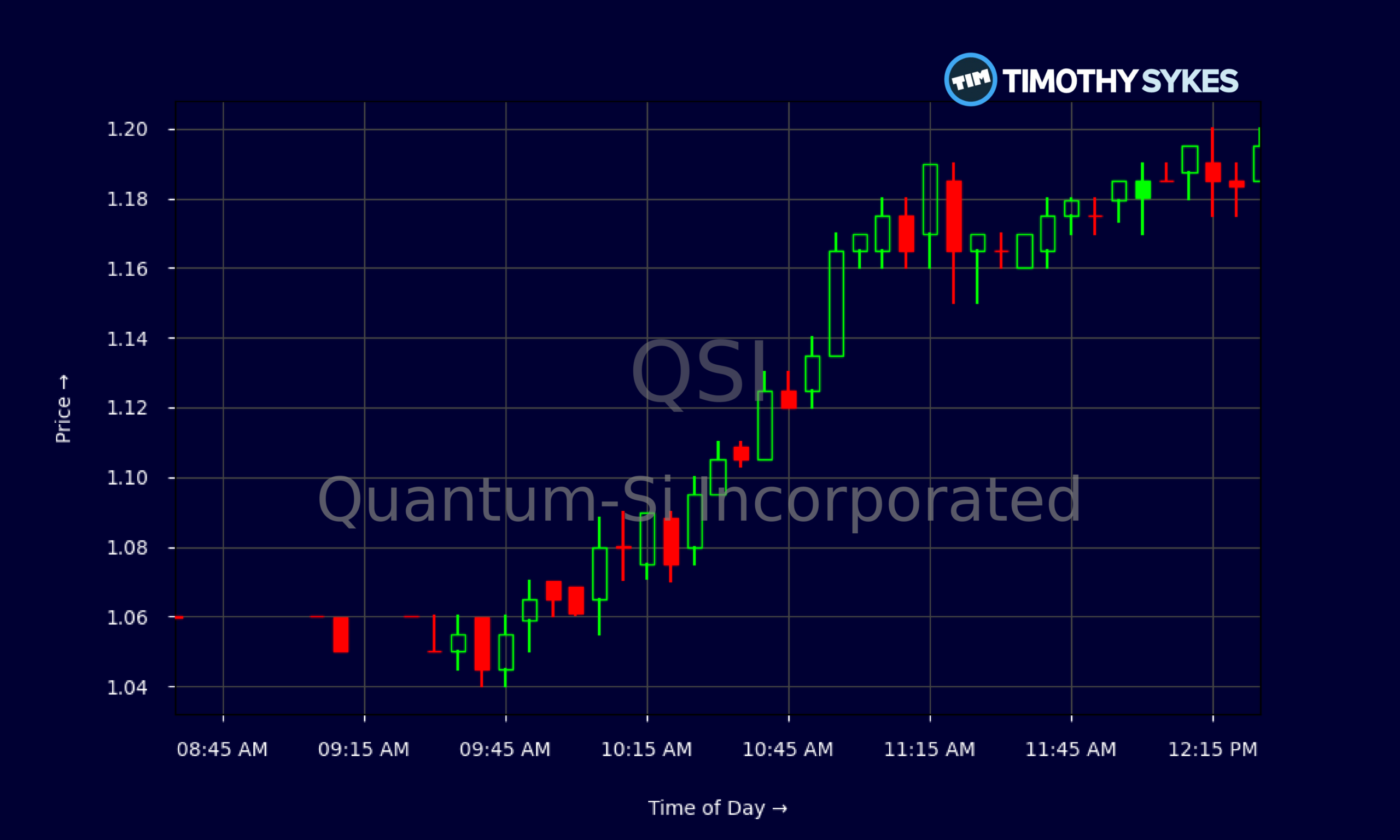
Live Update At 12:34:22 EDT: On Tuesday, October 20, 2026 Quantum-Si Incorporated stock [NASDAQ: QSI] is trending up by 9.17%! Discover the key drivers behind this movement as well as our expert analysis in the detailed breakdown below.
Quick Financial Overview
QSI is still a classic early-stage biotech-style story: tiny revenue, heavy burn, big technical swing. Quantum-Si booked just $344,000 in quarterly revenue and about $2.44M over the trailing period, while posting a net loss of roughly $23.5M for the quarter. That drives ugly margins on paper — profit metrics are deeply negative — but that is standard for a pre-commercial platform build-out.
On the balance sheet, QSI shows about $193.6M in total assets and $180.2M in equity, with very little debt. Long-term debt sits near $1.41M, and current liabilities are just $11.9M against working capital of about $107.1M. The current ratio around 10 and quick ratio near 9.4 tell traders this is not a near-term liquidity crisis story.
Cash and equivalents stand near $23.7M, while cash, equivalents, and short-term investments total roughly $111.7M. Free cash flow was about -$18.5M over the period, so Quantum-Si has a multi-year runway at the current burn, but not forever.
More Breaking News
On the tape, QSI bounced hard from sub-$1 levels in late September to recent closes in the low $1s, with a spike to $1.66 on 2026/10/09. Intraday action around $1.19 now shows a slow grind upward from the $1.05 open, forming a steady staircase rather than a blow-off spike. For traders, that combination — long runway, small float-style price, and early commercialization story — sets up a name that can move fast when volume hits.
Why Traders Are Watching QSI Now
QSI is finally starting to trade more on what it might become than what it is today. Quantum-Si’s next-generation Proteus single-molecule protein sequencing platform is the center of the story. Interim development data say Proteus dramatically outperforms the existing Platinum Pro system on scale, accuracy, peptide ID, and protein coverage. For traders, that is not just lab bragging. It is the core bull case.
Quantum-Si has now hit a key milestone: Proteus can detect 19 of 20 amino acids, and that capability is being locked into a developmental sequencing kit for integrated Proteus instruments. Management has repeated, in multiple updates, that it expects full 20-amino-acid detection by year-end 2026 and a commercial Proteus launch in Q2 2027. When a small-cap tech name keeps repeating the same date, that usually tells traders the internal teams are lining milestones up behind that window.
At the same time, QSI has cleaned up a major structural risk. The stock regained compliance with Nasdaq’s $1.00 minimum bid rule after trading above $1 for at least 10 straight days. That removes the immediate delisting threat that often scares off larger funds and some retail traders.
Yet this is not a straight-line breakout. One update notes QSI shares were trading down more than 5% on the day around $1.31 even after the compliance news. That shows the classic disconnect: fundamentals are stepping forward, but shorter-term trading still chops around. Add in vague Form 4 insider activity — direction and size not disclosed — and you get one more reason for chart-focused traders to lean on price action instead of rumor.
The upcoming Q3 2026 call on 2026/11/05 is the next major checkpoint. If Quantum-Si brings stronger Proteus data and a clear commercialization path, QSI can reprice quickly in either direction.
Conclusion
Traders looking at QSI right now are weighing two stories at once. On one side, Quantum-Si is a tiny-revenue company with steep losses and a long road to full commercialization. On the other, the company is stacking real milestones: Proteus outperforming Platinum Pro in interim data, reliable detection of 19 amino acids today, a realistic shot at all 20 by late 2026, and a targeted Q2 2027 launch.
The balance sheet buys Quantum-Si time. With more than $100M in cash and short-term investments and limited debt, QSI has room to keep funding R&D and gearing up for Proteus. Restored Nasdaq compliance over $1.00 helps keep the listing stable and reduces one of the biggest technical overhangs small caps can face.
For active traders, the setup is clear. QSI has a defined catalyst path — more development updates, then the 2026/11/05 call, and ultimately the planned 2027 launch window. Price action has already shown it can expand quickly from sub-$1 to the mid-$1s on news and volume.
As Tim Sykes loves to say, “Volatile, news-driven stocks are where small traders can level the playing field — if you respect risk, study the pattern, and never fall in love with the story.” That emphasis on discipline and risk management is central here; as millionaire penny stock trader and teacher Tim Sykes, says, “It’s better to go home at zero than to go home in the red.”. QSI fits that mold. It is a momentum candidate built on real technical progress, but it is still a high-risk, development-stage name. This article is for educational and research purposes only and is not investment advice; every trader must do their own homework and manage risk accordingly.
This is stock news, not investment advice. Timothy Sykes News delivers real-time stock market news focused on key catalysts driving short-term price movements. Our content is tailored for active traders and investors seeking to capitalize on rapid price fluctuations, particularly in volatile sectors like penny stocks. Readers come to us for detailed coverage on earnings reports, mergers, FDA approvals, new contracts, and unusual trading volumes that can trigger significant short-term price action. Some users utilize our news to explain sudden stock movements, while others rely on it for diligent research into potential investment opportunities.
Dive deeper into the world of trading with Timothy Sykes, renowned for his expertise in penny stocks. Explore his top picks and discover the strategies that have propelled him to success with these articles:
- Penny Stocks Trading Guide
- Best Penny Stocks Under $1 to Buy Today
- Top 8 Penny Stocks to Watch on Robinhood
Once you’ve got some stocks on watch, elevate your trading game with StocksToTrade the ultimate platform for traders. With specialized tools for swing and day trading, StocksToTrade will guide you through the market’s twists and turns.
Dig into StocksToTrade’s watchlists here:





Leave a reply