

PT Telekomunikasi Indonesia Tbk faces mounting pressure as regulatory and competitive concerns deepen, with stocks have been trading down by -12.99 percent.
Market Insights For TLK Traders
- Telekomunikasi Indonesia ADRs plunged 13% on 2026/10/16, leading South Asian decliners and signaling intense selling pressure.
- The stock has repeatedly lagged the Asia ADR index, including days when the benchmark finished modestly higher.
- TLK underperformed on 2026/10/01 as part of a group of weak Asian telecom and tech-linked ADRs dragging the S&P Asia 50 ADR Index lower.
- Several times through late September and October, TLK slipped even when the broader index was flat or rising, showing persistent stock-specific weakness.
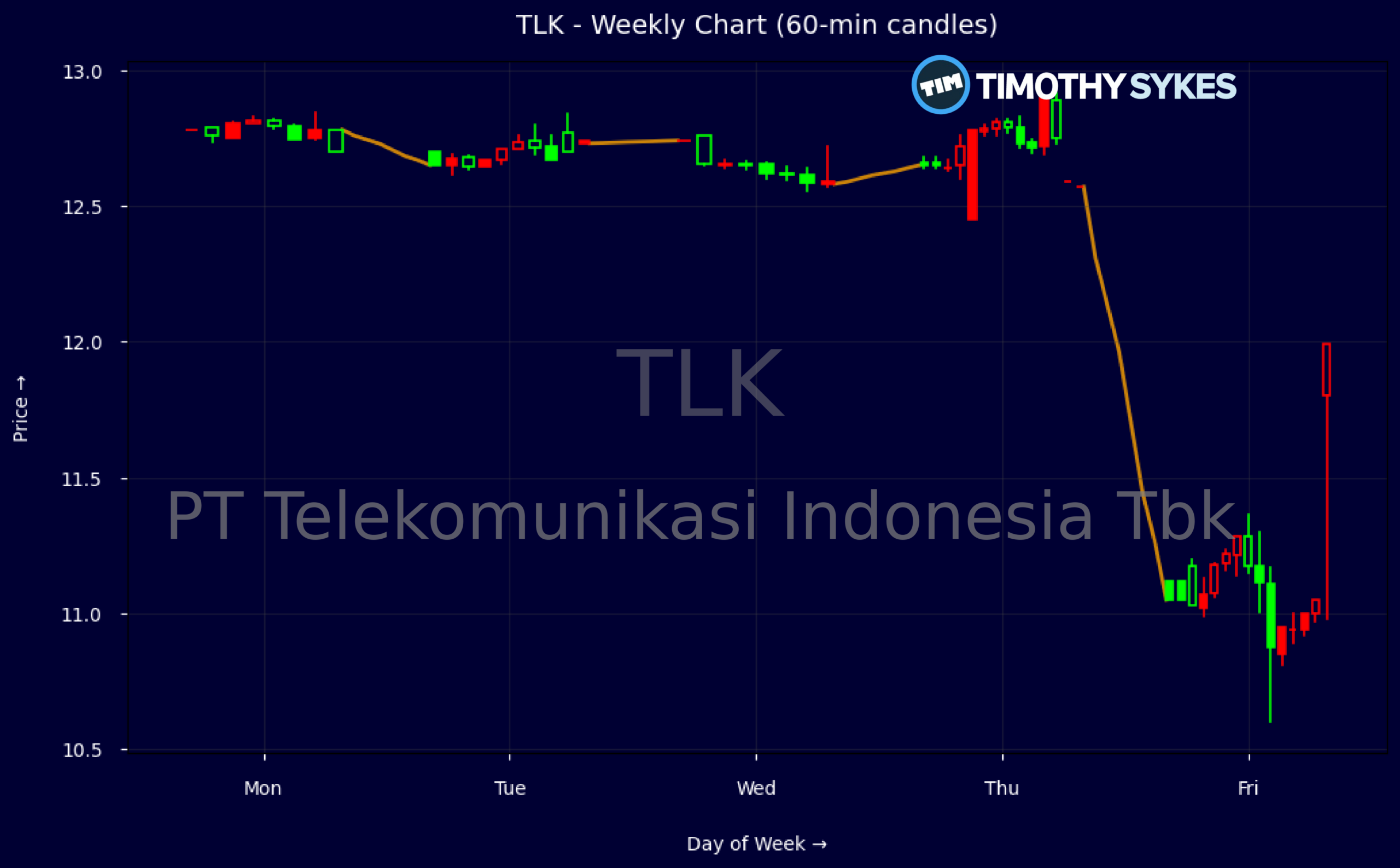
Weekly Update Oct 12 – Oct 16, 2026: On Sunday, October 18, 2026 PT Telekomunikasi Indonesia Tbk stock [NYSE: TLK] is trending down by -12.99%! Discover the key drivers behind this movement as well as our expert analysis in the detailed breakdown below.
Media & Telecommunications industry expert:
Analyst sentiment – neutral
Telkom Indonesia (TLK) remains Indonesia’s dominant integrated telco with strong fixed, mobile, and enterprise positions, but topline is under pressure: reported 3- and 5-year revenue CAGRs of -100% flag structural stagnation and/or data issues, not growth. Profitability is still solid, with a pre-tax margin near 29% and ROE of 8.8% and ROA of 3.3%, reflecting decent capital discipline. Leverage is manageable: long-term debt is only ~0.26 of capital, and EV/sales of 1.5 and P/E of 12.8 imply a discounted, income-oriented valuation supported by an 11% dividend yield.
Technically, the stock has broken from a tight consolidation into an abrupt downdraft. The weekly tape shows trading in a narrow 12.65–12.78 band before an air pocket to an 11.03 low and 11.12 close, aligning with the reported 13% ADR plunge and confirming a sharp, high-volume breakdown. The dominant trend is now short-term bearish below the 12.60–12.80 supply zone. Actionable level: aggressive traders can buy a first tranche near 11.00 with a tight stop around 10.60, targeting a mean-reversion move back toward 12.40–12.60.
Recent news flow is uniformly negative, with TLK repeatedly cited among Asia ADR underperformers and leading South Asian decliners, indicating sustained foreign selling pressure versus broader Media & Telecom peers. The 13% capitulation move likely reflects de-rating on weak growth and macro risk rather than balance-sheet stress. Relative to regional telco benchmarks, valuation is now attractive and dividend support is strong. Base case: a trading rebound toward 12.5 with medium-term resistance near 13.5 and support anchored around 11.0.
More Breaking News
Quick Financial Overview
PT Telekomunikasi Indonesia Tbk (TLK) is trading through a sharp sentiment reset. Weekly data show price holding around $12.70 for several sessions before a sudden gap down toward $11.12, matching the 13% plunge reported on 2026/10/16. Intraday, TLK swung between roughly $10.60 and $11.37 before closing near $11.03, which signals aggressive intraday selling and failed attempts to hold higher levels.
Under the hood, TLK still carries the profile of a mature, profitable telecom. The company posted revenue of about $149.97B (local currency) and runs at a pretax margin near 28.9%, which is strong for a capital-heavy operator. A price/earnings ratio of 12.8 and price/sales of 1.52 sit in value territory, while price/book of 1.72 implies the market is not pricing in high growth but does recognize steady returns.
From the balance sheet, total assets sit near $299.30B with equity around $141.89B, giving a leverage ratio of 2.2 and long-term debt of about $25.52B. Cash and equivalents of roughly $33.91B provide liquidity support, and returns on equity near 8.75% and returns on assets around 3.27% show the business is earning solid, if unspectacular, yields on capital. A stated dividend yield above 11% and cash payouts suggest TLK functions as an income-oriented telecom, but that high yield also reflects the market’s discount after recent price damage.
Conclusion
This is stock news, not investment advice. Timothy Sykes News delivers real-time stock market news focused on key catalysts driving short-term price movements. Our content is tailored for active traders and investors seeking to capitalize on rapid price fluctuations, particularly in volatile sectors like penny stocks. Readers come to us for detailed coverage on earnings reports, mergers, FDA approvals, new contracts, and unusual trading volumes that can trigger significant short-term price action. Some users utilize our news to explain sudden stock movements, while others rely on it for diligent research into potential investment opportunities.
Dive deeper into the world of trading with Timothy Sykes, renowned for his expertise in penny stocks. Explore his top picks and discover the strategies that have propelled him to success with these articles:
- Penny Stocks Trading Guide
- Best Penny Stocks Under $1 to Buy Today
- Top 8 Penny Stocks to Watch on Robinhood
Once you’ve got some stocks on watch, elevate your trading game with StocksToTrade the ultimate platform for traders. With specialized tools for swing and day trading, StocksToTrade will guide you through the market’s twists and turns.
Dig into StocksToTrade’s watchlists here:




Leave a reply