

Netflix Inc. stocks have been trading down by -6.69 percent amid growing concerns over slowing subscriber growth and rising competition.
Key Takeaways
- Q4 guidance from Netflix landed below Wall Street on both EPS and revenue, stoking concern that growth momentum is fading just as competition intensifies.
- Huber Research cut its view on NFLX from Overweight to Underweight with a sharply lower $70 target, signaling more downside risk from recent trading levels.
- HSBC moved Netflix to Hold from Buy and slashed its target to $76 from $96 after U.S. TV viewing share slid to 7.8% while YouTube climbed to a record 14.2%.
- Wells Fargo flagged co-CEO Ted Sarandos’s comments on slower-than-desired growth, backing its Underweight stance and $57 target as NFLX dipped about 2% near $67.91.
- The likely Paramount–WBD tie-up, after Netflix walked away from buying Warner Bros. Discovery, would build a stronger rival and add more pressure to Netflix’s streaming moat.
Live Update At 07:47:42 EDT: On Wednesday, October 21, 2026 Netflix Inc. stock [NASDAQ: NFLX] is trending down by -6.69%! Discover the key drivers behind this movement as well as our expert analysis in the detailed breakdown below.
Quick Financial Overview
NFLX has been grinding lower in recent sessions, and the chart tells the story. Over the last few weeks, Netflix has slipped from the low $70s to around $68.69 on 2026/10/20, failing to hold multiple attempts above $71. That slow bleed shows supply overpowering demand every time the stock pops.
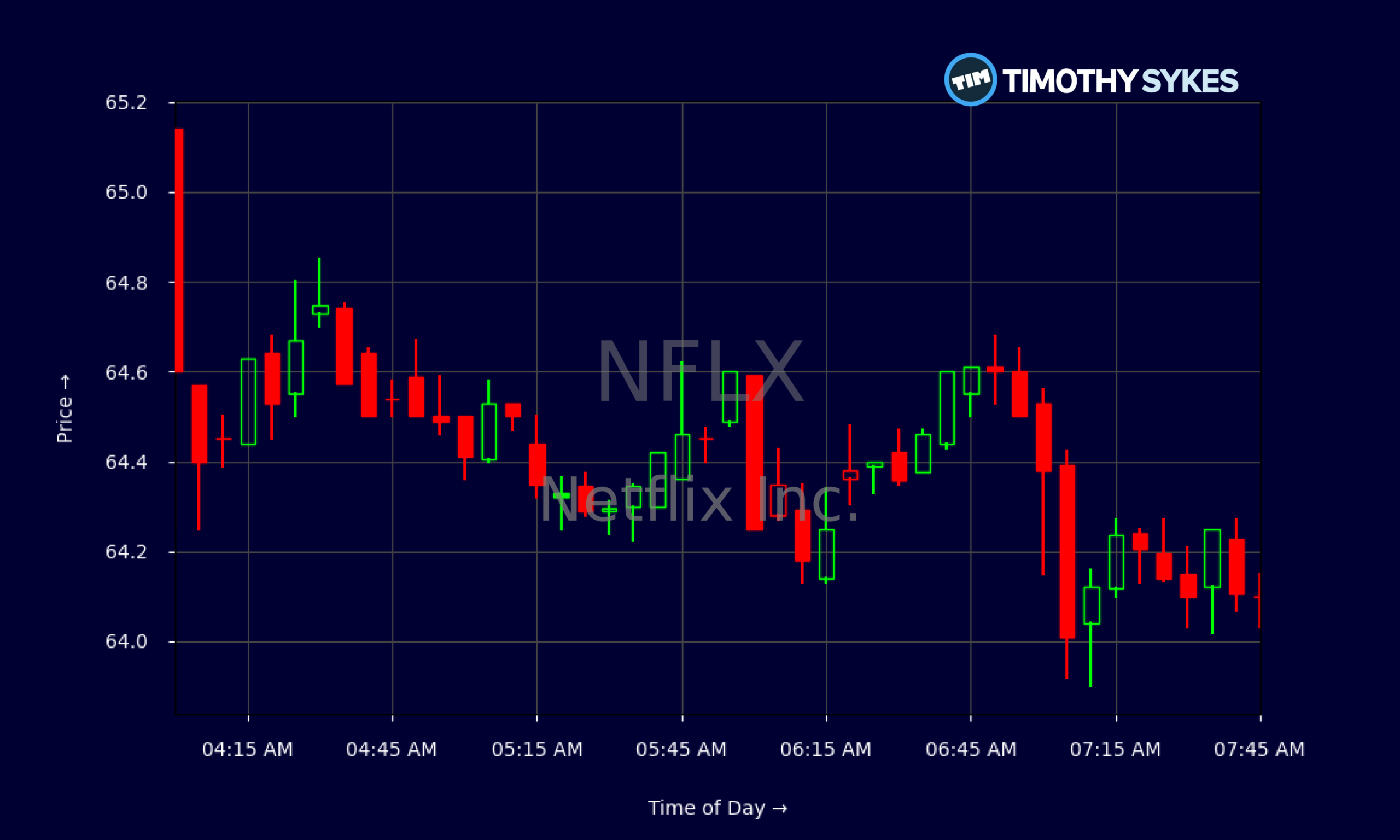
Intraday, NFLX has been stuck in a tight range around $64 in premarket trading, with five‑minute candles bouncing between roughly $64.00 and $64.70. That kind of low‑volatility chop often appears when traders are waiting on a fresh catalyst, or when big money is quietly distributing shares.
Under the hood, Netflix’s fundamentals are still strong on paper. Revenue over the last year is about $45.18B, while profit margins are stout, with EBIT margin near 35.9% and profit margin above 28%. Returns on equity and capital are high, and leverage looks manageable with total debt to equity around 0.47 and interest coverage near 11.9.
More Breaking News
But the market is not paying for past strength; it is re‑pricing future growth. With a price-to-earnings ratio near 22.1 and price-to-sales above 6, traders are asking whether NFLX still deserves a premium while engagement softens and competition ramps.
Why Traders Are Watching NFLX Now
The latest blow for Netflix landed on 2026/10/20, when the company issued Q4 guidance that fell short of Wall Street’s hopes. Management guided to earnings per share of $0.67 versus consensus at $0.73, and revenue of $13.44B versus $13.52B expected. Those gaps look small, but for a premium growth name like NFLX, guidance misses hit confidence fast. Traders know that when a market leader stops beating and starts lagging, multiple compression usually follows.
That is exactly what the analyst community is signaling. Huber Research downgraded Netflix from Overweight to Underweight and slapped a $70 price target on the stock. When a stock already trading in the high‑$60s receives a target near that level, it sends a clear message: upside looks capped, downside risk is back on the table.
HSBC added more fuel by cutting NFLX to Hold from Buy and slashing its target to $76 from $96. The bank called out a structural issue that traders cannot ignore: viewing share. Netflix’s slice of U.S. TV time has dropped to a multi‑year low of 7.8%, while YouTube hit a record 14.2%. That is not a one‑day blip; it is a trend. For momentum traders, that means engagement headwinds which can bleed into revenue growth, advertising potential, and eventually earnings.
Wells Fargo then reinforced the bear case by spotlighting co‑CEO Ted Sarandos’s own words on slower‑than‑desired growth. The firm reiterated its Underweight rating and a $57 target, well below the near $67.91 level where NFLX traded as it slipped about 2% intraday. When management tone turns cautious and multiple firms keep their targets far under spot, many short‑term traders step back or look for short setups.
Layer in industry consolidation and the picture gets tougher. Netflix previously walked away from buying Warner Bros. Discovery. Now the likely combination of Paramount and WBD would create a heavier content rival. More library depth, more franchises, more bargaining power. For NFLX, that means stiffer streaming competition just as engagement and guidance are wobbling.
Conclusion
For active traders, NFLX is shifting from a simple growth story to a tougher, more tactical chart. You have slowing Q4 guidance, multiple downgrades, shrinking U.S. TV share versus YouTube, and a looming Paramount–WBD content giant. All of that is pressing Netflix’s premium valuation at a time when the daily chart shows a steady drift lower and intraday action is stuck in tight ranges.
The key now is discipline. Netflix still throws off strong cash flow and enjoys fat margins, but the market trades the next 12–24 months, not the last 12. If earnings growth and engagement do not re‑accelerate, traders will keep challenging the high multiples and leaning on rallies. As millionaire penny stock trader and teacher Tim Sykes, says, “Cut losses quickly, let profits ride, and don’t overtrade.” That mindset is especially important in a name like NFLX, where momentum can flip quickly and overstaying a position can turn a small red trade into a large one.
Short‑term players should focus on levels, volume, and how NFLX reacts to every new headline. Does bad news get sold hard or shrugged off? Do bounces hold or fail by the close? Those tells matter more than anyone’s opinion.
As Tim Sykes likes to remind traders, “The market doesn’t care about your opinion, only your preparation and your rules.” With Netflix, preparation means understanding that great companies can still be bad trades when expectations reset. Stay nimble, cut losses fast, and let the price action, not the hype, guide your next move.
This is stock news, not investment advice. Timothy Sykes News delivers real-time stock market news focused on key catalysts driving short-term price movements. Our content is tailored for active traders and investors seeking to capitalize on rapid price fluctuations, particularly in volatile sectors like penny stocks. Readers come to us for detailed coverage on earnings reports, mergers, FDA approvals, new contracts, and unusual trading volumes that can trigger significant short-term price action. Some users utilize our news to explain sudden stock movements, while others rely on it for diligent research into potential investment opportunities.
Dive deeper into the world of trading with Timothy Sykes, renowned for his expertise in penny stocks. Explore his top picks and discover the strategies that have propelled him to success with these articles:
- Penny Stocks Trading Guide
- Best Penny Stocks Under $1 to Buy Today
- Top 8 Penny Stocks to Watch on Robinhood
Once you’ve got some stocks on watch, elevate your trading game with StocksToTrade the ultimate platform for traders. With specialized tools for swing and day trading, StocksToTrade will guide you through the market’s twists and turns.
Dig into StocksToTrade’s watchlists here:





Leave a reply