

Herc Holdings Inc. stocks have been trading up by 23.57 percent following strong earnings momentum and upbeat growth outlook.
Key Takeaways
- Leadership plans now locked in through 2027, with president Aaron Birnbaum set to take over as CEO while long‑time leader Larry Silber moves to executive chairman, signaling continuity at the top.
- Q3 2026 earnings for HRI are scheduled for 2026/10/27, with traders watching how the $4.4B‑revenue, 607‑location rental network is tracking key non‑residential construction trends.
- JPMorgan trimmed its HRI price target to $165 from $175 but kept an Overweight rating, citing cost pressures yet solid non‑residential and data center demand.
- Citi lowered its HRI target to $150 from $175 while maintaining a Buy rating, saying channel checks show machinery demand holding up and potentially strengthening into Q3.
- Wells Fargo cut its HRI target to $176 from $218 and reaffirmed Overweight, pointing to a recovering U.S. non‑residential construction cycle offsetting macro risks.
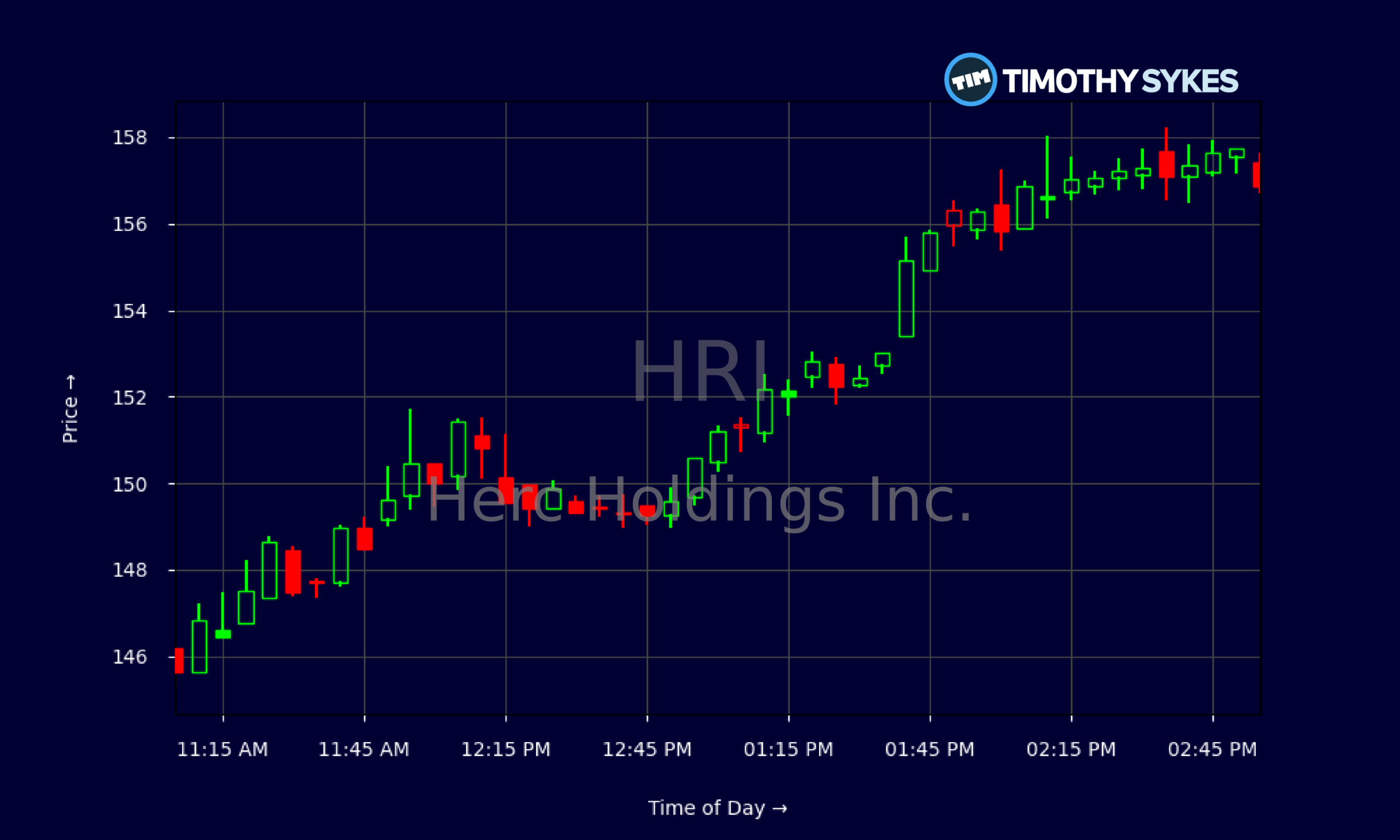
Live Update At 15:02:37 EDT: On Tuesday, October 27, 2026 Herc Holdings Inc. stock [NYSE: HRI] is trending up by 23.57%! Discover the key drivers behind this movement as well as our expert analysis in the detailed breakdown below.
Quick Financial Overview
HRI has been trading like a volatility lesson this month. From 2026/10/02 around $138 to 2026/10/27 near $157, Herc Holdings Inc. has ripped more than 10% off the lows, with a huge surge on the latest session. That day alone, HRI jumped from an open near $139 to close above $157 after touching $158.19, a massive range for a large‑cap rental name.
Under the hood, Herc Holdings posts serious scale: $4.328B in annual revenue, strong 59.1% gross margin, and EBITDA of $467M last quarter. But profitability to the bottom line is thin, with only about 1% net margin and a sky‑high P/E around 73. That tells traders the market is paying up for the cycle and future earnings growth, not current profits.
More Breaking News
Leverage is heavy. Total debt‑to‑equity near 5x and interest coverage of 1.7x mean HRI is tightly tied to credit conditions and rates. At the same time, operating cash flow of $314M versus negative free cash flow of about $12M shows how capital‑intensive this business is. For active trading, this is a classic “macro plus rates” vehicle riding construction demand.
Why Traders Are Watching HRI Now
HRI is lighting up scanners because multiple storylines are hitting at once: a clean leadership succession, earnings on deck, and a cluster of bullish‑but‑trimmed analyst targets. That’s the cocktail that creates opportunity for prepared traders.
On governance, Herc Holdings laid out a long‑planned handoff: current president and former COO Aaron Birnbaum becomes CEO on 2027/01/01, while Larry Silber slides to executive chairman. For a capital‑heavy equipment rental player, this is exactly what many traders like to see — evolution, not revolution. Birnbaum has three‑plus decades inside Herc Holdings, so the message from HRI is “steady hands,” not “new playbook.” For swing traders, that usually means the catalyst is sentiment, not fear of a hostile reset.
At the same time, Wall Street is quietly resetting expectations without abandoning the bull case. JPMorgan marked its HRI target down to $165, Citi to $150, and Wells Fargo to $176. All three stuck with Overweight or Buy ratings. The common thread: cost inflation and mixed demand in some segments, but healthy non‑residential construction and re‑accelerating data center projects.
That matches what the tape is showing. HRI had been grinding in the low‑$120s to low‑$130s for weeks. Then, into the 2026/10/27 earnings date, the stock exploded above $150 with strong intraday trend and shallow pullbacks. For momentum traders, that pattern — analyst trims plus resilient fundamentals and a defined earnings catalyst — often becomes a “buy the fear, sell the reaction” playground.
Conclusion
For traders studying HRI right now, the picture is clear: Herc Holdings is a leveraged bet on a still‑alive non‑residential construction cycle, with a leadership transition scripted well into 2027 and Wall Street expectations pulled back to more realistic levels. The stock’s surge from roughly $125–$130 into the high‑$150s ahead of Q3 2026 earnings shows that traders are already positioning, not waiting for headlines.
The fundamentals of HRI tell the same story the chart does. This is a high‑fixed‑cost, high‑debt, high‑operating‑leverage name. When demand is there, margins and cash flow can ramp fast. When demand wobbles or rates stay high, the balance sheet becomes the main risk. That’s why Citi’s and JPMorgan’s comments on machinery demand holding up — and potentially improving — matter so much for Herc Holdings.
For active traders, HRI is not a set‑and‑forget play. It’s a stock to stalk around catalysts: earnings, macro data, or big construction headlines. As Tim Sykes loves to say, “discipline and preparation beat hope every single time.” As millionaire penny stock trader and teacher Tim Sykes, says, “The goal is not to win every trade but to protect your capital and keep moving forward.”. With HRI, that means mapping your levels, respecting the volatility, and treating every trade as a planned trade — not a guess. This article is for educational and research purposes only, but the lessons in how HRI trades around news are universal for anyone serious about the markets.
This is stock news, not investment advice. Timothy Sykes News delivers real-time stock market news focused on key catalysts driving short-term price movements. Our content is tailored for active traders and investors seeking to capitalize on rapid price fluctuations, particularly in volatile sectors like penny stocks. Readers come to us for detailed coverage on earnings reports, mergers, FDA approvals, new contracts, and unusual trading volumes that can trigger significant short-term price action. Some users utilize our news to explain sudden stock movements, while others rely on it for diligent research into potential investment opportunities.
Dive deeper into the world of trading with Timothy Sykes, renowned for his expertise in penny stocks. Explore his top picks and discover the strategies that have propelled him to success with these articles:
- Penny Stocks Trading Guide
- Best Penny Stocks Under $1 to Buy Today
- Top 8 Penny Stocks to Watch on Robinhood
Once you’ve got some stocks on watch, elevate your trading game with StocksToTrade the ultimate platform for traders. With specialized tools for swing and day trading, StocksToTrade will guide you through the market’s twists and turns.
Dig into StocksToTrade’s watchlists here:





Leave a reply