

GlucoTrack Inc. stocks have been trading up by 17.54 percent amid heightened optimism over its latest noninvasive glucose-monitoring advancements.
Key Takeaways
- Qare launches as a free GLP-1-focused comparative health app, building a real-world data asset around outcomes, side effects, and costs for GlucoTrack Inc. and its subsidiary Lōkahi Therapeutics.
- Public rollout of Qare on 2026/10/14 gives traders in GCTK a clear near-term catalyst and a roadmap to expand into additional drug classes over time.
- Qare lets GLP-1 users compare outcomes and costs across similar cohorts, backed by SOC 2 and ISO 27001-grade infrastructure aimed at institutional-quality data security.
- Lōkahi’s ai² platform expands internationally via a new University of Georgia–Universität Paderborn garage33 collaboration, targeting fee-for-service, revenue-generating strategic partnerships.
- These moves broaden GlucoTrack’s biopharma and diabetes-technology strategy, positioning GCTK as a data and partnerships story rather than a one-product micro-cap.
Live Update At 09:19:05 EDT: On Wednesday, October 28, 2026 GlucoTrack Inc. stock [NASDAQ: GCTK] is trending up by 17.54%! Discover the key drivers behind this movement as well as our expert analysis in the detailed breakdown below.
Quick Financial Overview
GCTK has been trading like a classic low-float momentum name. Over the last two weeks, GlucoTrack Inc. slid from the $1.10–$1.20 area down into the $0.40s, then ripped back above $1.60. That is a massive percentage swing, and it tells traders this is a highly speculative, news-driven chart.
From 2026/10/23 to 2026/10/26, GCTK bounced from a close near $0.40 to $1.61, then pushed to $1.71 on 2026/10/27. That kind of multi-day move often signals shorts caught leaning the wrong way plus fresh volume chasing the Qare headlines.
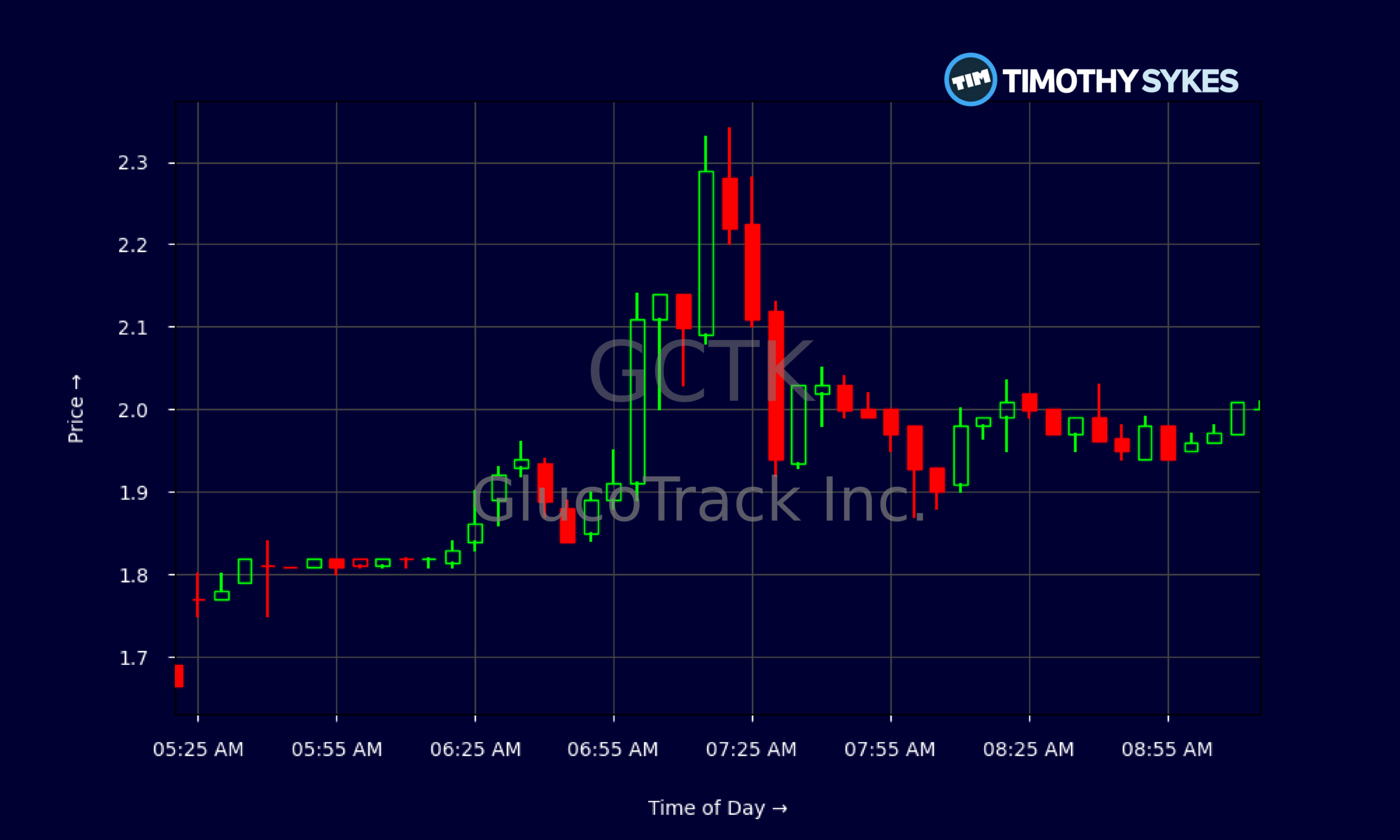
Intraday, the 5-minute tape shows GCTK holding a wide band between roughly $1.80 and a premarket spike into the mid-$2.30s before fading. That’s the kind of liquidity and volatility active traders hunt, but it also demands tight risk control.
More Breaking News
Fundamentals paint the picture of an early-stage, cash-burning micro-cap. GlucoTrack Inc. posted a quarterly net loss of about $3.8M and negative free cash flow of roughly $3.6M, ending the period with just $1.1M in cash and negative equity. A current ratio around 0.5 and quick ratio near 0.4 signal real balance-sheet pressure. For traders, that often means dilution risk is on the table — and why GCTK behaves more like a trading vehicle around catalysts than a steady compounder.
Why Traders Are Watching GCTK’s Qare and ai² Moves
GCTK is in the spotlight because GlucoTrack Inc., through Lōkahi Therapeutics, is planting its flag in one of the hottest drug categories on the planet: GLP-1s. Qare is not another drug; it is a free, patient-facing, real-time comparative health app. It collects user-reported outcomes, side effects, and costs for GLP-1 medications — exactly the kind of real-world data that payers, providers, and pharma obsess over.
For traders, the key is understanding what Qare is and what it is not. Today, Qare is an early-stage platform, not a proven revenue engine. But it gives GlucoTrack Inc. and GCTK exposure to a huge narrative: data-driven optimization of GLP-1 therapy. If Qare builds scale, that database becomes a potential asset for partnerships, licensing, or targeted collaborations.
Public availability on 2026/10/14 matters. It gives the market a specific date to watch for user uptake chatter, app download traction, and any early commentary from GlucoTrack Inc. GCTK has already reacted with a strong price spike, showing traders are front-running what they see as optionality — not certainty — around future deals.
Security and privacy also stand out. Lōkahi is using SOC 2 and ISO 27001-certified third-party infrastructure for Qare, a signal that GCTK wants this data to pass institutional due-diligence tests. That plays directly into the second major catalyst: the ai² asset-evaluation platform going international through the University of Georgia and Universität Paderborn’s garage33.
This ai² collaboration expands Lōkahi’s reach to source and diligence therapeutic assets outside the U.S. and run fee-for-service, revenue-generating strategic partnerships, modeled on Innovate GBM. For GCTK, this is a diversification story — not just diabetes devices, but a broader biopharma and data-services angle. Traders watching GCTK now have two parallel narratives: GLP-1 real-world data via Qare, and ex-U.S. partnering capacity via ai².
Conclusion
GCTK is acting like a textbook small-cap catalyst play. GlucoTrack Inc. has lined up a tangible product launch in Qare on 2026/10/14 and paired it with a strategic expansion of its ai² platform into an international university network. The company’s financials show heavy losses, thin cash, and negative equity, which explains why GCTK trades with sharp spikes and equally sharp pullbacks. The balance sheet forces management to lean hard on partnerships, platforms, and optionality.
For traders, the Qare launch centers the story on data. If patients embrace the GLP-1-focused app and GlucoTrack Inc. converts that real-world data into pharma, payer, or tech partnerships, GCTK gains a more credible roadmap. If uptake disappoints, the stock can round-trip quickly, as the recent rollercoaster from $1+ to $0.40s and back already suggests.
The ai² collaboration between the University of Georgia and Universität Paderborn’s garage33 adds another angle: potential fee-for-service, non-dilutive revenue and ex-U.S. deal flow. That is still early and qualitative, but it gives traders more than a single binary bet.
As Tim Sykes likes to remind his community, “The market doesn’t care about your opinion — it cares about catalysts and price action. Study the news, watch the volume, and always, always cut losses quickly.” As millionaire penny stock trader and teacher Tim Sykes, says, “You must adapt to the market; the market will not adapt to you.”. For anyone tracking GCTK, that mindset is essential. This article is for educational and research purposes only and is not investment advice.
This is stock news, not investment advice. Timothy Sykes News delivers real-time stock market news focused on key catalysts driving short-term price movements. Our content is tailored for active traders and investors seeking to capitalize on rapid price fluctuations, particularly in volatile sectors like penny stocks. Readers come to us for detailed coverage on earnings reports, mergers, FDA approvals, new contracts, and unusual trading volumes that can trigger significant short-term price action. Some users utilize our news to explain sudden stock movements, while others rely on it for diligent research into potential investment opportunities.
Dive deeper into the world of trading with Timothy Sykes, renowned for his expertise in penny stocks. Explore his top picks and discover the strategies that have propelled him to success with these articles:
- Penny Stocks Trading Guide
- Best Penny Stocks Under $1 to Buy Today
- Top 8 Penny Stocks to Watch on Robinhood
Once you’ve got some stocks on watch, elevate your trading game with StocksToTrade the ultimate platform for traders. With specialized tools for swing and day trading, StocksToTrade will guide you through the market’s twists and turns.
Dig into StocksToTrade’s watchlists here:




Leave a reply