

DataMeds AI Inc. soars as breakthrough healthcare AI partnership fuels optimism, and its stocks have been trading up by 15.21 percent.
Key Takeaways
- Helomics, a DataMeds AI unit, won Humana Medicaid coverage for its ChemoFx gynecologic cancer test, unlocking reimbursed use under key oncology CPT codes.
- Corexa Pharmacy topped $1M in preliminary September 2026 revenue, up more than 66% from July on expanding customers and Tollo Health product launches.
- DataMeds AI and Tollo Health rolled out the Health Lives Here app for GLP‑1 users, tying together telehealth, pharmacy, nutrition, wearables data, and behavioral health.
- Litigation tied to the Helomics deal was settled, removing about $19M of liabilities and retiring 364,099 shares, while DataMeds AI sharpened its AI‑driven health IT focus.
- Exclusive U.S. direct‑to‑consumer rights from REBOOT Health AI position Health Lives Here to capture GLP‑1 weight‑management demand via subscriptions and revenue sharing.
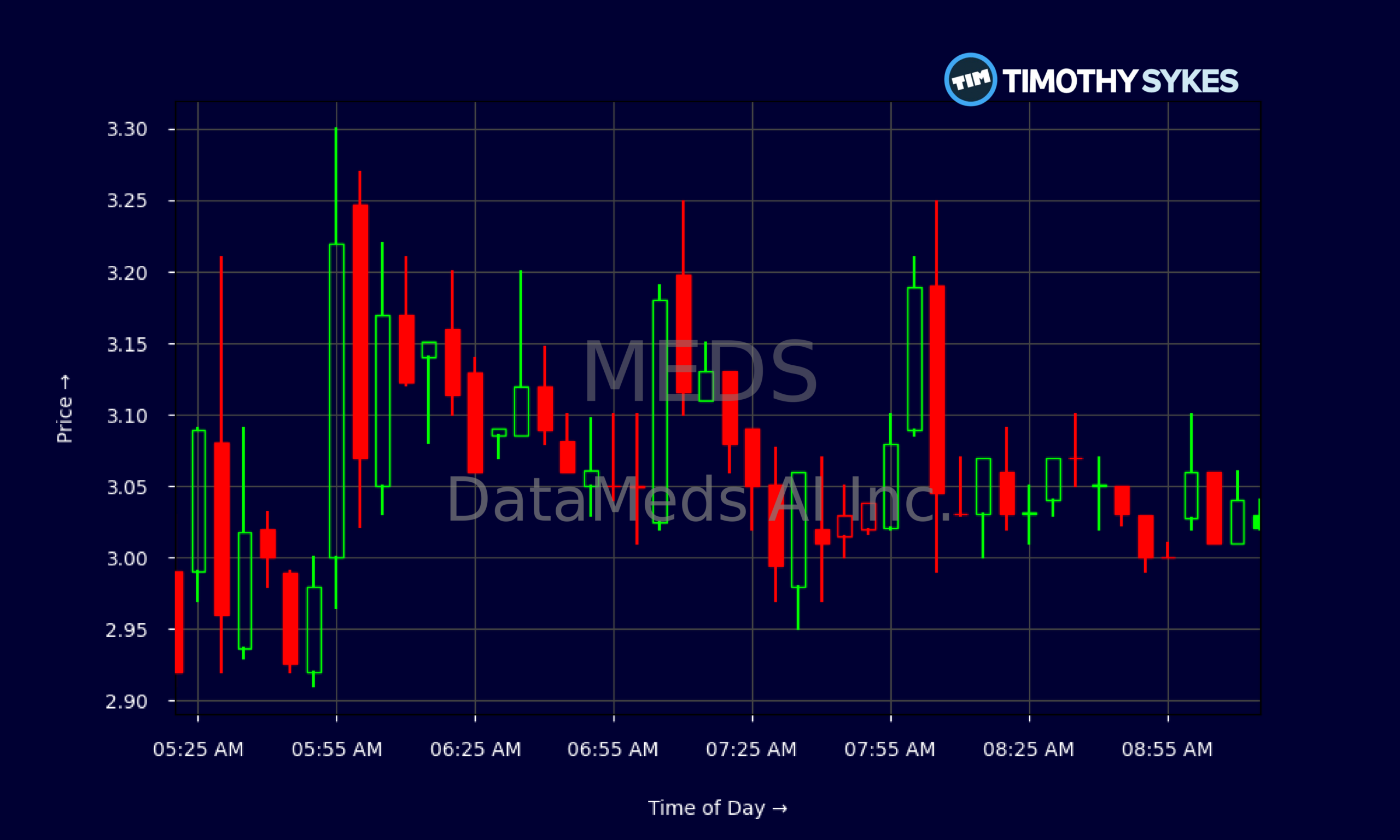
Live Update At 09:18:35 EDT: On Monday, October 19, 2026 DataMeds AI Inc. stock [NASDAQ: MEDS] is trending up by 15.21%! Discover the key drivers behind this movement as well as our expert analysis in the detailed breakdown below.
Quick Financial Overview
MEDS has turned into a classic high‑volatility story stock. On the daily chart, DataMeds AI ran from the mid‑$3s to a $4.06 close on 2026/10/01 after the Corexa Pharmacy $1M revenue update, then faded back into the mid‑$2s by 2026/10/16. That’s a big round‑trip, and it tells traders one thing: every headline is a potential catalyst.
Intraday action around $3 shows the same pattern. The 5‑minute tape swings between roughly $2.90 and $3.25 with repeated spikes and quick fades. For active traders, MEDS is offering clean intraday ranges and liquidity when news hits.
Fundamentals are still ugly. DataMeds AI posted about $23.34M in trailing revenue, but EBITDA of roughly -$16.45M and a profit margin north of -1,100%. Return on assets is deeply negative, and the current ratio sits at a thin 0.1, signaling tight cash and heavy leverage. Free cash flow in the latest quarter was about -$3.14M.
More Breaking News
In simple terms, MEDS is a loss‑making, capital‑hungry platform that the market trades on growth headlines, not on earnings strength. That’s why price‑to‑sales near 1x matters more than any P/E here.
Why Traders Are Watching MEDS Right Now
DataMeds AI has stacked a series of catalysts that the market clearly respects. The biggest: Humana Medicaid coverage for the Helomics ChemoFx chemoresponse assay in gynecologic cancers. That single decision lit a fire under MEDS, with premarket spikes reported north of 38% and additional moves around 24% as traders piled into the ticker once the coverage determination circulated.
For traders, this is about validation and visibility. When a major payer like Humana agrees to reimburse ChemoFx under CPT codes 81535 and 81536, it doesn’t just promise incremental revenue; it turns MEDS into a legitimate oncology reimbursement story. Coverage decisions often force funds and day traders to re‑rate diagnostics names, which fits the sharp premarket reaction we’ve seen in MEDS.
On a second front, Corexa Pharmacy is emerging as a real revenue engine. Preliminary, unaudited September 2026 sales over $1M, more than 66% above July, show DataMeds AI isn’t just talking about growth; it’s printing it. That update alone drove a roughly 35% premarket surge in MEDS, reinforcing the idea that even monthly run‑rate numbers can be tradable events.
Then there’s the GLP‑1 and digital health angle. The Health Lives Here app launch with Tollo Health triggered another heavy‑volume spike, with MEDS jumping close to 39% as traders chased anything linked to obesity drugs. DataMeds AI layered on exclusive U.S. direct‑to‑consumer rights with REBOOT Health AI, turning GLP‑1 weight management into a subscription‑driven funnel for pharmacy, labs, nutraceuticals, and telehealth. Add the peptide compounding opportunity under the FDA’s proposed Interim Access Policy, and MEDS is now positioned across several of the market’s hottest themes: GLP‑1, AI‑driven oncology, and cash‑pay compounding.
Conclusion
Under the hood, DataMeds AI is still a turnaround. The balance sheet shows negative equity of about -$19.5M and working capital deeply underwater. Yet management is clearly trying to clean it up. The Helomics‑related litigation settlement removed roughly $19M of liabilities and retired 364,099 shares, which helps de‑risk the story. Cost cuts, especially in corporate overhead, show MEDS shifting from deal‑making to execution.
At the same time, the company is leaning hard into its AI and health‑IT identity. The new AI‑focused corporate site, the EinsteinRx and PharmacyChain platforms, and the upcoming presence at the 2026 National Telehealth and Virtual Care Summit all aim to put MEDS in front of the right audience. For short‑term traders, those conferences and pending multi‑party transactions with partners like DataVault AI are pure newsflow catalysts.
The key is discipline. MEDS is a small‑cap with big volatility, weak current ratios, and heavily negative margins. That’s exactly the type of stock where experienced traders in the Tim Sykes community focus on patterns, not promises. As Tim likes to say, “Volatile stocks are great teachers if you cut losses quickly and never believe the hype.” As millionaire penny stock trader and teacher Tim Sykes says, “Embrace the journey, the ups and downs; each mistake is a lesson to improve your strategy.”. For anyone trading MEDS, the lesson is simple: respect the catalysts, respect the range, and always respect your risk.
This is stock news, not investment advice. Timothy Sykes News delivers real-time stock market news focused on key catalysts driving short-term price movements. Our content is tailored for active traders and investors seeking to capitalize on rapid price fluctuations, particularly in volatile sectors like penny stocks. Readers come to us for detailed coverage on earnings reports, mergers, FDA approvals, new contracts, and unusual trading volumes that can trigger significant short-term price action. Some users utilize our news to explain sudden stock movements, while others rely on it for diligent research into potential investment opportunities.
Dive deeper into the world of trading with Timothy Sykes, renowned for his expertise in penny stocks. Explore his top picks and discover the strategies that have propelled him to success with these articles:
- Penny Stocks Trading Guide
- Best Penny Stocks Under $1 to Buy Today
- Top 8 Penny Stocks to Watch on Robinhood
Once you’ve got some stocks on watch, elevate your trading game with StocksToTrade the ultimate platform for traders. With specialized tools for swing and day trading, StocksToTrade will guide you through the market’s twists and turns.
Dig into StocksToTrade’s watchlists here:





Leave a reply