

Transocean Ltd (Switzerland) stocks have been trading up by 4.98 percent amid upbeat offshore drilling demand and contract momentum
Key Takeaways
- Transocean locked in about $1.1B of new firm backlog, led by a ~$62M, 120‑day two‑well contract for Transocean Norge with A/S Norske Shell and a multi‑rig Equinor deal in Norway.
- Brazil’s regulator granted unconditional approval for the Valaris–Transocean combination, clearing the last major antitrust hurdle and setting up a Q4 closing.
- Transocean extended and upsized its main revolving credit facility to $750M, with maturity out to 2031, contingent on completing the Valaris acquisition.
- The company redeemed $165M of 8% Aquila Notes, trimming future interest expense by roughly $22M and signaling steady balance sheet cleanup.
- After the Norge contract news, RIG traded about 0.7% higher pre‑market even as the broader energy tape and crude benchmarks traded slightly weaker.
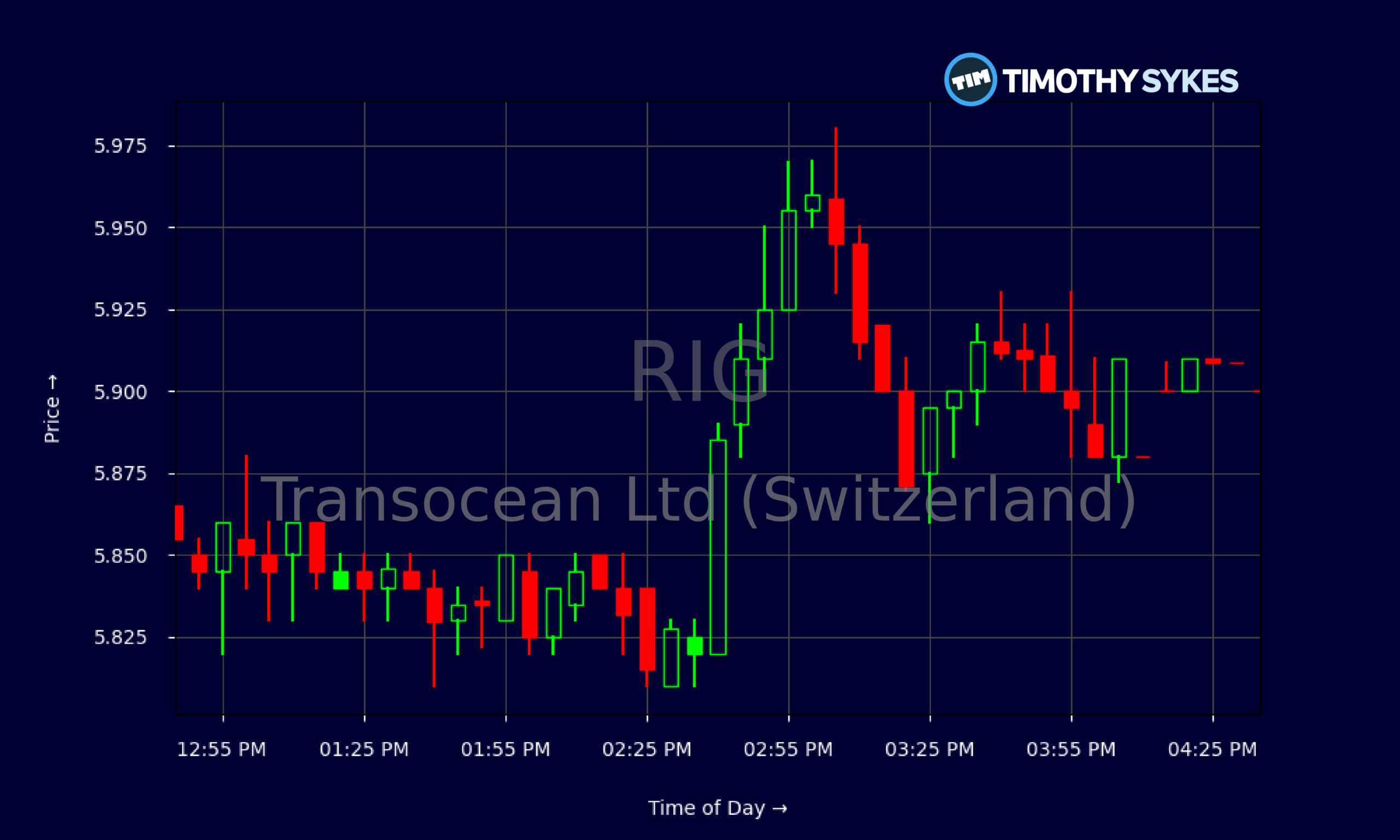
Live Update At 16:46:45 EDT: On Monday, October 19, 2026 Transocean Ltd (Switzerland) stock [NYSE: RIG] is trending up by 4.98%! Discover the key drivers behind this movement as well as our expert analysis in the detailed breakdown below.
Quick Financial Overview
RIG has been grinding higher in October. The daily chart shows Transocean climbing from around $5.17 at the start of the month to about $5.89 by 2026/10/19. That’s a controlled uptrend, not a wild short squeeze. For active traders, this kind of steady staircase move often sets up clean dip‑buy and breakout patterns.
Intraday, RIG mostly held the mid‑$5.80s to low‑$5.90s area, with tight 5‑minute candles and shallow pullbacks. That intraday action tells you supply is getting absorbed rather than dumped. Breaks toward $5.95–$6 now become a key psychological level for short‑term trading.
Fundamentally, Transocean is still cleaning up from years of pain. On the plus side, RIG generated about $3.97B in revenue over the last year and is growing the top line at double‑digit rates over three and five years. Price‑to‑sales sits near 1.5 and price‑to‑book is about 0.74, which puts RIG below stated book value.
More Breaking News
Margins at the consolidated level are still negative, and returns on equity and assets are deep in the red. However, the latest quarterly numbers show operating income of $154M and free cash flow of about $212M, which is crucial. Traders care less about old losses and more about whether RIG is now cash‑flow positive and able to service its debt while the stock trends up.
Why Traders Are Watching RIG Right Now
The real story around Transocean this month is contract and balance‑sheet momentum hitting at the same time. RIG just added roughly $1.1B in firm backlog, led by a new ~$62M, 120‑day, two‑well contract for the Transocean Norge rig with A/S Norske Shell plus final approval on a previously announced ~$1.0B multi‑rig deal with Equinor. That’s not soft “letters of intent.” It is firm work for three harsh‑environment semisubmersibles in Norway.
For offshore drillers, backlog is life. When RIG locks in $1.1B of work, traders get visibility on future day‑rate revenue and cash flow. Norway is a premium market, and harsh‑environment rigs are the top‑shelf assets. That tells the market there is real demand, not just story‑telling about an offshore recovery.
The tape confirmed that read. After the Norge contract hit, RIG traded about 0.7% higher pre‑market even while energy ETFs and crude were slightly red. That is relative strength, and short‑term traders watch that closely for continuation moves.
On the corporate side, Transocean also cleared a huge hurdle: Brazil’s competition authority gave unconditional approval for the Valaris–Transocean business combination. With all key regulatory approvals effectively in place, the Valaris deal is teed up to close in Q4. Traders now shift from “Will the merger happen?” to “What does the combined fleet mean for earnings and pricing power?”
Add in the financing moves and the picture sharpens. RIG amended and restated its main revolver, pushing maturity from 2028 to 2031 and increasing commitments to $750M, contingent on the Valaris closing. The fact that this credit facility was oversubscribed tells you lenders are buying into the Transocean–Valaris story. That matters for equity traders looking at downside risk during the next cycle turn.
Conclusion
Put it all together and RIG is behaving like a turnaround that is finally getting some wind at its back. Transocean has booked about $1.1B of new firm backlog, tightened its relationship with majors like Shell and Equinor in Norway, and lined up a transformative Valaris merger that just cleared its last big regulatory gate in Brazil. At the same time, RIG has extended its main credit facility to 2031 at $750M in commitments and paid off $165M of 8% Aquila Notes, cutting interest costs by roughly $22M.
For traders, that combination of stronger backlog, cleaner debt, and a nearing M&A close can shift sentiment fast. RIG’s recent price action — higher lows on the daily, stable intraday consolidations, and a pre‑market pop on contract news against a weak sector — shows the market is already starting to re‑rate the name.
The next catalyst on deck is the upcoming Q3 2026 earnings release and fleet status report, where Transocean is expected to provide more color on the Norge contract, Equinor backlog, the Valaris integration path, and the new revolver. As Tim Sykes loves to say, “Patterns repeat because human nature never changes — your job is to spot them early and manage risk like a pro.” As millionaire penny stock trader and teacher Tim Sykes says, “Embrace the journey, the ups and downs; each mistake is a lesson to improve your strategy.”. For RIG, the current pattern is a slow‑building turnaround story that active traders will want to track closely, while always treating this as education and research, not a signal to buy or sell.
This is stock news, not investment advice. Timothy Sykes News delivers real-time stock market news focused on key catalysts driving short-term price movements. Our content is tailored for active traders and investors seeking to capitalize on rapid price fluctuations, particularly in volatile sectors like penny stocks. Readers come to us for detailed coverage on earnings reports, mergers, FDA approvals, new contracts, and unusual trading volumes that can trigger significant short-term price action. Some users utilize our news to explain sudden stock movements, while others rely on it for diligent research into potential investment opportunities.
Dive deeper into the world of trading with Timothy Sykes, renowned for his expertise in penny stocks. Explore his top picks and discover the strategies that have propelled him to success with these articles:
- Penny Stocks Trading Guide
- Best Penny Stocks Under $1 to Buy Today
- Top 8 Penny Stocks to Watch on Robinhood
Once you’ve got some stocks on watch, elevate your trading game with StocksToTrade the ultimate platform for traders. With specialized tools for swing and day trading, StocksToTrade will guide you through the market’s twists and turns.
Dig into StocksToTrade’s watchlists here:





Leave a reply