

Okta Inc. stocks have been trading up by 8.49 percent after strong identity-security demand fueled bullish investor sentiment.
Key Takeaways For OKTA Traders
- Wall Street piled into bullish calls on Okta, with firms lifting price targets into the $227–$245 range and keeping Outperform/Buy/Overweight ratings.
- Strong traction for Okta for AI Agents is driving 25%–60% uplift in deal values and expanding the company’s reach across third‑party identity providers.
- The new Blueprint Alliance puts Okta at the center of setting standards for securing enterprise AI agents with partners like AWS, Google Cloud, Salesforce, and ServiceNow.
- Macquarie and RBC expect Okta’s AI‑driven identity capabilities to accelerate revenue growth, even as the stock has seen short‑term pullbacks after a big year‑to‑date run.
- Q2 FY2027 results showed $805M in revenue, up 11% year over year, with remaining performance obligations climbing 17% to $4.858B.
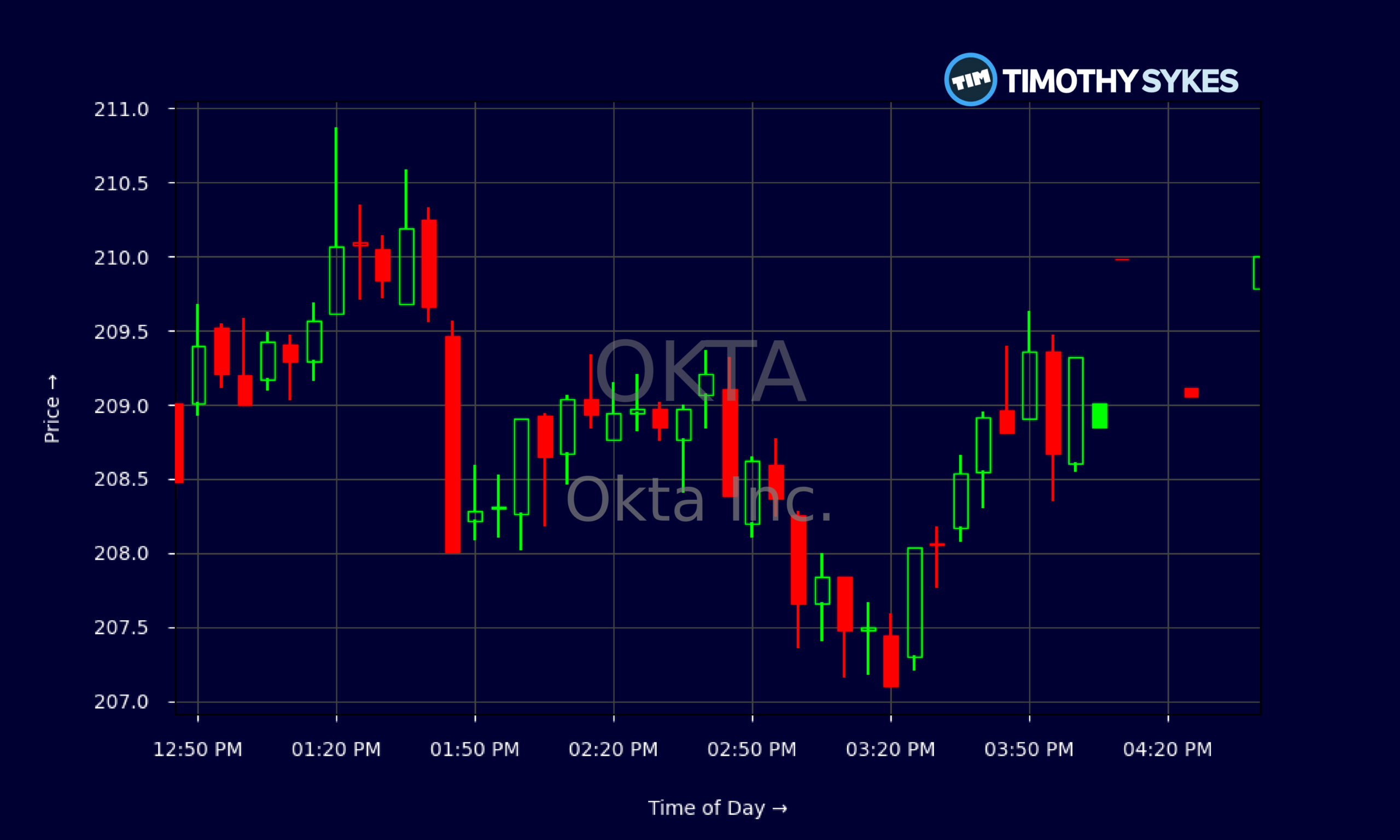
Live Update At 16:47:00 EDT: On Wednesday, October 21, 2026 Okta Inc. stock [NASDAQ: OKTA] is trending up by 8.49%! Discover the key drivers behind this movement as well as our expert analysis in the detailed breakdown below.
Quick Financial Overview
OKTA’s latest numbers show a company shifting from pure growth story to profitable operator, while still leaning into momentum. For Q2 FY2027, Okta reported $805M in revenue, up 11% year over year, with $793M of that from subscriptions, up 12%. That subscription mix matters for traders because it anchors future cash flow and smooths out volatility.
Remaining performance obligations hit $4.858B, rising 17%. That’s the backlog of contracted work still to be recognized as revenue, and it effectively sets a floor under Okta’s growth over the next several years. Guidance for FY2027 revenue of $3.216B–$3.226B signals management’s confidence that demand for identity and AI‑driven security is not slowing.
On profitability, OKTA posted an EBIT margin around 10% and EBITDA margin near 20%, backed by a hefty 78.1% gross margin. The balance sheet looks clean, with total debt to equity at just 0.01 and a current ratio of 1.5, giving Okta room to keep investing in AI Agents and platform expansion. For traders, that mix of moderate growth, improving margins, and low leverage supports a premium valuation — but also raises the bar for execution.
More Breaking News
Technically, OKTA has been grinding higher. Over the last several sessions, the stock bounced from around $187 to a close near $208.64 on 2026/10/21. Intraday, the 5‑minute tape shows steady buying from the low $200s into the high $208–$210 range, with dips getting scooped up quickly. That kind of tight intraday range near recent highs often signals accumulation rather than distribution, a pattern active traders on OKTA will watch closely.
Why Traders Are Watching OKTA’s AI Agents Story
OKTA is turning its AI narrative into hard numbers, and that’s why traders are glued to this tape. RBC Capital and Macquarie both argue that Okta for AI Agents is not just a buzzword but a new leg of growth. RBC sees early adopters of the suite lifting their spend by roughly 25%–40% on the Okta platform. Roth Capital goes even further, pointing to 50%–60% deal value uplift tied to AI Agents after the recent Oktane Investor Summit.
When multiple firms line up like that, traders listen. Roth kept a Buy and a $235 target on OKTA, highlighting stronger sales productivity, better partner engagement, and broader support for third‑party identity providers — including heavyweights like Microsoft Entra ID. That openness expands Okta’s total addressable market because it can now sit in mixed environments rather than demand rip‑and‑replace.
On top of that, analysts from Baird, Scotiabank, BMO, Stephens, Truist, Macquarie, Oppenheimer, and RBC have all raised OKTA price targets into roughly the $227–$245 band while keeping bullish ratings. Scotiabank pushed to $245 after meetings with management, flagging strong customer interest in Okta’s AI Agents and expecting these tools to become a meaningful growth driver starting in Q1 2028. BMO later matched that $245 level after further leadership meetings, citing long‑term upside from Okta for AI Agents and the new Agent Gateway product.
Then there’s the Blueprint Alliance. Okta co‑founded this cross‑industry coalition with AWS, Google Cloud, Salesforce, ServiceNow, CrowdStrike, Zscaler, Wiz, and others. The goal: define standards and reference architecture for securing enterprise AI agents and managing their identities and access. For traders, that positions OKTA not just as another SaaS name, but as a rule‑setter in the emerging “agentic identity” market — a narrative the Street loves to pay up for.
Conclusion
For active traders, OKTA is now a pure play on identity security and the next wave of AI‑driven automation. The stock is trading above the Street’s prior mean target of about $200, hovering around the low $200s while a wall of new targets clusters in the high $230s to mid‑$240s. That spread tells you sentiment is leaning bullish, but not euphoric — there is still room for surprise, especially if AI Agents revenue ramps faster than the Street expects.
Short‑term, OKTA’s chart reflects that tension. Pullbacks of 3%–5% around big news days — like Macquarie flagged — show traders locking in gains after a strong year‑to‑date run. But those dips have been met with fresh target hikes and upbeat commentary about revenue acceleration, cross‑sell from Agent SSO, and the strategic weight of the Blueprint Alliance. That classic “strong story, choppy price” mix is where nimble traders often find opportunity.
The key is discipline. OKTA’s premium valuation, with a price‑to‑sales near 13.5 and a rich P/E, leaves little room for execution errors. Traders should track upcoming quarters for signs that backlog, AI Agent adoption, and margin expansion stay on track. As millionaire penny stock trader and teacher Tim Sykes, says, “Small gains add up over time; focus on building wealth gradually, not chasing jackpots.” As Tim Sykes likes to hammer home, “Trade the catalysts, but always respect the price action and cut losses quickly when the story doesn’t match the chart.”
This analysis of OKTA is for educational and research purposes only and is meant to help traders understand how the company’s AI identity push, analyst upgrades, and technical setup are shaping current trading opportunities.
This is stock news, not investment advice. Timothy Sykes News delivers real-time stock market news focused on key catalysts driving short-term price movements. Our content is tailored for active traders and investors seeking to capitalize on rapid price fluctuations, particularly in volatile sectors like penny stocks. Readers come to us for detailed coverage on earnings reports, mergers, FDA approvals, new contracts, and unusual trading volumes that can trigger significant short-term price action. Some users utilize our news to explain sudden stock movements, while others rely on it for diligent research into potential investment opportunities.
Dive deeper into the world of trading with Timothy Sykes, renowned for his expertise in penny stocks. Explore his top picks and discover the strategies that have propelled him to success with these articles:
- Penny Stocks Trading Guide
- Best Penny Stocks Under $1 to Buy Today
- Top 8 Penny Stocks to Watch on Robinhood
Once you’ve got some stocks on watch, elevate your trading game with StocksToTrade the ultimate platform for traders. With specialized tools for swing and day trading, StocksToTrade will guide you through the market’s twists and turns.
Dig into StocksToTrade’s watchlists here:





Leave a reply