

Inter & Co. Inc. stocks have been trading up by 7.42 percent amid strong investor optimism from the latest earnings news.
What Traders Need To Know
- JPMorgan raised Inter & Co.’s price target from $9 to $11 and reaffirmed an Overweight rating after a “risk-on” rally in Brazilian financials post-election.
- UBS lifted its price target on Inter & Co. to $10 from $8.80 and reiterated a Buy rating, signaling growing confidence in upside potential.
- Shares trade around $7.21 versus a mean Street target of $10.20, with an overall overweight stance from analysts.
- New COO and Chief Growth Officer appointments with Brazil-focused backgrounds triggered a brief 1.8% pre-market dip.
- A routine Form 6-K filing added no new operational or strategic information, keeping focus on ratings and leadership changes.
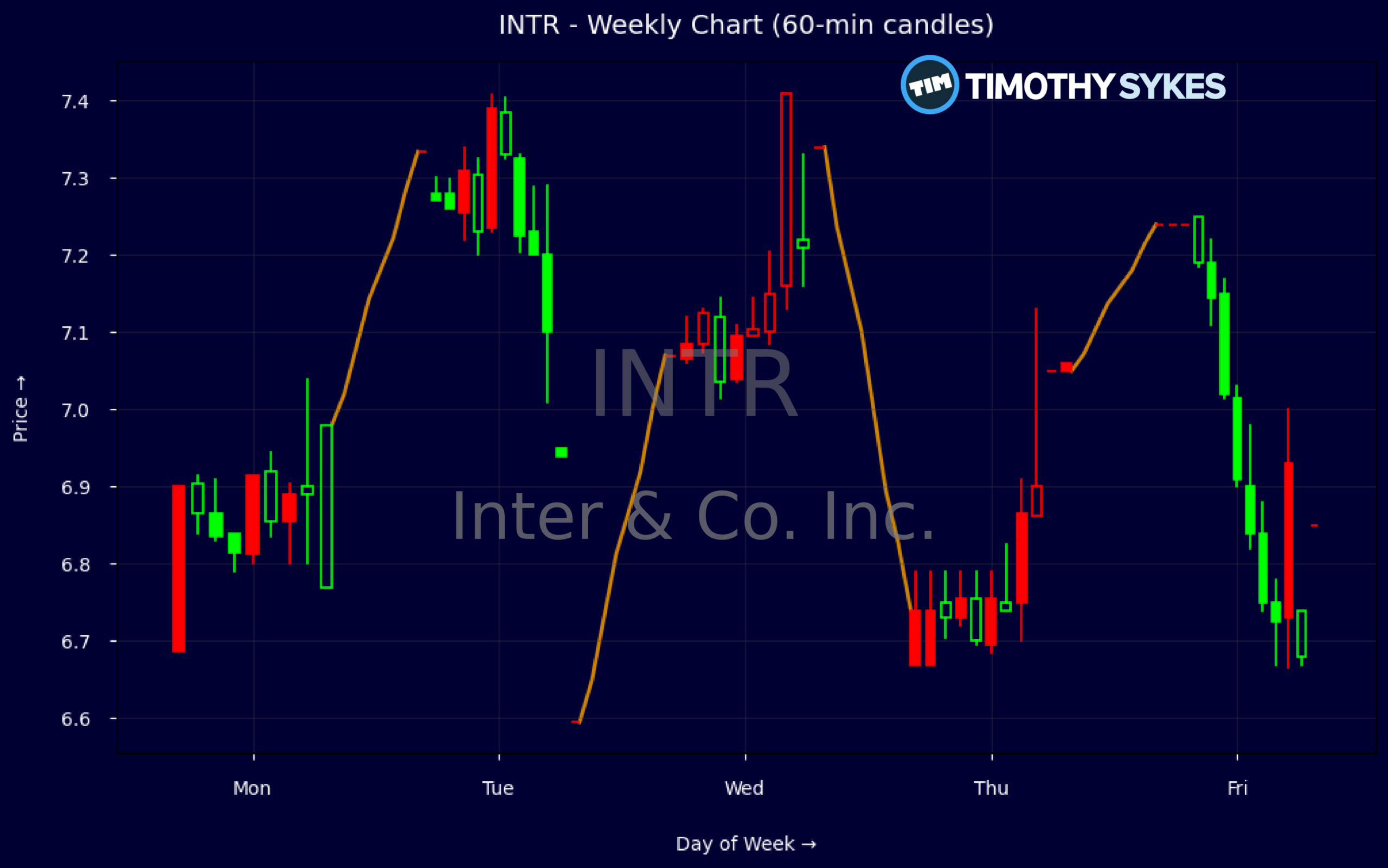
Weekly Update Oct 19 – Oct 23, 2026: On Saturday, October 24, 2026 Inter & Co. Inc. stock [NASDAQ: INTR] is trending up by 7.42%! Discover the key drivers behind this movement as well as our expert analysis in the detailed breakdown below.
Finance industry expert:
Analyst sentiment – positive
Inter&Co (INTR) sits in an early-scale, moderately capitalized position within Brazilian digital banking, with total assets of ~R$98.6bn and equity of ~R$10.2bn, implying a leverage ratio of 9.7x, typical for banks. Revenue of ~R$8.4bn against a pre-tax margin of -2.3% signals subscale profitability, though positive ROA (1%) and ROE (8%) indicate underlying earnings masked by non-recurring or valuation effects. At 2.07x P/S and 1.71x P/B, valuation embeds material growth expectations but not bubble-like conditions.
Weekly price action between 6.69 and 7.33 shows a constructive, stair-step pattern of higher closes with shallow pullbacks, consistent with a nascent uptrend following consolidation near 6.70. Intraday 5‑minute candles confirm dip-buying interest around 7.00 and supply emerging near 7.30–7.35, with expanding volume on up-moves and lighter selling volume. The key actionable level is 7.00: above it, long bias is warranted with a trading stop around 6.65 and profit-taking into 7.60–7.80.
Fundamentally, the stock is being re-rated: JPMorgan lifting its target to $11 and UBS to $10, both with Overweight/Buy, reinforces the growth narrative versus Brazilian banking peers that typically trade near 1.0–1.3x P/B with higher but slower-growing ROE. Management additions (new COO and CGO) should accelerate execution in core Brazil. With the stock at ~7.20 versus a Street mean target of ~10.20, I view risk-reward as favorable, with near-term resistance at 7.80–8.00 and medium-term upside toward 10.00.
More Breaking News
Quick Financial Overview
Inter & Co. Inc. (INTR) is trading at a discount to Wall Street views, with the stock around $7.21 against a mean target of $10.20. JPMorgan has raised its target from $9 to $11 and kept an Overweight rating, while UBS moved its target to $10 from $8.80 and reiterated Buy. For traders, that cluster of higher targets is the core of the current bull narrative around Inter & Co. Inc.
On the tape, weekly data show a recent push from the high $6 range into the low $7s, with closes around $7.07 to $7.34 after a prior print near $6.67. The intraday 5-minute candle showing a move from a $6.92 open down to a $6.665 low and then back up to a $7.19 close signals active dip-buying interest. That kind of reclaim off the lows often marks short-term support, especially when it lines up with a broader upgrade cycle like we see in INTR.
Fundamentally, Inter & Co. Inc. posted revenue of about $8.40B, with a price-to-sales ratio near 2.07 and price-to-book around 1.71. Profitability is still thin, with a pretax margin of roughly -2.3% and modest returns on assets near 1% and equity near 8%, while leverage is elevated with a ratio of about 9.7. The balance sheet shows roughly $98.6B in total assets and about $89.0B in liabilities, plus a modest dividend yield around 1.6%, giving traders a picture of a growing but leveraged financial platform.
Conclusion
This is stock news, not investment advice. Timothy Sykes News delivers real-time stock market news focused on key catalysts driving short-term price movements. Our content is tailored for active traders and investors seeking to capitalize on rapid price fluctuations, particularly in volatile sectors like penny stocks. Readers come to us for detailed coverage on earnings reports, mergers, FDA approvals, new contracts, and unusual trading volumes that can trigger significant short-term price action. Some users utilize our news to explain sudden stock movements, while others rely on it for diligent research into potential investment opportunities.
Dive deeper into the world of trading with Timothy Sykes, renowned for his expertise in penny stocks. Explore his top picks and discover the strategies that have propelled him to success with these articles:
- Penny Stocks Trading Guide
- Best Penny Stocks Under $1 to Buy Today
- Top 8 Penny Stocks to Watch on Robinhood
Once you’ve got some stocks on watch, elevate your trading game with StocksToTrade the ultimate platform for traders. With specialized tools for swing and day trading, StocksToTrade will guide you through the market’s twists and turns.
Dig into StocksToTrade’s watchlists here:




Leave a reply