

Charles River Laboratories International Inc. stocks have been trading up by 11.27 percent amid strong earnings and optimistic growth outlook.
Key Takeaways For CRL Traders
- Street turned sharply bullish after CRL’s 2026 Investor Day, with long-term growth, margin, and EPS targets laid out to 2030 and 2026 guidance reaffirmed at the top of the range.
- Major banks — RBC, BofA, Jefferies, Deutsche Bank, Morgan Stanley, and UBS — all raised CRL price targets into the $320–$357 zone while sticking with Buy, Outperform, or Overweight ratings.
- UBS and others see sizeable margin upside for Charles River Laboratories, helped by internalizing non‑human primate supply and a $300M-plus efficiency program running from 2027–2030.
- New tools like Apollo Orchestrate and the Magellan Stem Cells partnership show CRL leaning into digital QC, next‑gen sequencing, and higher‑value biologics testing.
- Citrini Research flags Charles River as a likely winner from AI‑driven drug discovery, where “virtual biologists” could funnel more early‑stage work into CRL’s labs.
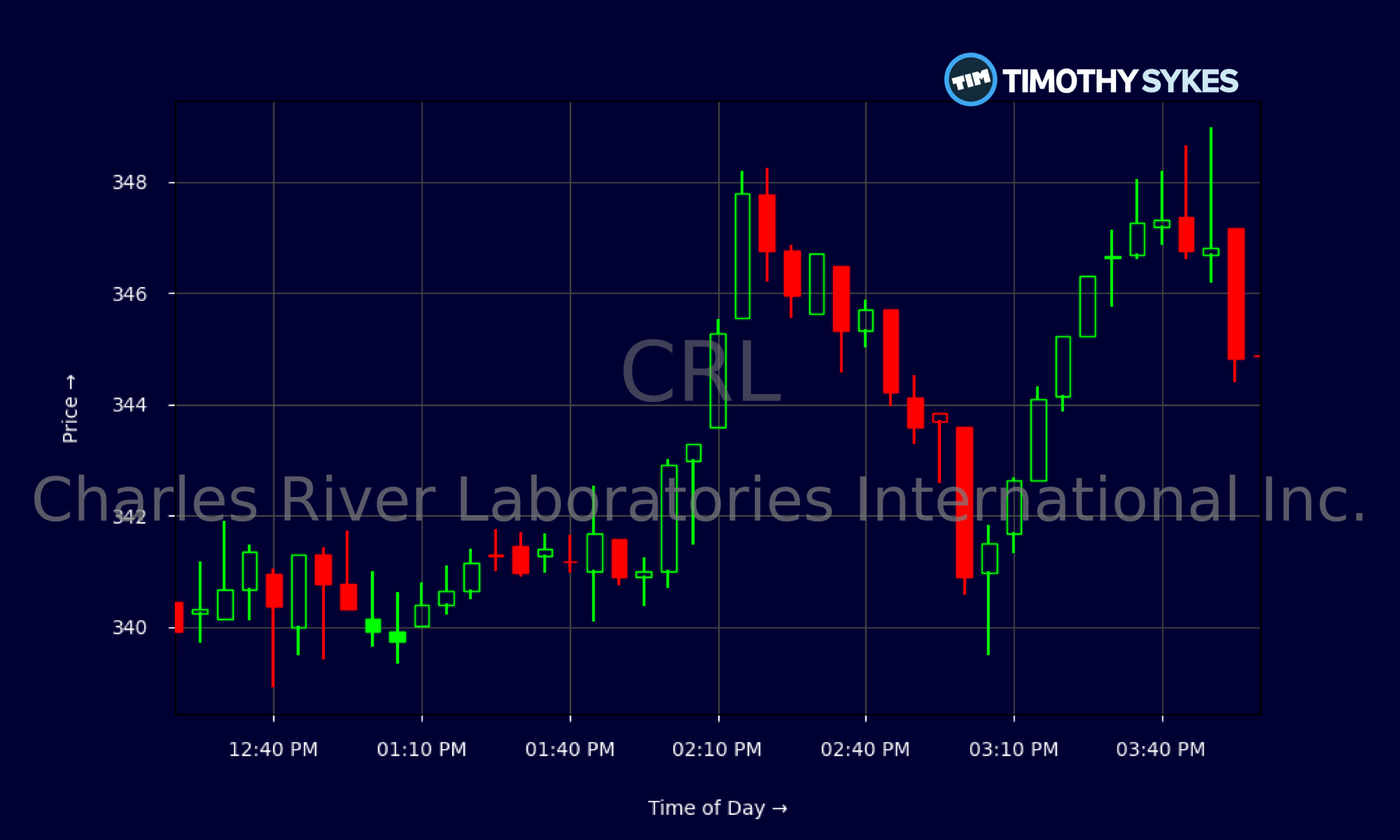
Live Update At 16:46:40 EDT: On Wednesday, October 21, 2026 Charles River Laboratories International Inc. stock [NYSE: CRL] is trending up by 11.27%! Discover the key drivers behind this movement as well as our expert analysis in the detailed breakdown below.
Quick Financial Overview
CRL has been trading like a strong uptrend that still has gas in the tank. Over the last few weeks, Charles River Laboratories climbed from the high‑$280s to a recent close around $344.87, with multiple tight pullbacks holding near prior support. That tells traders dip‑buyers are active.
The latest session shows CRL opening near $314 and squeezing to an intraday high just under $349. The 5‑minute tape reads like a classic trend day: higher lows through midday, then a steady grind higher into the close. Breakouts above $340 held, not failed, which is what momentum traders want to see.
Fundamentals line up with that strength. Charles River Laboratories generated about $4.02B in annual revenue with a healthy 32.7% gross margin, but GAAP profit margins are currently negative as the company absorbs interest expense and one‑time charges. Debt is meaningful — total‑debt‑to‑equity sits around 1.07 — yet operating cash flow of $179.7M and free cash flow of $148.6M last quarter show the business funding itself.
More Breaking News
For traders, CRL screens like a premium, cash‑generating CRO that is temporarily compressed on earnings, while the Street is betting those margins expand from here.
Why Traders Are Watching CRL Momentum
What changed the game for CRL was the 2026 Investor Day. Charles River Laboratories rolled out its refreshed “Pathway to Purpose” strategy and finally put hard numbers on the long‑term story. Management is calling for 5–7% organic revenue growth from 2027–2030, margin expansion to roughly 24%, and low double‑digit EPS growth, backed by more than $300M in cost savings over that same stretch. On top of that, 2026 EPS guidance stays at the high end of the $11.15–$11.45 range, already ahead of prior Street consensus.
Traders pay attention when long‑dated promises line up with immediate action from the sell side. After that event, RBC Capital, BofA, Jefferies, Deutsche Bank, Morgan Stanley, and UBS all pushed CRL price targets higher, clustering roughly between $320 and $357 while keeping bullish ratings. UBS went further, upgrading Charles River Laboratories from Neutral to Buy and lifting its target all the way to $357 from $175 — a major sentiment swing that tends to pull in fresh money.
These calls lean on real operating levers. Analysts highlight margin upside in the Discovery and Safety Assessment unit, benefits from internalizing non‑human primate supply, and that $300M efficiency program the company laid out. Charles River Laboratories is also stacking growth drivers: the Pathoquest acquisition builds NGS capabilities, Apollo Orchestrate digitizes QC across Biologics Testing Solutions, and the Magellan Stem Cells deal adds cGMP sequencing and viral safety testing around Zelestrocel.
Layer on the AI angle and the narrative tightens. Citrini Research argues CRL is positioned to gain as AI “virtual biologists” speed up drug discovery, sending more compounds into preclinical and safety workflows where Charles River Laboratories gets paid. None of this guarantees a straight‑up chart, but it explains why dips keep finding buyers.
Conclusion
For active traders, CRL now sits at the crossroads of three powerful stories: a credible long‑range financial roadmap, visible operational upgrades, and a macro tailwind from AI‑enabled drug discovery. Charles River Laboratories is telling the market it can grow organically at 5–7%, widen margins toward 24%, and compound EPS at low double‑digit rates, while a $300M‑plus cost‑savings program and internal supply moves do the heavy lifting behind the scenes.
The tape is confirming that message for now. Charles River Laboratories has broken above recent consolidation levels, ridden by a wave of price‑target hikes and an upgrade from UBS that signals lingering fears are fading. The next real checkpoint is the Q3 2026 earnings release on 2026/11/04, where CRL will need to show that these modernization and efficiency stories are flowing through to bookings, margins, and cash.
For traders studying CRL, this is a textbook example of how narrative and numbers can align into a momentum setup — but discipline still rules. As Tim Sykes likes to say, “The market doesn’t care about your opinion, only your preparation. Study the pattern, make a plan, and always be ready to cut losses fast.” As millionaire penny stock trader and teacher Tim Sykes, says, “Embrace the journey, the ups and downs; each mistake is a lesson to improve your strategy.”. This article is for educational and research purposes only, and every trader must make their own decisions.
This is stock news, not investment advice. Timothy Sykes News delivers real-time stock market news focused on key catalysts driving short-term price movements. Our content is tailored for active traders and investors seeking to capitalize on rapid price fluctuations, particularly in volatile sectors like penny stocks. Readers come to us for detailed coverage on earnings reports, mergers, FDA approvals, new contracts, and unusual trading volumes that can trigger significant short-term price action. Some users utilize our news to explain sudden stock movements, while others rely on it for diligent research into potential investment opportunities.
Dive deeper into the world of trading with Timothy Sykes, renowned for his expertise in penny stocks. Explore his top picks and discover the strategies that have propelled him to success with these articles:
- Penny Stocks Trading Guide
- Best Penny Stocks Under $1 to Buy Today
- Top 8 Penny Stocks to Watch on Robinhood
Once you’ve got some stocks on watch, elevate your trading game with StocksToTrade the ultimate platform for traders. With specialized tools for swing and day trading, StocksToTrade will guide you through the market’s twists and turns.
Dig into StocksToTrade’s watchlists here:




Leave a reply