

Array Technologies Inc. stocks have been trading down by -3.92 percent amid bearish sentiment over renewable energy policy and demand headwinds.
Key Takeaways
- Morgan Stanley cut its price target on Array Technologies from $8 to $6, tying ARRY’s reset to higher rates and weaker valuation multiples across renewables.
- Susquehanna reduced its ARRY target from $6.75 to $4, preferring alternative energy names with stronger utility-scale and domestic manufacturing positioning.
- UBS downgraded ARRY from Buy to Neutral and slashed its target to $5, warning that cash dividend payments will crimp free cash flow and deleveraging.
- Barclays lowered its ARRY target from $8 to $4, citing worries over bookings, delivery timing, and refinancing needs this quarter.
- RBC Capital cut its Array Technologies target from $9 to $5, even as the Street’s average rating and mean target of $8.69 remain higher.
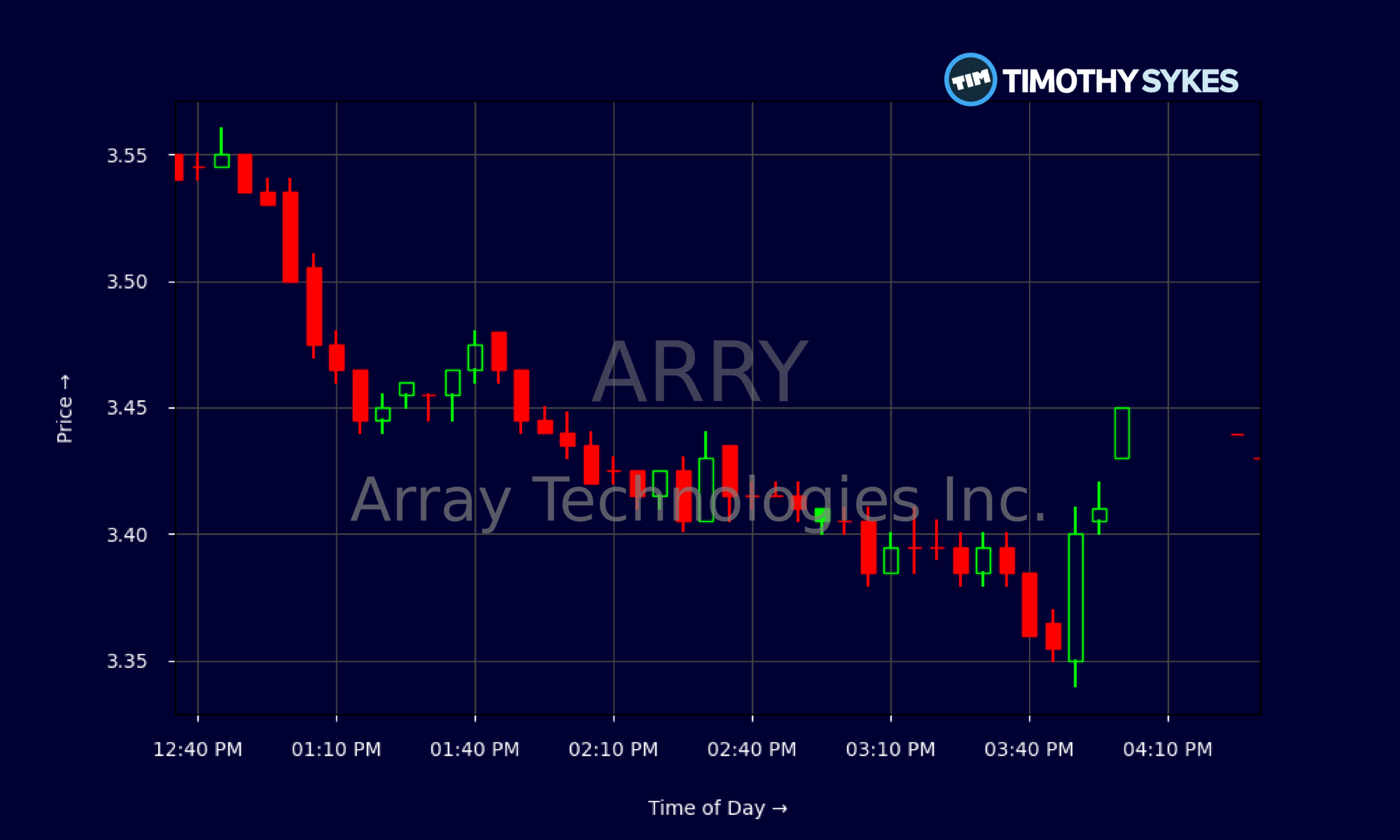
Live Update At 16:46:55 EDT: On Friday, October 16, 2026 Array Technologies Inc. stock [NASDAQ: ARRY] is trending down by -3.92%! Discover the key drivers behind this movement as well as our expert analysis in the detailed breakdown below.
Quick Financial Overview
ARRY is trading like a broken growth story, sitting around the mid-$3s after weeks of steady pressure. The daily chart shows a clear drift lower from about $4.10 on 2026/09/21 to roughly $3.43 on 2026/10/16, with bounces getting sold and each lower high reinforcing the downtrend.
Intraday action in ARRY underscores that weakness. On the latest day, ARRY opened near $3.60 in premarket, popped briefly, then faded through the session to close near the lows around $3.43. The five‑minute candles show tight ranges and consistent selling into strength, not the kind of aggressive dip‑buying momentum traders love.
Fundamentally, Array Technologies is stuck between decent revenue and tough profitability. ARRY generated about $1.28B in revenue over the last year, yet margins are negative, with profit margin around -12% and returns on equity deep in the red. Leverage is high: total debt to equity runs above 2.5, with a leverageratio over 5, signaling a balance sheet that matters in a high‑rate world.
More Breaking News
On the positive side, ARRY is throwing off strong cash. Recent quarterly operating cash flow of roughly $121M and free cash flow of about $114M look solid versus the stock’s low price‑to‑sales of 0.48 and price‑to‑cash‑flow near 1.2. For traders, that mix — beaten‑down chart, heavy debt, but real cash generation — sets up a battleground name where sentiment and headlines drive the next leg.
Why Traders Are Watching ARRY Now
Traders are glued to Array Technologies because Wall Street has turned from cautious to openly skeptical, and that kind of sentiment shift often fuels sharp trading moves. In the latest hit, Morgan Stanley cut its ARRY price target from $8 to $6, blaming higher interest rates and valuation multiple compression across renewable and power equipment names. That tells traders ARRY is being priced as a rate‑sensitive, levered play in a tough macro tape, not a momentum growth darling.
Susquehanna piled on, dropping its ARRY target from $6.75 to $4 and keeping a Neutral stance. The key line for traders is that Susquehanna prefers alternative energy names with stronger utility‑scale and domestic manufacturing positioning. Translation: even with growing power demand from data centers and electrification, ARRY is not their go‑to way to play the theme. That relative preference can keep rotation flows away from ARRY and into peers.
The UBS move is even more structural for ARRY’s story. UBS downgraded Array Technologies from Buy to Neutral and cut its target to $5, flagging a shift in preferred dividends from payment‑in‑kind to cash. That cash drain squeezes free cash flow and limits deleveraging and growth spending just as competitors consolidate. For traders, that’s a clear red flag: ARRY’s balance sheet is working against it while rivals get stronger.
Barclays and RBC reinforced the pressure by slashing targets to $4 and $5, respectively, while still using labels like Equal Weight and Sector Perform. That combination — neutral‑sounding ratings but much lower targets — often keeps a lid on rallies. It signals that ARRY is not abandoned, but the bar for upside has been pulled down hard, which matters when you’re trading around $3–$4 with Street targets now clustered only slightly above.
Conclusion
For active traders, ARRY is a textbook example of why you never fall in love with a story. The chart is heavy, the Street is walking down its numbers, and the core narrative around Array Technologies has shifted from “growth solar hardware play” to “levered, rate‑sensitive name fighting for relevance while peers consolidate.”
At the same time, ARRY’s financials show why the stock still attracts attention. The company generates over $1B in annual revenue and strong quarterly free cash flow, holds more than $300M in cash, and trades at low price‑to‑sales and cash‑flow multiples. That mix can create sharp short squeezes or relief rallies when any headline breaks the other way, especially if ARRY surprises on bookings, margins, or refinancing progress.
But the wave of target cuts from Morgan Stanley, Susquehanna, UBS, Barclays, and RBC tells traders to respect the risk. Concerns about refinancing, dividend cash drains, and weaker positioning versus other alternative energy names are real drivers of sentiment. In markets like this, as Tim Sykes loves to remind traders, “The market doesn’t care about your opinion, only about price action and risk.” As millionaire penny stock trader and teacher Tim Sykes, says, “Preparation plus patience leads to big profits.”. With ARRY, that means treating it as a volatile trading vehicle, not a conviction hold — planning entries and exits around key levels, respecting the downtrend, and cutting losses fast when the tape turns against you. This analysis is for educational and research purposes only and is not investment advice.
This is stock news, not investment advice. Timothy Sykes News delivers real-time stock market news focused on key catalysts driving short-term price movements. Our content is tailored for active traders and investors seeking to capitalize on rapid price fluctuations, particularly in volatile sectors like penny stocks. Readers come to us for detailed coverage on earnings reports, mergers, FDA approvals, new contracts, and unusual trading volumes that can trigger significant short-term price action. Some users utilize our news to explain sudden stock movements, while others rely on it for diligent research into potential investment opportunities.
Dive deeper into the world of trading with Timothy Sykes, renowned for his expertise in penny stocks. Explore his top picks and discover the strategies that have propelled him to success with these articles:
- Penny Stocks Trading Guide
- Best Penny Stocks Under $1 to Buy Today
- Top 8 Penny Stocks to Watch on Robinhood
Once you’ve got some stocks on watch, elevate your trading game with StocksToTrade the ultimate platform for traders. With specialized tools for swing and day trading, StocksToTrade will guide you through the market’s twists and turns.
Dig into StocksToTrade’s watchlists here:





Leave a reply