

AI OKTO CORP. stocks have been trading up by 131.06 percent after major AI breakthrough headlines fueled investor optimism.
Market Insights For AIOK Traders
- AI OKTO agreed to sell its LPG carrier Dream Arrax to Robin Energy for $18M, unlocking cash from a non-core asset.
- The deal coincided with a 138% spike in AIOK’s share price, signaling aggressive speculative interest.
- Trading volume exploded to extremely elevated levels, showing strong short-term momentum focus from active traders.
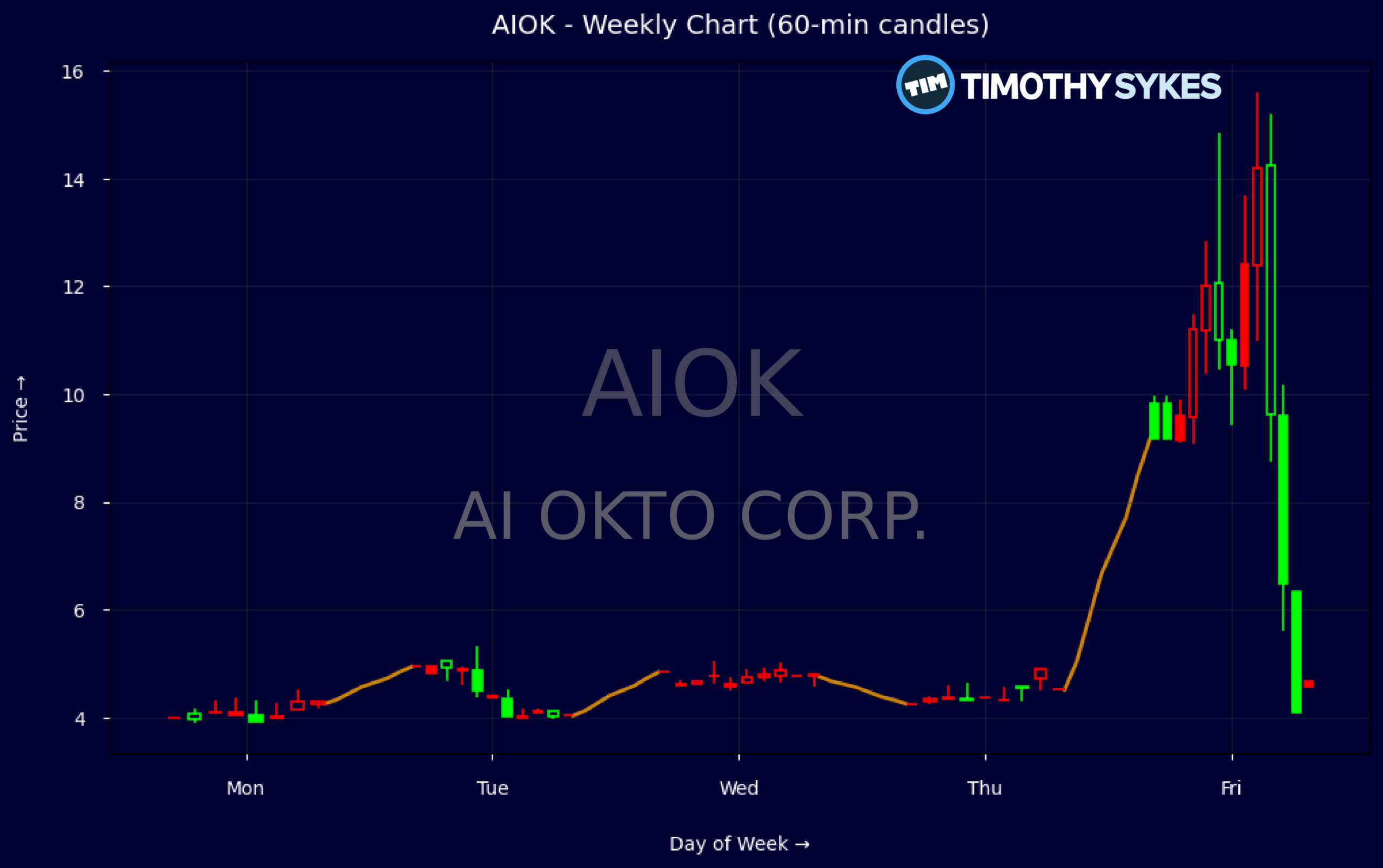
- Weekly price action shows a shift from a $3–$5 range into double digits, confirming a major repricing.
- Intraday volatility expanded sharply, with a single session swing from the mid-$5 area to above $15 before closing near $12.
Weekly Update Oct 19 – Oct 23, 2026: On Sunday, October 25, 2026 AI OKTO CORP. stock [NASDAQ: AIOK] is trending up by 131.06%! Discover the key drivers behind this movement as well as our expert analysis in the detailed breakdown below.
Energy industry expert:
Analyst sentiment – positive
AI OKTO (AIOK) is a distressed, asset-rich microcap with weak fundamentals. 2025 revenue of roughly $7.6m sits against an operating loss of $1.7m and net loss of $2.1m, implying negative EBIT and net margins. Free cash flow of -$7.8m and operating cash flow of -$7.8m highlight an unsustainable cash burn, with only $622 of cash on hand. However, a $51.9m enterprise value versus $48.9m equity and substantial PP&E suggest significant asset backing.
Technically, the stock has transitioned from illiquid, flat trading around $4 to a violent upside break, closing at $9.82 on 23 Oct after a spike to $12.82. The dominant trend is now sharply bullish but highly speculative, driven by news-driven volume rather than stable accumulation. Intraday 5‑minute candles show repeated long wicks and wide ranges, indicating aggressive momentum trading. $9.00 is the key actionable level: above it, momentum traders can stay long; sustained breaks below favor rapid profit-taking.
The $18m sale of LPG carrier Dream Arrax to Robin Energy is transformational for liquidity and balance-sheet flexibility, explaining the 138% price surge and extreme volume. Relative to Energy and Fossil Fuels benchmarks, AIOK is now a high-beta event-driven name rather than a fundamental compounder. Near term, support sits at $8.50–9.00 with resistance at $12.50. Base case: speculative upside toward $14–15 if asset monetization continues and volume remains elevated.
More Breaking News
Quick Financial Overview
AI OKTO CORP. comes into this move with modest reported revenue and weak recent earnings. The company generated about $7.61M in revenue over the period shown, but also booked a net loss of roughly $2.11M and negative operating income of about $1.69M. Cash flow from operations was negative and free cash flow sat around -$7.82M, while beginning and ending cash balances were very low, in the low-thousands of dollars. That backdrop explains why a $18M asset sale matters so much to the story.
On the balance sheet, AI OKTO CORP. shows total assets of about $50.20M against total liabilities of only $1.31M, with stockholders’ equity near $48.88M. Current assets of about $18.10M and current liabilities near $1.31M indicate solid working capital on paper, helped by sizeable receivables and property, plant, and equipment. The sale of the Dream Arrax LPG carrier for $18M can meaningfully reshape liquidity and potentially reduce the need for new financing if proceeds are used carefully.
The chart confirms how dramatic the market reaction has been. On the weekly data, AIOK traded around $3.98, then pushed toward the mid-$4s, before exploding to a $12.02 open and $12.82 high, closing at $9.82 after the news around 2026/10/23. Intraday, a 5-minute candle shows price jumping from the mid-$5s to as high as $15.59 and settling near $12.02, a huge range that signals both intense demand and profit-taking. For traders, this is a classic high-volatility, catalyst-driven name where risk must be sized very carefully.
Conclusion
AIOK’s Ship Sale Ignites High-Risk, High-Reward Setup
The $18M sale of the Dream Arrax carrier is a clear turning point in how the market views AIOK in the short term. A loss-making company with tight cash suddenly unlocked a lump of capital large relative to recent revenue and its tiny cash position. The 138% surge in AIOK’s stock price, combined with extremely elevated trading volume, tells you momentum traders rushed in fast, pushing price far away from its prior $3–$5 range.
For AI OKTO CORP., the key question now is how those proceeds are used and whether the business can turn that balance sheet boost into better earnings and cash flow. For traders, the tape sends a different message: this has shifted into a pure catalyst-and-volatility trade. The weekly and intraday charts both show wide ranges and strong whips, which create opportunity but also raise the odds of sharp reversals once the initial excitement cools.
In this kind of name, risk management matters more than the story. Breakout and pullback traders will focus on how price behaves around the recent double-digit zone and whether volume stays heavy or fades off. As millionaire penny stock trader and teacher Tim Sykes, says, “It’s better to go home at zero than to go home in the red.”. That mindset fits perfectly here, where honoring stop losses and preserving mental and trading capital can matter more than catching every last cent of a move. As I tell my students, “Big news can double a stock in a day, but disciplined risk is what decides whether that move grows your account or blows it up.” All of this is for educational and research purposes, and every trader must do their own work before taking a position.
This is stock news, not investment advice. Timothy Sykes News delivers real-time stock market news focused on key catalysts driving short-term price movements. Our content is tailored for active traders and investors seeking to capitalize on rapid price fluctuations, particularly in volatile sectors like penny stocks. Readers come to us for detailed coverage on earnings reports, mergers, FDA approvals, new contracts, and unusual trading volumes that can trigger significant short-term price action. Some users utilize our news to explain sudden stock movements, while others rely on it for diligent research into potential investment opportunities.
Dive deeper into the world of trading with Timothy Sykes, renowned for his expertise in penny stocks. Explore his top picks and discover the strategies that have propelled him to success with these articles:
- Penny Stocks Trading Guide
- Best Penny Stocks Under $1 to Buy Today
- Top 8 Penny Stocks to Watch on Robinhood
Once you’ve got some stocks on watch, elevate your trading game with StocksToTrade the ultimate platform for traders. With specialized tools for swing and day trading, StocksToTrade will guide you through the market’s twists and turns.
Dig into StocksToTrade’s watchlists here:





Leave a reply