

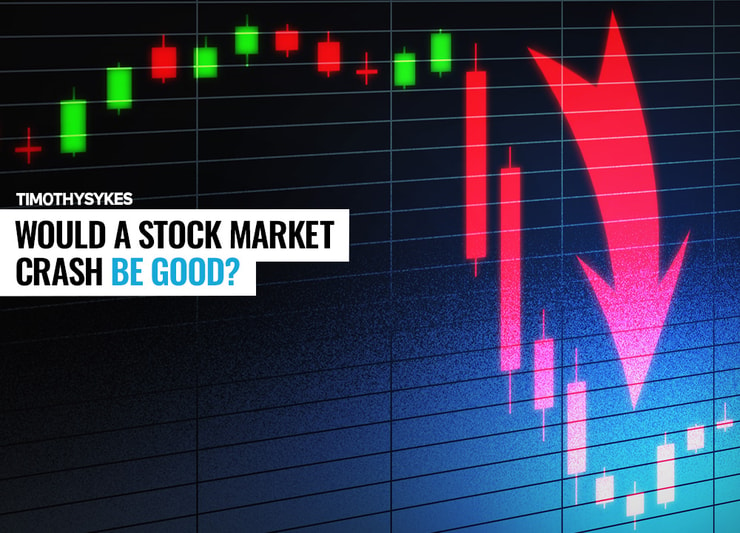


I don’t know if there’s definitely going to be a crash, but all the signs point to it.
The problem is, we have so many newbies who don’t know market history.
They don’t think this can happen…
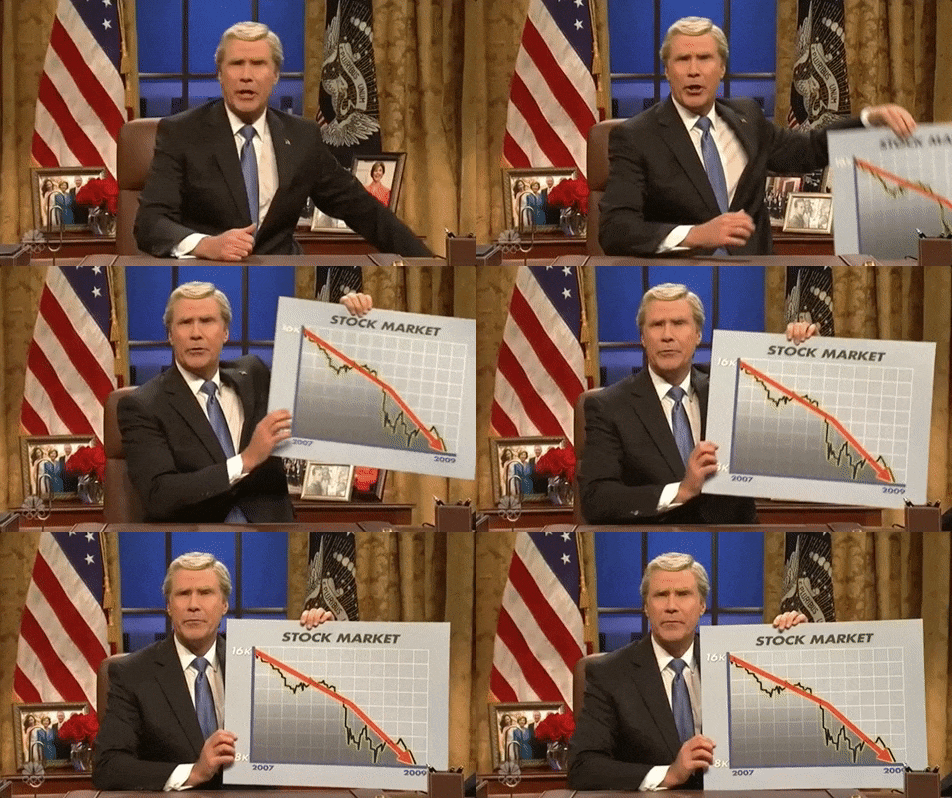
They might remember the COVID crash from March 2020 (but they also remember how fast it bounced).
They have no experience of an extended market crash.
For them, it’s always…
“Buy the dip!”
That way of thinking brings up one of the most important lessons you can ever learn….
Table of Contents
In an Uncertain Market, Err On the Side of Caution
Last week we saw several big tech companies report earnings, only to get crushed by Wall Street.
Alphabet (NASDAQ: GOOGL) reported after the bell on Wednesday (Oct. 28). It dropped 13% and kept going…

Amazon (NASDAQ: AMZN) reported on Thursday and dropped 12%. It bounced but is still down…

The one that caught everyone by surprise was Intel (NASDAQ: INTC). It dropped 28% overnight.
By Friday’s close it was down even more…

The tech selloff dragged the Nasdaq lower by 2% for the week.

Again, I can’t predict whether a crash is coming.
But I do know that a lot of stocks are WAY overvalued.
If a crash does come, is it a good thing?
Here’s my take…
Why the Next Market Crash Could Be a Good Thing
I hope the overall market keeps going. And I hope the AI revolution keeps going.
But at the same time you have to look at the big picture.
Nasty nasty nasty $DIA $SPY $QQQ action after an attempted morning bounce and I'm SO glad I made this video yesterday and have been warning about a potential #stockmarketcrash for the past 3 weeks…scumbags like @ChrisCamillo and @saylor have led an entire generation to gamble… https://t.co/kKAwVjtMkG
— Timothy Sykes (@timothysykes) October 30, 2026
Looking at it historically, everything is expensive.
That said, there are also reasons why a stock market crash would be good…
3 Benefits of a Market Crash
A full-blown stock market crash would scare a lot of people.
You could make an argument that a healthy pullback and consolidation would be better.
But a crash in an overextended market has benefits (especially for day traders).
First, it would…
Flush Out Speculation from Overvalued Stocks
A market crash exposes overvalued companies and over-leveraged speculators.
“Only when the tide goes out do you discover who’s been swimming naked.” – Warren Buffett

As penny stock traders, we’re used to the hype and speculation, right?
But some BIG companies and big traders have ridden hype a long way over the past couple of years.
That has led to newbies thinking stocks only go up.
A crash would reset valuations to more realistic levels. In other words, it wouldn’t take crazy math to make the valuations work.
Remember, if a crash comes it will…
Create Buying Opportunities
When there’s a huge sell-off, it creates great buying opportunities.
I’m not suggesting that you try to day trade INTC, or GOOGL with a small account.
But there are always plays.
For example, even in an ugly market on Friday, we had a play with AI OKTO Corp (NASDAQ: AIOK)…
Now $AIOK is into the $31s and it looks like we all sold too early, myself especially in the $26s, but I like trading cowardly in this market, someone has to be the voice of reason when you have madmen like @ChrisCamillo corrupting an entire generation of over-aggressive gamblers… https://t.co/iv1yWrEmzR pic.twitter.com/OinakKl3of
— Timothy Sykes (@timothysykes) October 30, 2026
Take advantage of the opportunities.
So many people are just HODLing overleveraged positions. If the crash comes, they’ll start panic selling.
If you sit on the sidelines and wait for opportunities, you have an edge. In the meantime, trade what’s moving.
Finally…
A Stock Market Crash Is Healthy
Frankly, I’m surprised that we haven’t had a market crash in a while. We’re overdue.
The reason valuations get so out of whack is due to speculation and excessive leverage.
For the past few years, it has paid to HODL most tech stocks. But in the long run, HODLing can be very dangerous.
A crash would wipe out a lot of newbies and HODLers. And it would be painful for some VERY big traders using leverage.
But it would also mean that strong companies with real revenue could lead the way back.
That’s how we get to new highs that are sustainable.
Catalyst Watch
Tomorrow’s midterms will clear up a lot of the uncertainty in the market.
Remember, the S&P 500 has risen in 19 post-midterm election years since 1950. If history rhymes, then we could see a big market rally in 2027.
All the more reason to stay safe now, right? That way you can take advantage of any potential bounce.
Key Takeaway
We’re due some consolidation. That’s always been good for the market in the long-run.
I’m sure most of the “real” companies building out AI will be fine. The technology will be fine.
And, yes, the economy will be fine over time.
Understand that even if a big crash does happen, there will be opportunities in the market.
All the more reason to apply for my Trading Challenge today.
Remember, preparation is key.
Are you prepared for what happens today, tomorrow, and next week?
Cheers,
– Tim Sykes

Leave a reply