
timothy sykes logo

Sell-Off: I Was Early, You Were Prepared

Timothy SykesAvatar
Written by Timothy Sykes
Updated 11/5/2026 6 min read

Well, it finally happened.

If you were paying attention, you didn’t end up doing this…
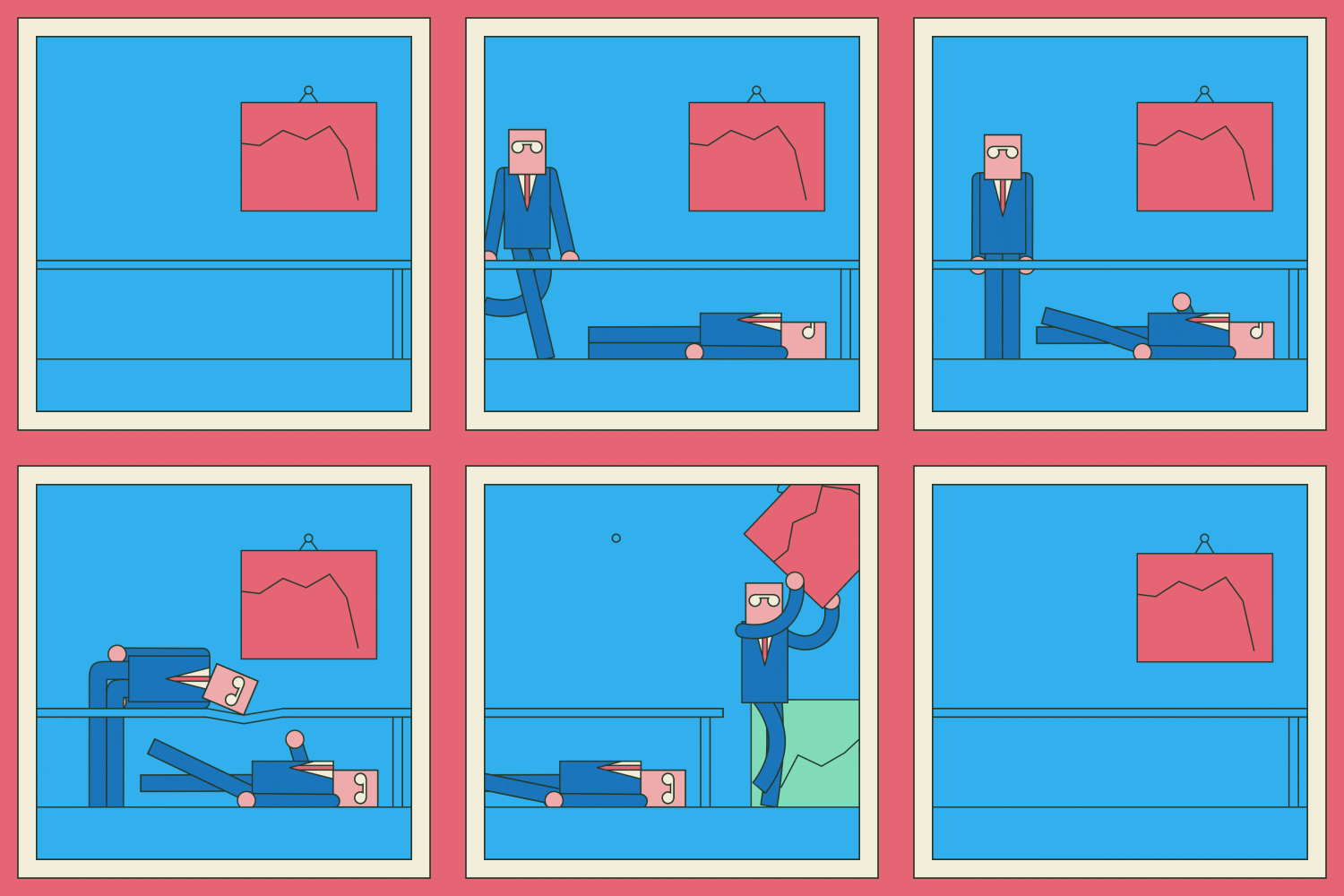
Even though I was early with my warnings about a stock market crash…

I’ve been preparing students and readers for the past three weeks.

There are a lot of lessons to be learned from market corrections.

Especially when it happens like this…

The Sell-Off I Called Weeks Ago

Yesterday (Nov. 5), the Nasdaq dropped more than 1200 points before 11AM ET.

The INVESCO QQQ Trust (NASDAQ: QQQ) shows just how fast panic sets in…

QQQ 11/5/26, 1-min candles, tech sell-off

Again, I’ve been calling this for three weeks…

You were ready, right?

The Qs ended the day in correction territory, even after the bounce…

QQQ 3-month, daily candles, correction territory

It was an ugly day.

When the market is crashing, the most important thing to remember is…

Do Your Best To Stay Safe

It’s crazy, right?

When there are tons of plays, it’s all I can do to encourage new traders to take advantage of the opportunities.

But when the S&P 500 Heat Map looks like this…

S&P 500 Heat Map, 11/5/26

I can’t emphasize this enough:

It is WAY more important to stay safe than to trade just for the sake of trading.

You Do NOT Have To Trade Every Day
Post image

Get my after-hours watchlist, free

The Night Tape, every trading day after the closing bell, plus The Second Session guide.

It’s okay to let Wall Street and more experienced traders battle it out.

In other words, if you are still a newbie, it’s okay to sit on the sidelines.

You do NOT have to trade during a crash. And you do NOT have to HODL…

In fact, in a crash it’s good to remember one of the fundamental rules of trading:

Cash Is a Position

A financial planner will likely never say that to you. They’ll tell you to stay in the markets even when the VIX is spiking like this…

Cboe Volatility Index (VIX)

Let’s get real…

You can stay in cash and wait for better opportunities (once the overall market bottoms).

Keep making a watchlist and look for big percent gainers. Get ready for more morning panic dip buys.

But also understand this is not an excuse to stop studying.

In fact, you MUST learn from it and prepare for the next crash (and the next one after that).

You might be wondering…

“Is it over? Can it go any lower?”

I have no idea how low it will go.

Can it go lower? Of course it can.

But anyone who says this correction won’t turn into a full-blown bear market is just guessing.

I don’t try to guess. Ever.

Even three weeks ago I called it a potential market crash based on all the signs.

And I admitted it when I was wrong. Turns out I was just early, right?

The Beauty of Being Conservative In an Industry Full of Fakes

Everything I teach is based on experience. What happened yesterday wasn’t new (and there were signs).

Wherever you are on your journey, be VERY careful over the coming days.

Again, there will be opportunities.

But consider trading small (or paper trading) so you can focus on the process.

Especially if this is your first market crash.

If you want even MORE insight into what’s going on in the markets, then I HIGHLY recommend you take advantage of StocksToTrade Network’s FREE LIVE SHOWS every week.

Just click on the image below…
Key Takeaway

Remember, a market crash flushes out overleveraged speculators.

It also creates buying opportunities.

And, ultimately, it’s healthy for the market.

It brings stock valuations back in line when they’re insanely overpriced.

For those of us trading penny stocks conservatively, it’s like a reset.

I know a LOT of great traders who’ve been struggling recently.

A big correction would help heal the market.

Stay safe out there.

Cheers,

– Tim Sykes


How much has this post helped you?


Leave a reply

Author card Timothy Sykes picture

Timothy Sykes

Tim Sykes is a penny stock trader and teacher who became a self-made millionaire by the age of 22 by trading $12,415 of bar mitzvah money. After becoming disenchanted with the hedge fund world, he established the Tim Sykes Trading Challenge to teach aspiring traders how to follow his trading strategies. He’s been featured in a variety of media outlets including CNN, Larry King, Steve Harvey, Forbes, Men’s Journal, and more. He’s also an active philanthropist and environmental activist, a co-founder of Karmagawa, and has donated millions of dollars to charity.
Read More

* Results are not typical and will vary from person to person. Making money trading stocks takes time, dedication, and hard work. There are inherent risks involved with investing in the stock market, including the loss of your investment. Past performance in the market is not indicative of future results. Any investment is at your own risk. See Terms of Service here

The available research on day trading suggests that most active traders lose money. Fees and overtrading are major contributors to these losses.

A 2000 study called “Trading is Hazardous to Your Wealth: The Common Stock Investment Performance of Individual Investors” evaluated 66,465 U.S. households that held stocks from 1991 to 1996. The households that traded most averaged an 11.4% annual return during a period where the overall market gained 17.9%. These lower returns were attributed to overconfidence.

A 2014 paper (revised 2019) titled “Learning Fast or Slow?” analyzed the complete transaction history of the Taiwan Stock Exchange between 1992 and 2006. It looked at the ongoing performance of day traders in this sample, and found that 97% of day traders can expect to lose money from trading, and more than 90% of all day trading volume can be traced to investors who predictably lose money. Additionally, it tied the behavior of gamblers and drivers who get more speeding tickets to overtrading, and cited studies showing that legalized gambling has an inverse effect on trading volume.

A 2019 research study (revised 2020) called “Day Trading for a Living?” observed 19,646 Brazilian futures contract traders who started day trading from 2013 to 2015, and recorded two years of their trading activity. The study authors found that 97% of traders with more than 300 days actively trading lost money, and only 1.1% earned more than the Brazilian minimum wage ($16 USD per day). They hypothesized that the greater returns shown in previous studies did not differentiate between frequent day traders and those who traded rarely, and that more frequent trading activity decreases the chance of profitability.

These studies show the wide variance of the available data on day trading profitability. One thing that seems clear from the research is that most day traders lose money .

Millionaire Publishing 66 W Flagler St. Ste. 900 Miami, FL 33130 United States (833) 986-6771 This is for information purposes only as Millionaire Publishing LLC nor Timothy Sykes is registered as a securities broker-dealer or an investment adviser. No information herein is intended as securities brokerage, investment, tax, accounting or legal advice, as an offer or solicitation of an offer to sell or buy, or as an endorsement, recommendation or sponsorship of any company, security or fund. Millionaire Publishing LLC and Timothy Sykes cannot and does not assess, verify or guarantee the adequacy, accuracy or completeness of any information, the suitability or profitability of any particular investment, or the potential value of any investment or informational source. The reader bears responsibility for his/her own investment research and decisions, should seek the advice of a qualified securities professional before making any investment, and investigate and fully understand any and all risks before investing. Millionaire Publishing LLC and Timothy Sykes in no way warrants the solvency, financial condition, or investment advisability of any of the securities mentioned in communications or websites. In addition, Millionaire Publishing LLC and Timothy Sykes accepts no liability whatsoever for any direct or consequential loss arising from any use of this information. This information is not intended to be used as the sole basis of any investment decision, nor should it be construed as advice designed to meet the investment needs of any particular investor. Past performance is not necessarily indicative of future returns.

Citations for Disclaimer

Barber, Brad M. and Odean, Terrance, Trading is Hazardous to Your Wealth: The Common Stock Investment Performance of Individual Investors. Available at SSRN: “Day Trading for a Living?”

Barber, Brad M. and Lee, Yi-Tsung and Liu, Yu-Jane and Odean, Terrance and Zhang, Ke, Learning Fast or Slow? (May 28, 2019). Forthcoming: Review of Asset Pricing Studies, Available at SSRN: “https://ssrn.com/abstract=2535636”

Chague, Fernando and De-Losso, Rodrigo and Giovannetti, Bruno, Day Trading for a Living? (June 11, 2020). Available at SSRN: “https://ssrn.com/abstract=3423101”