timothy sykes logo

Focus On One Solid Trade

Timothy SykesAvatar
Written by Timothy Sykes
Updated 11/19/2026 8 min read

It’s pretty crazy how many traders need a bull market to be successful. I think that’s a waste.

You have to learn strategies where you can potentially win in good AND bad markets.

Too many traders make it hard on themselves.

There’s a better way…

What is it?

Start here…

Put Yourself In a Position to Win

I like a bull market because there are a lot of plays. It’s fast and exciting…
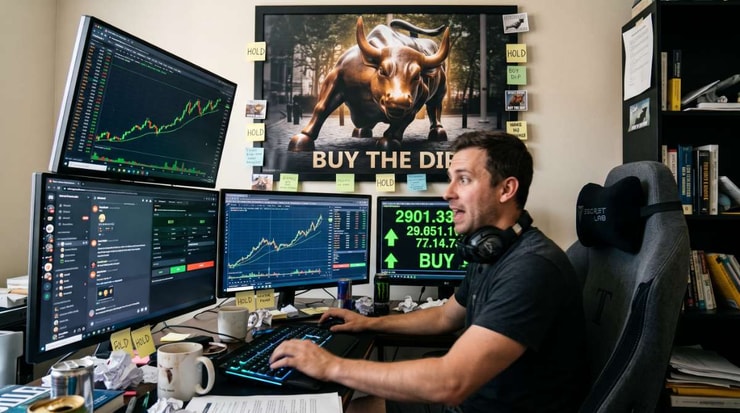
Image created with Google Gemini

“Buy this, buy this, trade that!”

Meanwhile, you end up missing plays and STILL don’t learn the lessons.

I prefer a bear market because there are fewer plays. It forces you to focus and learn.

Remember, you have two accounts:

  1. Trading account
  2. Knowledge account

In a bear market you get to focus on your knowledge account.

There’s opportunity in both bull and bear markets. But you’ve got to have the right mindset…

Be Meticulous and Trade Like a Sniper
Post image

Get my after-hours watchlist, free

The Night Tape, every trading day after the closing bell, plus The Second Session guide.

I see a lot of traders posting on X…

Source: X
Source: X

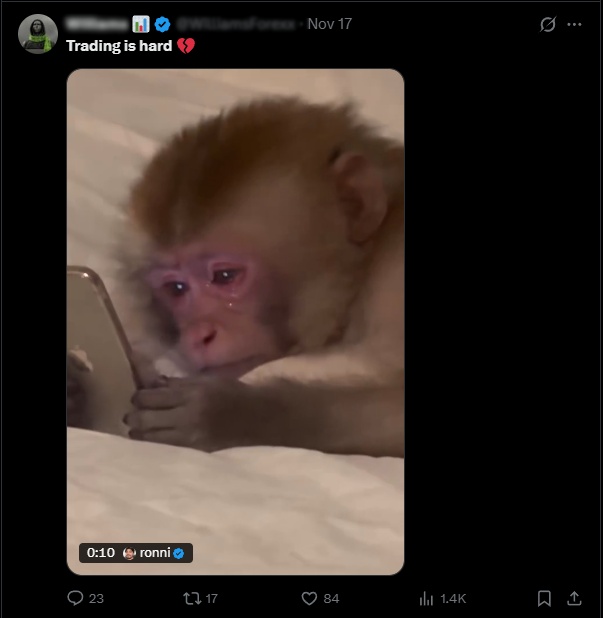
“Trading is so hard. It’s the hardest thing EVER!”

Meanwhile, they’re sitting in front of their computer all day, taking trade after trade.

You can sit there for hours and scalp (or hyperscalp). It might even add up.

But if you do that, it will definitely feel like you’re working hard.

Is that REALLY what you want?

What if you could just trade a couple of hours each day and be done?

If you take the right trade, you don’t have to sit there all the time.

In fact, oftentimes it’s counterproductive

Trading Is Hard Enough Without Playing on “Nightmare Mode”

Trading isn’t easy, okay? But I believe that most people make it WAY more difficult than necessary.

Let’s use a recent runner, Akanda Corp. (NASDAQ: AKAN), as an example.

For the past week, AKAN has given us some outstanding opportunities.

Now imagine you’ve been winning all day and you’re about to hit a new milestone.

Maybe you’re up $900 on the day and you REALLY want to get to $1000. It’s closing in on 8 p.m. ET on Monday (Nov. 16), and you see this:

AKAN 11/13-16/26, potential breakout

Would you try to buy the after-hours breakout? I’ve been there (more than once).

I stupidly wanted that little milestone for my ego. Then, I’d lose half my gains on one undisciplined trade.

Nothing Is Guaranteed In Trading

Now look at what happened with AKAN on Tuesday (highlighted on the chart below)

AKAN 11/13-17/26, 1-min candles, quadruple top

Anyone who tried to buy the unconfirmed breakout on Monday, was down in early premarket trading on Tuesday.

Even if you had the patience to hold (I do not), you would’ve been lucky to get out for breakeven because it failed at the same level.

Then AKAN put in that crazy cup-and-handle during the day.

You could have tried again in after-hours trading on Tuesday, but it was the same outcome.

Now check out what happened on Wednesday (Nov. 18)…

AKAN 11/13-18/26, multi-day runner

AKAN finally got the breakout near the open.

You might think the best way to trade it was to wait for the breakout, right? And that was a good trade for anyone who waited for confirmation.

But check this out…

AKAN 11/13-19/26, opportunities to take singles before the breakout

AKAN hit the $2.80s on Friday (Nov. 13). After that, it failed at that level again and again. A lot of people bought those failed breakouts.

But the ONLY time the breakout was confirmed, was on Wednesday morning (#7 on the chart above).

Meanwhile, it had support in the $2.40s. Anyone who recognized that could have locked in singles before the breakout.

THAT is an example of putting yourself in a position to win.

And it only takes one, right?

One Single Pattern, One Single Trade

You can literally focus on one pattern and ONLY take a trade when that pattern comes.

Keep in mind that you won’t win every trade. For example, on Tuesday (Nov. 17), I tried the very trade I described above:

AKAN 11/17/26, 4PM to 6PM only, 1-min candles, right idea, too early

I took the small loss when it couldn’t get back over $2.50, which is a key psychological level.

It turns out I was just a few minutes early. I’m okay taking small losses (especially when I’m on the right track).

The point is, once you master one pattern or setup, that’s your bread and butter.

You really only need one:

  • One pattern
  • One trade
  • One time of day that you like to trade

This is especially important for newbies!

Don’t get me wrong…

To become my next millionaire student you will have to immerse yourself in the markets, learn several patterns, and figure out what works best for you.

But trying to do too many things at once just leads to confusion.

Millionaire Moves

Matt Monaco is a great example. Not only is he one of my top millionaire students, he’s also a great guy.

© Millionaire Media
© Millionaire Media

Matt has made over $3M from trading.*

Obviously I’m happy for him. But I’m also proud because he’s SO meticulous (he trades like a sniper).

Want to know something really cool?

Matt is done trading most days by 11 a.m. ET.

That’s because he’s very selective with his trades. Matt has one pattern in particular that works for him roughly 4 out of every 5 times.

He’s sharing it with anyone who wants to learn. I highly recommend you check it out:

Watch Matt Monaco’s Single Pattern Side Hustle Workshop Here

Matt says one of the best things about his pattern is that you don’t need a big account to take advantage of it.

Key Takeaway

Remember to be extra meticulous.

There’s no harm in taking one or two trades per day (or none at all).

You have to prioritize quality over quantity.

If you focus on one single pattern, and one trade at a time…

  • You don’t have to be a HODLer
  • You don’t have to be an investor
  • You don’t have to rely on a bull market or breakouts

If you take meticulous trades, it’s possible to grow a small account in any market.

I think that’s what everyone should be doing.

Especially right now.

Cheers,

– Tim Sykes

*Results not typical. Past performance is not indicative of future results.


How much has this post helped you?


Leave a reply

Author card Timothy Sykes picture

Timothy Sykes

Tim Sykes is a penny stock trader and teacher who became a self-made millionaire by the age of 22 by trading $12,415 of bar mitzvah money. After becoming disenchanted with the hedge fund world, he established the Tim Sykes Trading Challenge to teach aspiring traders how to follow his trading strategies. He’s been featured in a variety of media outlets including CNN, Larry King, Steve Harvey, Forbes, Men’s Journal, and more. He’s also an active philanthropist and environmental activist, a co-founder of Karmagawa, and has donated millions of dollars to charity.
Read More

* Results are not typical and will vary from person to person. Making money trading stocks takes time, dedication, and hard work. There are inherent risks involved with investing in the stock market, including the loss of your investment. Past performance in the market is not indicative of future results. Any investment is at your own risk. See Terms of Service here

The available research on day trading suggests that most active traders lose money. Fees and overtrading are major contributors to these losses.

A 2000 study called “Trading is Hazardous to Your Wealth: The Common Stock Investment Performance of Individual Investors” evaluated 66,465 U.S. households that held stocks from 1991 to 1996. The households that traded most averaged an 11.4% annual return during a period where the overall market gained 17.9%. These lower returns were attributed to overconfidence.

A 2014 paper (revised 2019) titled “Learning Fast or Slow?” analyzed the complete transaction history of the Taiwan Stock Exchange between 1992 and 2006. It looked at the ongoing performance of day traders in this sample, and found that 97% of day traders can expect to lose money from trading, and more than 90% of all day trading volume can be traced to investors who predictably lose money. Additionally, it tied the behavior of gamblers and drivers who get more speeding tickets to overtrading, and cited studies showing that legalized gambling has an inverse effect on trading volume.

A 2019 research study (revised 2020) called “Day Trading for a Living?” observed 19,646 Brazilian futures contract traders who started day trading from 2013 to 2015, and recorded two years of their trading activity. The study authors found that 97% of traders with more than 300 days actively trading lost money, and only 1.1% earned more than the Brazilian minimum wage ($16 USD per day). They hypothesized that the greater returns shown in previous studies did not differentiate between frequent day traders and those who traded rarely, and that more frequent trading activity decreases the chance of profitability.

These studies show the wide variance of the available data on day trading profitability. One thing that seems clear from the research is that most day traders lose money .

Millionaire Publishing 66 W Flagler St. Ste. 900 Miami, FL 33130 United States (833) 986-6771 This is for information purposes only as Millionaire Publishing LLC nor Timothy Sykes is registered as a securities broker-dealer or an investment adviser. No information herein is intended as securities brokerage, investment, tax, accounting or legal advice, as an offer or solicitation of an offer to sell or buy, or as an endorsement, recommendation or sponsorship of any company, security or fund. Millionaire Publishing LLC and Timothy Sykes cannot and does not assess, verify or guarantee the adequacy, accuracy or completeness of any information, the suitability or profitability of any particular investment, or the potential value of any investment or informational source. The reader bears responsibility for his/her own investment research and decisions, should seek the advice of a qualified securities professional before making any investment, and investigate and fully understand any and all risks before investing. Millionaire Publishing LLC and Timothy Sykes in no way warrants the solvency, financial condition, or investment advisability of any of the securities mentioned in communications or websites. In addition, Millionaire Publishing LLC and Timothy Sykes accepts no liability whatsoever for any direct or consequential loss arising from any use of this information. This information is not intended to be used as the sole basis of any investment decision, nor should it be construed as advice designed to meet the investment needs of any particular investor. Past performance is not necessarily indicative of future returns.

Citations for Disclaimer

Barber, Brad M. and Odean, Terrance, Trading is Hazardous to Your Wealth: The Common Stock Investment Performance of Individual Investors. Available at SSRN: “Day Trading for a Living?”

Barber, Brad M. and Lee, Yi-Tsung and Liu, Yu-Jane and Odean, Terrance and Zhang, Ke, Learning Fast or Slow? (May 28, 2019). Forthcoming: Review of Asset Pricing Studies, Available at SSRN: “https://ssrn.com/abstract=2535636”

Chague, Fernando and De-Losso, Rodrigo and Giovannetti, Bruno, Day Trading for a Living? (June 11, 2020). Available at SSRN: “https://ssrn.com/abstract=3423101”