

Zeta Network Group stocks have been trading up by 18.83 percent after announcing a transformative AI infrastructure partnership expansion.
Key Takeaways
- Shares of ZNB have pulled back hard from early premarket highs above $4 after a fast spike and fade on heavy volume.
- Recent daily candles show ZNB slipping from late-July highs near $2.90–$3.00 into a choppy downtrend with strong intraday reversals.
- Zeta Network Group’s balance sheet holds about $1.06M in cash against current liabilities near $12.5M, creating tight working capital.
- Valuation looks compressed, with ZNB trading around 0.06x sales and 0.02x book value, a setup momentum traders often watch.
- With negative working capital and wild intraday ranges, traders are treating ZNB as a short-term trading vehicle, not a long-term story.

Live Update At 09:18:27 EDT: On Wednesday, August 19, 2026 Zeta Network Group stock [NASDAQ: ZNB] is trending up by 18.83%! Discover the key drivers behind this movement as well as our expert analysis in the detailed breakdown below.
Quick Financial Overview
ZNB has the profile of a tiny, capital‑starved operator that still attracts aggressive trading. Zeta Network Group reported revenue of roughly $8.73M, which works out to about $33.29 per share. On that revenue base, ZNB trades at about 0.06x sales — extremely low by traditional standards — and about 0.02x book value, with book value per share near $88.99. Those numbers tell traders one thing: the market has very little confidence in the current business, despite sizable reported equity.
The balance sheet reinforces that view. Zeta Network Group shows total assets of about $35.82M, but only $1.06M sits in cash and cash equivalents. Current liabilities stand near $12.50M, leaving working capital a steep negative at roughly -$8.77M. For ZNB, that means pressure. The company must manage payables and short‑term obligations with a very thin cash cushion.
More Breaking News
Return metrics for ZNB underline the struggle. Reported return on capital around -182.77% signals that capital deployed in Zeta Network Group has not produced attractive earnings. For traders, this is not a steady compounder. It is a distressed, thinly capitalized name where price action, not fundamentals, drive most trading decisions.
Why Traders Are Watching ZNB Price Action
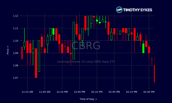
The real story with ZNB right now is the tape. Zeta Network Group’s intraday chart looks like a textbook momentum chase that ran out of steam. In the early premarket window, ZNB ripped from the low $3s toward $5, touching a high near 5.03 before slamming back under $4 and then grinding lower. By later premarket prints, ZNB was already in the mid‑$3s, and into the regular session it slid further toward the low $2s.
That kind of fast spike and fade is classic for small-cap momentum names. Traders pile into ZNB on the way up, chasing the parabolic move. When Zeta Network Group fails to hold new highs, short sellers step in, late longs panic, and the unwind accelerates. The intraday data shows repeated lower highs and fading bounces — a sign that control shifted from longs to shorts as the day went on.
Zooming out to the multi‑day chart, ZNB has been trending lower from late‑July peaks. Zeta Network Group traded near $2.90–$3.00 on 2026/07/28 and 2026/07/30. Since then, the closes have drifted down into the low $2s, with frequent intraday swings of 10%–20%. For short‑term traders, that volatility is the opportunity. ZNB offers wide ranges and clear intraday levels, but it also punishes anyone who overstays a move.
Technically, many traders will mark the recent $4–$5 premarket spike as a key resistance zone. Below, recent daily lows near $1.80–$2.00 form an important support band. As long as Zeta Network Group trades between those levels, ZNB remains a pure momentum playground — ideal for experienced traders who cut losses fast, dangerous for anyone hoping it “comes back” on its own.
Conclusion
For active traders, ZNB is a clear example of why price action matters more than stories. Zeta Network Group’s fundamentals show low valuation multiples but also negative working capital, poor returns on capital, and thin cash. The market sees that and discounts the stock. Yet, in the short term, ZNB still produces wild swings that attract day traders and swing traders looking for quick moves.
Zeta Network Group’s intraday pattern — hard ramp, sharp reversal, then steady leak — is one many in the Tim Sykes community have seen thousands of times. The lesson is always the same: trade the move, not the hope. Tight risk management is non‑negotiable in names like ZNB, where liquidity can vanish and spreads can widen in seconds. As millionaire penny stock trader and teacher Tim Sykes, says, “The goal is not to win every trade but to protect your capital and keep moving forward.”
ZNB will stay on many watchlists as long as the range stays wide and volume remains elevated. If Zeta Network Group pushes back toward the $4–$5 area, traders will look for either a clean breakout with volume or another failed spike to short. If it cracks the low $2s and heads toward prior support near $1.80, dip buyers and shorts will both circle.
As Tim Sykes often reminds his students, “The market doesn’t care about your opinion, it only cares about price action.” For ZNB and Zeta Network Group, price action is the whole game right now — and disciplined traders are the ones most likely to stick around long enough to learn from it.
This is stock news, not investment advice. Timothy Sykes News delivers real-time stock market news focused on key catalysts driving short-term price movements. Our content is tailored for active traders and investors seeking to capitalize on rapid price fluctuations, particularly in volatile sectors like penny stocks. Readers come to us for detailed coverage on earnings reports, mergers, FDA approvals, new contracts, and unusual trading volumes that can trigger significant short-term price action. Some users utilize our news to explain sudden stock movements, while others rely on it for diligent research into potential investment opportunities.
Dive deeper into the world of trading with Timothy Sykes, renowned for his expertise in penny stocks. Explore his top picks and discover the strategies that have propelled him to success with these articles:
- Penny Stocks Trading Guide
- Best Penny Stocks Under $1 to Buy Today
- Top 8 Penny Stocks to Watch on Robinhood
Once you’ve got some stocks on watch, elevate your trading game with StocksToTrade the ultimate platform for traders. With specialized tools for swing and day trading, StocksToTrade will guide you through the market’s twists and turns.
Dig into StocksToTrade’s watchlists here:




Leave a reply