

Vertiv Holdings LLC stocks have been trading up by 16.76 percent amid strong data center infrastructure demand and growth optimism.
Key Takeaways
- New “AI factory” architecture with Nvidia targets up to 30% more token output in year one, with Polar Data Centers rolling it out in a 41MW Norway project.
- SmartIT launch gives Vertiv Holdings (VRT) a pre-engineered AI data-center platform that ties together power, cooling, and monitoring for dense AI workloads.
- Digital-twin partnership with Dassault Systèmes aims to cut design and deployment times for Nvidia DSX AI factories by roughly 60%.
- Acquisition of King Environmental Services expands Vertiv’s liquid-cooling and commissioning reach across Europe and briefly lifted VRT shares about 2%.
- Major banks, including Roth Capital, Mizuho, Morgan Stanley, and RBC Capital, trimmed VRT price targets but kept Buy or equivalent ratings clustered in the low-to-mid $300s.
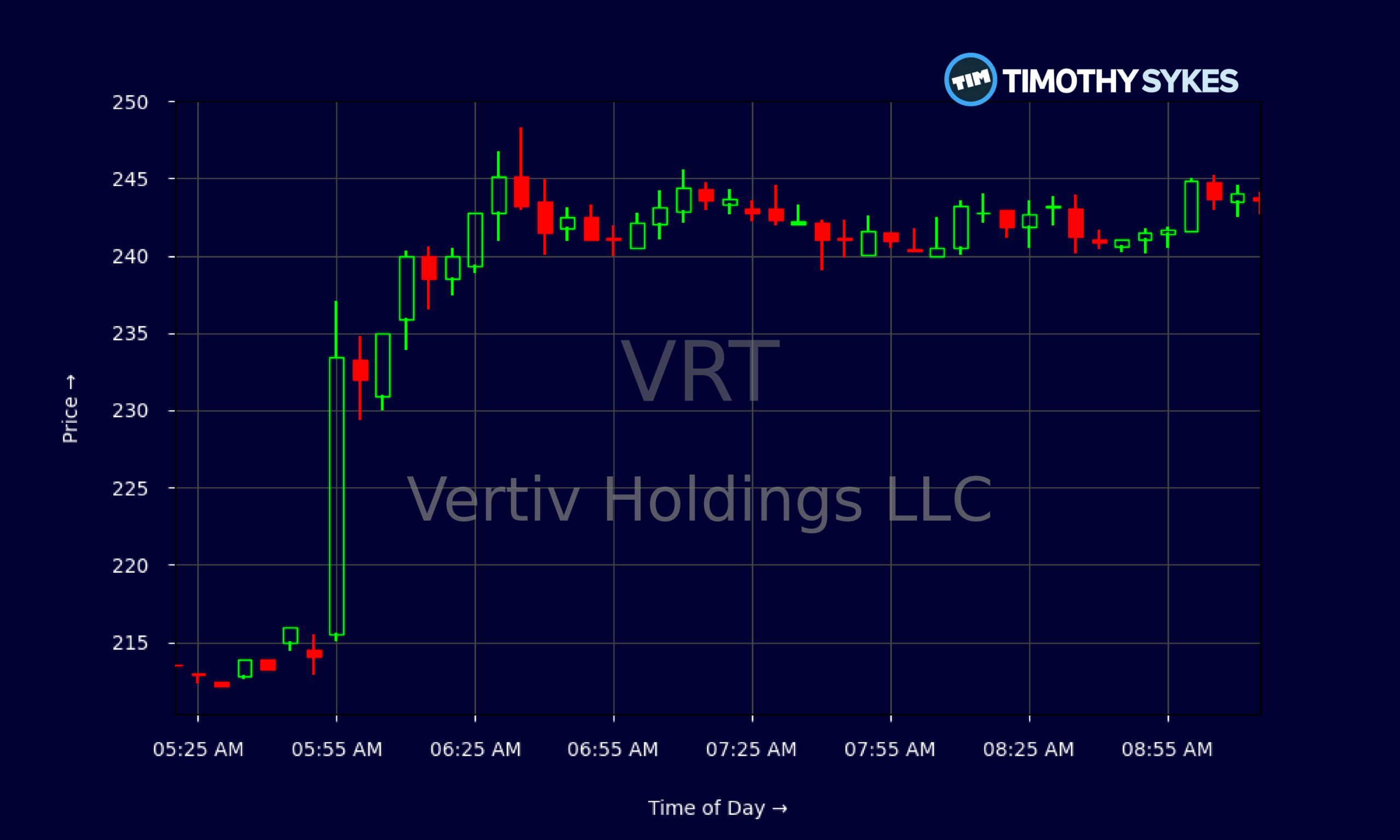
Live Update At 09:18:57 EDT: On Wednesday, October 28, 2026 Vertiv Holdings LLC stock [NYSE: VRT] is trending up by 16.76%! Discover the key drivers behind this movement as well as our expert analysis in the detailed breakdown below.
Quick Financial Overview
VRT has been on a wild ride. The stock slid from the mid-$250s in early October 2026 to a low near $187, then clawed its way back to close around $208.56 on 2026/10/27. That’s still a deep pullback, but the bounce shows traders are willing to step back in.
On a 5‑minute chart, VRT trades like a classic high‑beta AI name — big gaps, heavy early volatility, and strong intraday reversals. This is a momentum trader’s playground, but it punishes anyone who hesitates to cut losses.
Fundamentally, Vertiv is not some story-only AI sympathy play. Revenue over the last year runs around $10.23B, with gross margin at 38% and EBIT margin near 18.9%. Return on equity above 40% and ROIC in the low‑20s tell traders this business is squeezing real profit out of its data‑center niche.
More Breaking News
The flip side is valuation. VRT trades at a price/earnings ratio near 55 and price/sales above 8. Those are “priced for growth” levels. Debt looks manageable with total debt-to-equity at 0.7 and interest coverage near 42x, but the current ratio of 1.4 still matters if AI spending wobbles. For active traders, this mix screams “trend with tight risk.”
Why Traders Are Watching Vertiv Now
Traders are locked on VRT because the company is wiring itself into the core of the AI build‑out, not just selling boxes. Vertiv and Nvidia rolled out a configurable “AI factory” design that claims up to 30% more cumulative token output in the first year without adding capacity. Polar Data Centers is already deploying this in the first 41MW phase of its Norway AI site, with scalability to 100MW. That is real-world validation, not just slideware.
VRT then stacked more catalysts. The company launched SmartIT, a pre‑engineered AI data‑center infrastructure platform that bundles power, cooling, and monitoring. It’s validated with NVIDIA MGX and OCP ORV3 architectures, which means big customers can move faster and with less custom engineering. For traders, that screams scalability — standardized platforms usually mean quicker deals, smoother rollouts, and higher margins if executed well.
The digital‑twin angle is another piece of the puzzle. VRT’s partnership with Dassault Systèmes uses 3DEXPERIENCE virtual twin and agentic AI to simulate Nvidia DSX AI factories before a shovel hits dirt. Management is targeting up to roughly 60% faster design and deployment times. In a race where cloud giants want AI capacity yesterday, that time edge matters.
Layer on the broader Nvidia ecosystem work — including plans with Dell, HPE, and Eaton to deploy DSX POD‑based Vera Rubin AI factories from early 2027 — and you see why VRT sits in the middle of a multi‑year AI capex story. Short term, the stock still chops around on sentiment and macro worries about AI financing. Long term, the news flow keeps pushing Vertiv deeper into mission‑critical AI infrastructure.
Conclusion
Vertiv’s latest moves give traders a textbook case of strong fundamentals colliding with high expectations. On one hand, VRT is rolling out AI factory blueprints with Nvidia, scaling SmartIT across data centers, and using Dassault Systèmes’ virtual twin tools to shrink deployment timelines. It is also bolting on capabilities like King Environmental Services to deepen its position in liquid‑cooling services, a key bottleneck for dense AI racks.
On the other hand, the market has already paid up for that promise. An 18% drawdown in October, plus a string of price‑target trims from Roth Capital, Mizuho, Morgan Stanley, and RBC Capital, show how sensitive VRT is to any wobble in the AI spending story. Yet those same firms kept Buy, Outperform, or Overweight ratings, with average targets still in the low‑to‑mid $300s — well above recent trading levels.
For active traders, that mix sets up a classic Sykes‑style environment: strong long‑term story, high volatility, and emotional price swings. As Tim Sykes tells his students, “I don’t fall in love with the story, I trade the price action — patterns first, hype second.” As millionaire penny stock trader and teacher Tim Sykes, says, “Be patient, don’t force trades, and let the perfect setups come to you.”. VRT fits that mindset perfectly. The AI factory narrative is powerful, but the edge goes to traders who respect the risk, watch the levels, and let the chart confirm the thesis before they size up. This analysis is for educational and research purposes only and is not advice.
This is stock news, not investment advice. Timothy Sykes News delivers real-time stock market news focused on key catalysts driving short-term price movements. Our content is tailored for active traders and investors seeking to capitalize on rapid price fluctuations, particularly in volatile sectors like penny stocks. Readers come to us for detailed coverage on earnings reports, mergers, FDA approvals, new contracts, and unusual trading volumes that can trigger significant short-term price action. Some users utilize our news to explain sudden stock movements, while others rely on it for diligent research into potential investment opportunities.
Dive deeper into the world of trading with Timothy Sykes, renowned for his expertise in penny stocks. Explore his top picks and discover the strategies that have propelled him to success with these articles:
- Penny Stocks Trading Guide
- Best Penny Stocks Under $1 to Buy Today
- Top 8 Penny Stocks to Watch on Robinhood
Once you’ve got some stocks on watch, elevate your trading game with StocksToTrade the ultimate platform for traders. With specialized tools for swing and day trading, StocksToTrade will guide you through the market’s twists and turns.
Dig into StocksToTrade’s watchlists here:





Leave a reply