

Tesla Inc. stocks have been trading up by 3.22 percent after upbeat delivery forecasts boosted investor confidence in future growth.
Key Takeaways TSLA Traders Need Now
- Q3 deliveries hit 486,532 vehicles versus 464,391 produced, plus 13.7 GWh of energy storage, showing demand outpacing supply and rapid energy growth.
- TSLA shares spiked roughly 5% after beating Wall Street’s 461,000 delivery estimate, driving gains in consumer discretionary and the Nasdaq.
- Tigress Financial, UBS, Jefferies, and RBC raised or reiterated bullish TSLA targets from $385 to $550, leaning on AI, energy, and non-auto growth.
- China and UK demand stayed strong, with China sales up 5% year over year and UK registrations nearly doubling, far ahead of local markets.
- Traders are watching TSLA’s AI roadmap — Full Self-Driving, Optimus, robotaxis, and even potential SpaceX tie-ins — as the next narrative driver.
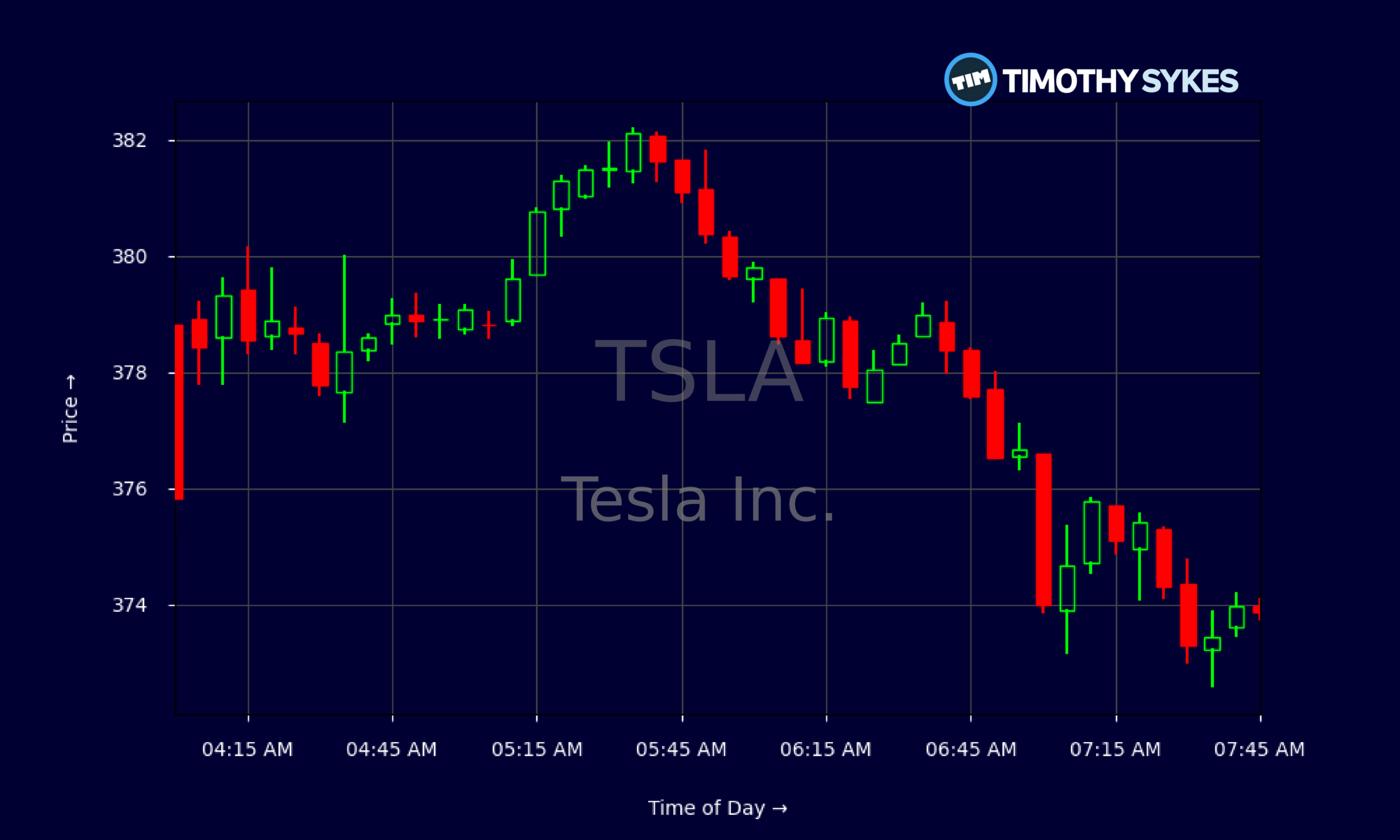
Live Update At 07:48:27 EDT: On Friday, October 16, 2026 Tesla Inc. stock [NASDAQ: TSLA] is trending up by 3.22%! Discover the key drivers behind this movement as well as our expert analysis in the detailed breakdown below.
Quick Financial Overview
TSLA is trading in the upper $360s–$380s range after a strong run. The recent daily chart shows a grind higher from around $354 on 2026/09/30 to closes near $378–$382 in mid-October, with dips getting bought and lower wicks showing support. For short-term traders, that’s classic uptrend behavior with shallow pullbacks.
Intraday, TSLA’s 5‑minute action around $378–$381 shows tight ranges and steady volume. That kind of consolidation after a news-driven spike often means the stock is catching its breath rather than breaking down. Day traders watching TSLA can lean on these ranges for clear risk levels.
More Breaking News
Fundamentally, Tesla reported trailing 12‑month revenue of about $94.8B with an 18.9% gross margin. Net margin is thin at roughly 3%–4%, but asset returns and low debt (total debt-to-equity near 0.19) keep the balance sheet solid. The trade-off is valuation: a sky‑high P/E over 350 and price-to-sales around 14.6. For TSLA traders, that message is simple — this is still a sentiment and growth story, not a cheap value play.
Why TSLA Traders Are Locked In
The core of the current TSLA move is the Q3 delivery beat. Tesla produced 464,391 vehicles and delivered 486,532, meaning it sold more cars than it built in the quarter. That usually signals strong demand and good inventory management. Wall Street was looking for about 461,000 deliveries; Tesla cleared that bar by more than 25,000 units. The market noticed. TSLA jumped around 5%, lifting consumer discretionary names and helping the Nasdaq push higher.
But the story is not just cars. Tesla also deployed 13.7 GWh of energy storage. For traders, that number matters because it shows the energy segment is turning into a real second engine. When TSLA holds a premium multiple, it is partly because traders are willing to pay up for multiple growth pillars, not just EVs.
Regionally, the data reinforce that narrative. China-made Model 3 and Model Y sales rose 5% year over year in September to 95,366 units, an acceleration from August’s 3.6% growth. In the UK, new Tesla registrations almost doubled, up 98.7% to 15,875 units, massively ahead of the overall market. That kind of outperformance is exactly what fuels “share gain” storylines that momentum traders love.
On the Street, the analyst tape tilts bullish. Tigress Financial reiterated a Buy with a $550 target, pitching Tesla as a “physical AI” flywheel around FSD, Cybercab robotaxis, Optimus robotics, energy, and potential SpaceX-related upside. UBS nudged its target to $391 with a Buy, calling risk/reward attractive at these sentiment-driven levels. Jefferies took its target up to $400 but stayed on Hold, leaning on more traditional auto metrics like a projected $29.2B in Q3 revenue and 16.7% auto gross margin. RBC kept an Outperform with a $480 target, pointing to resilient U.S. demand and pricing power.
On top of that, regulation and strategy add new catalysts. Tesla is pushing EU safety regulators to clear its Full Self-Driving system. It has initial approval in the Netherlands and national approvals in seven more EU countries, with an EU‑wide vote expected. Any broader green light would feed the AI narrative traders are already chasing. Meanwhile, Barclays has floated the idea of a Tesla–SpaceX merger before an early-December annual meeting, arguing that combining AI capabilities is the main upside, while stressing that shareholder approval would be a real hurdle. None of this is confirmed, but it is the kind of speculation that can juice TSLA’s volatility into year-end.
Conclusion
For active traders, TSLA is back to playing its greatest hits: a clean delivery beat, a sharp share-price pop, and a fresh storyline around AI, robotics, and possible SpaceX links. The underlying Q3 data — 486,532 deliveries, strong China and UK growth, and 13.7 GWh of energy storage — show real execution. The tape confirms it: a 4%–5% jump after the news, followed by tight consolidation around $378–$382.
At the same time, valuation stays extreme and the narrative is shifting. More of TSLA’s value is now tied to future cash flows from Full Self-Driving, Optimus, robotaxis, and any deeper AI play than to the current 3%–4% profit margin. That can drive big multi-day moves in both directions as headlines hit.
This is where discipline matters. As Tim Sykes likes to tell students, “I don’t care how hot the story is — the chart and your risk management make or break the trade.” As millionaire penny stock trader and teacher Tim Sykes, says, “Consistency is key in trading; don’t let emotions dictate your trades.”. For anyone trading TSLA, that means respecting the volatility, watching the levels the market is defending, and remembering that all of this is for education and research — not a signal to blindly chase the hype.
This is stock news, not investment advice. Timothy Sykes News delivers real-time stock market news focused on key catalysts driving short-term price movements. Our content is tailored for active traders and investors seeking to capitalize on rapid price fluctuations, particularly in volatile sectors like penny stocks. Readers come to us for detailed coverage on earnings reports, mergers, FDA approvals, new contracts, and unusual trading volumes that can trigger significant short-term price action. Some users utilize our news to explain sudden stock movements, while others rely on it for diligent research into potential investment opportunities.
Dive deeper into the world of trading with Timothy Sykes, renowned for his expertise in penny stocks. Explore his top picks and discover the strategies that have propelled him to success with these articles:
- Penny Stocks Trading Guide
- Best Penny Stocks Under $1 to Buy Today
- Top 8 Penny Stocks to Watch on Robinhood
Once you’ve got some stocks on watch, elevate your trading game with StocksToTrade the ultimate platform for traders. With specialized tools for swing and day trading, StocksToTrade will guide you through the market’s twists and turns.
Dig into StocksToTrade’s watchlists here:



Leave a reply