

TeraWulf Inc. stocks have been trading up by 3.08 percent amid heightened optimism over its expanding Bitcoin mining capacity.
Key Takeaways
- Morgan Stanley reiterated an Overweight on TeraWulf, flagging nearly 392% upside to a $65 target and calling the recent WULF pullback misaligned with its contracted AI pipeline.
- Cantor Fitzgerald trimmed its target to $30 but kept an Overweight rating on WULF, still framing the name as a potential “generational buy” tied to easing AI funding fears.
- Regulatory approval for a 482 MW power deal in Kentucky underpins TeraWulf’s Justified Data Campus, a $4.0–$4.5B AI project anchored by a 20-year, ~401 MW Anthropic lease.
- An amended Kentucky Power agreement doubles Muskie Data Campus capacity to 1 GW and accelerates the second 500 MW phase to 2029, reinforcing WULF’s AI/HPC data center ambitions.
- TD Cowen started coverage of TeraWulf with a Buy and $21 target, arguing current 9% cap rates on its Google-backed data center portfolio leave room for valuation re-rating.
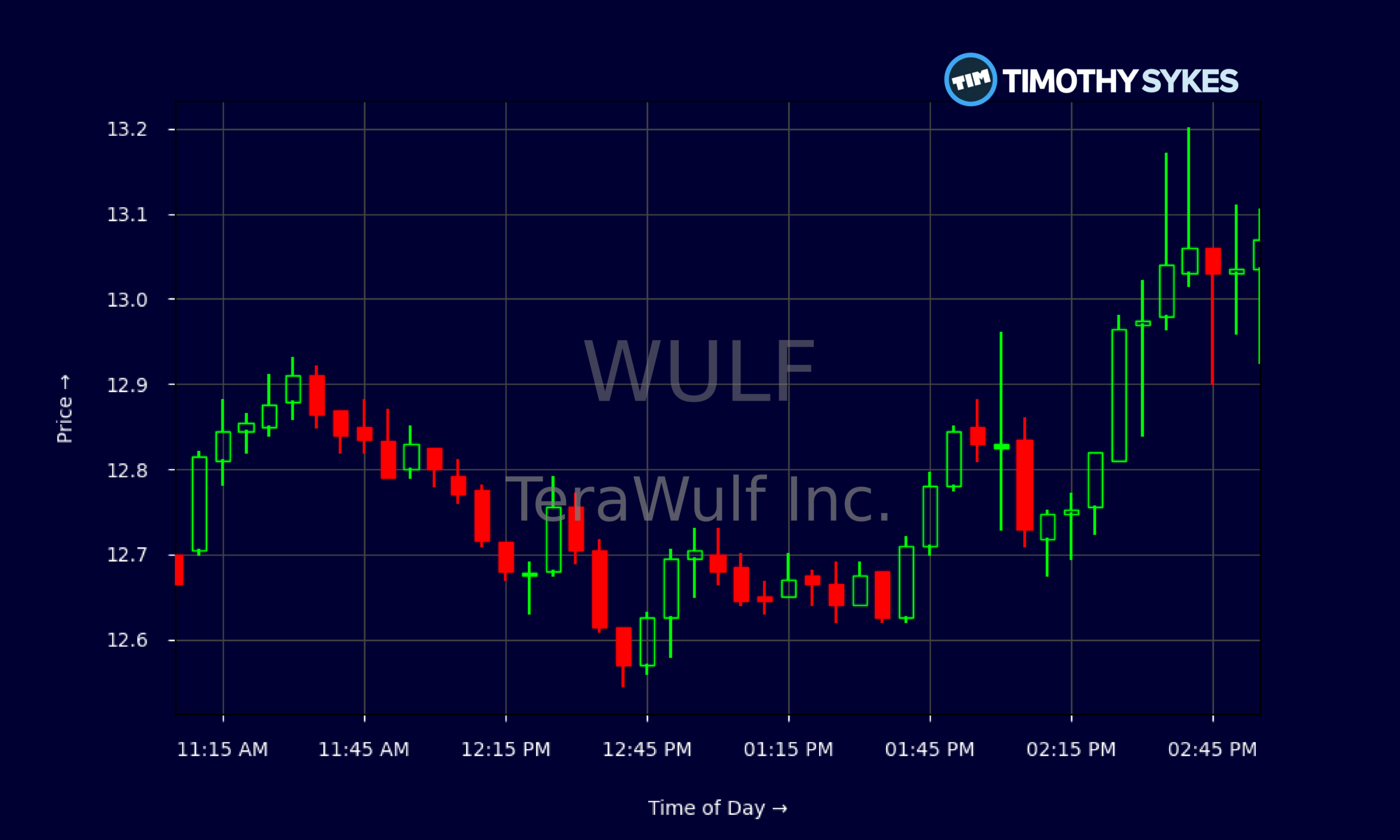
Live Update At 15:02:22 EDT: On Wednesday, October 28, 2026 TeraWulf Inc. stock [NASDAQ: WULF] is trending up by 3.08%! Discover the key drivers behind this movement as well as our expert analysis in the detailed breakdown below.
Quick Financial Overview
WULF is trading like a high‑beta AI infrastructure story, not a sleepy utility. Over the last few weeks, TeraWulf’s share price slid from the mid‑$15s to around $13, a pullback of roughly 15% from the October high in this dataset. Yet the last three days show a sharp rebound: the stock bounced from about $11.35 on 2026/10/26 to just over $13.03 on 2026/10/28, a fast two‑day squeeze that active traders love to stalk.
Intraday action on 2026/10/28 shows WULF opening near $13.02 in premarket, getting slapped down toward $12.32 at the regular‑session low, then grinding back to close almost flat near $13.04. That’s classic accumulation behavior — sellers test the downside, but bids keep reappearing.
Fundamentally, TeraWulf is still deep in build‑out mode. Revenue over the last year sits near $168.5M, but margins are ugly: profit margin runs around -1,180%, and return on equity is massively negative as WULF pours cash into power‑heavy data campuses. Free cash flow for the latest quarter was roughly -$992M, with about $1.09B of property and equipment spend showing how aggressive the build is.
More Breaking News
The balance sheet tells the same story. WULF holds around $2.62B in cash and short‑term investments but also carries about $4.02B in long‑term debt and roughly $1.19B of current debt. Current and quick ratios under 1.0 highlight tight liquidity. For traders, that mix — heavy capex, big cash pile, and leverage — screams “execution story.” If TeraWulf delivers on its AI leases, the earnings power can swing fast. If not, dilution and refinancing risk stay front and center.
Why Traders Are Watching WULF’s AI Pivot
What keeps WULF at the top of many watchlists is not today’s income statement. It’s the contracts lining up for tomorrow. TeraWulf just secured regulatory approval for a 482 MW power agreement in Kentucky tied to its Justified Data Campus, a massive AI data center project pegged at $4.0–$4.5B in initial spend. That site is anchored by a 20‑year, roughly 401 MW critical IT lease with Anthropic, with options to extend another 10 years. For traders, that’s rare long‑dated visibility, backed by expected investment‑grade credit.
On top of that, WULF amended its electric service deal with Kentucky Power for the Muskie Data Campus. Contracted power jumps from 500 MW to 1 GW, and the second 500 MW phase was pulled forward to 2029 from 2030, with talk of eventual expansion to 2 GW. In return, TeraWulf commits to fund $100M in winter bill credits for local customers and help cover financing costs for a 760 MW gas plant at Big Sandy. It’s a big tab, but it buys WULF priority access to the lifeblood of AI — cheap, reliable power.
Wall Street is taking notice. Morgan Stanley reiterated an Overweight on TeraWulf and raised its target to $65, implying nearly 392% upside from recent levels, arguing the pullback doesn’t match the value of these locked‑in contracts. Cantor Fitzgerald, even while trimming its target to $30, still tagged WULF as a potential “generational buy” once AI funding jitters and sector data‑center headwinds cool down.
TD Cowen joined the bull camp with a Buy and $21 target, calling out a 9% cap rate on WULF’s leased data center portfolio — including Google‑backed Fluidstack support — as too conservative. The message across these desks is the same: if AI demand holds and TeraWulf executes on these Kentucky projects, the market may be mispricing the cash flows.
Still, traders should not gloss over the risks. Commentary around WULF stresses the shift from pure build‑out to scaled execution. Construction timelines, financing terms, and ramp schedules now matter as much as hype. A recently noted Form 8‑K filing, even without detail in the coverage, underlines that this is a dynamic, deal‑driven story where filings can shift sentiment quickly.
Conclusion
For active traders, WULF is a classic high‑reward, high‑risk runway story. The chart shows volatility, but the fundamentals show why the tape stays busy. TeraWulf is tying down multidecade AI leases — Anthropic at Justified, Google‑linked support via Fluidstack — and locking in gigawatts of power at Muskie just as AI workloads explode. That combination gives WULF something many speculative names lack: contracted demand with recognizable counterparties.
At the same time, the financials spell out the cost of that upside. Nearly $1.09B of recent capex, almost $1.0B of negative free cash flow, tight liquidity metrics, and more than $4.0B in long‑term debt leave no room for sloppy execution. Every quarter of delay or budget creep matters. Upcoming earnings — including the Q3 2026 call WULF has queued up — will be key checkpoints for traders tracking progress against the Anthropic schedule and Kentucky build‑outs.
The analyst chorus is loud, but not a guarantee. Consensus Buy ratings and mean targets around the low‑$30s, plus outliers like Morgan Stanley’s $65 view, only tell you how the Street is modeling the story today. As Tim Sykes loves to remind traders, “Patterns repeat, but only if you respect risk and cut losses quickly.” As millionaire penny stock trader and teacher Tim Sykes, says, “It’s better to go home at zero than to go home in the red.”. With WULF, the pattern is clear: rising AI optionality, rising stakes, and a tape that rewards those who study the contracts, watch the filings, and stay disciplined when the volatility hits.
This is stock news, not investment advice. Timothy Sykes News delivers real-time stock market news focused on key catalysts driving short-term price movements. Our content is tailored for active traders and investors seeking to capitalize on rapid price fluctuations, particularly in volatile sectors like penny stocks. Readers come to us for detailed coverage on earnings reports, mergers, FDA approvals, new contracts, and unusual trading volumes that can trigger significant short-term price action. Some users utilize our news to explain sudden stock movements, while others rely on it for diligent research into potential investment opportunities.
Dive deeper into the world of trading with Timothy Sykes, renowned for his expertise in penny stocks. Explore his top picks and discover the strategies that have propelled him to success with these articles:
- Penny Stocks Trading Guide
- Best Penny Stocks Under $1 to Buy Today
- Top 8 Penny Stocks to Watch on Robinhood
Once you’ve got some stocks on watch, elevate your trading game with StocksToTrade the ultimate platform for traders. With specialized tools for swing and day trading, StocksToTrade will guide you through the market’s twists and turns.
Dig into StocksToTrade’s watchlists here:





Leave a reply