

TeraWulf Inc. stocks have been trading up by 7.64 percent amid strong investor optimism surrounding its latest expansion developments.
Key Takeaways Traders Need To Know
- TeraWulf signed a 20-year lease with Anthropic at its Justified Data campus in Kentucky, expected to generate about $19B in contracted revenue and provide a long-term demand source for its infrastructure.
- The company agreed to sell its 50.1% stake in the Abernathy AI data center joint venture in Texas to a Fluidstack-led investor group, monetizing roughly $450M of invested capital at a premium for redeployment into wholly owned projects.
- TeraWulf plans to raise about $3.5B in leveraged loans and high-yield bonds, led by Morgan Stanley, to fund construction of the fully pre-leased Justified Data campus for Anthropic.
- Multiple analysts are bullish: Rosenblatt raised its price target to $30 and reiterated a Buy rating, Needham lifted its target to $33 with a Buy, Chardan initiated at Buy with a $32 target, and Cantor Fitzgerald reiterated an Overweight with a $37 target while calling the New York-driven selloff overdone.
- Shares have been volatile but overall strong, jumping roughly 11–19% on the Anthropic lease news and up about 111% year-to-date even amid weak recent digital asset revenue and wider losses.

Live Update At 16:47:10 EDT: On Monday, August 03, 2026 TeraWulf Inc. stock [NASDAQ: WULF] is trending up by 7.64%! Discover the key drivers behind this movement as well as our expert analysis in the detailed breakdown below.
Quick Financial Overview
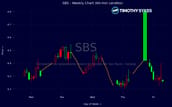
WULF has turned into a pure volatility machine. On the daily chart, TeraWulf has swung from the low $20s in mid-2026/07 down toward $15, then bounced back to close near $18.83 on 2026/08/03. That’s a steep rollercoaster in just a few weeks.
Intraday, the 5‑minute tape shows WULF grinding higher from the $17s at the open into the high $18s and low $19s into the close. That steady bid, with shallow pullbacks, signals aggressive dip‑buying and shorts covering into strength.
Fundamentals tell a very different story. TeraWulf posted about $168.5M in revenue over the last year, but margins are deeply negative, with profit margins north of -600% and EBITDA for the latest quarter around -$330M. WULF also burned significant cash, with free cash flow around -$540.5M for the recent quarter and heavy capex tied to data center buildouts.
More Breaking News
Leverage is already high, with long‑term debt near $4.7B and stockholders’ equity negative. A price‑to‑sales ratio above 50 says traders are paying up for future AI data center cash flows, not current bitcoin or hosting economics. For active traders, WULF is a momentum and story stock first, fundamentals second.
Why Traders Are Watching WULF’s AI Pivot
WULF is no longer just a bitcoin miner with side projects. TeraWulf has effectively stapled its future to AI infrastructure, and the Anthropic deal is the centerpiece of that pivot. The company signed a 20‑year lease with Anthropic at its Justified Data campus in Kentucky, expected to generate roughly $19B in contracted revenue. That is real, long‑dated, contracted cash flow tied to a marquee AI name.
At the same time, WULF agreed to sell its 50.1% stake in the Abernathy, Texas AI data center joint venture to a Fluidstack‑led group, crystallizing roughly $450M of invested capital at a premium. For traders, that matters. It shows TeraWulf can both win big AI tenants and flip assets to redeploy into wholly owned campuses where it keeps more of the upside.
The market has reacted hard. Multiple reports show WULF jumping between about 11% and 19% on the Anthropic headlines and more than 7% on chatter about the planned financing. Year‑to‑date, WULF is up around 111%, even with weak digital asset revenue and wider losses. That’s sentiment in action.
Now layer in the $3.5B in planned leveraged loans and high‑yield bonds, led by Morgan Stanley, to fund the Hawesville, Kentucky campus that Anthropic has already pre‑leased for 20 years. If WULF executes, the capital stack looks like classic infrastructure financing wrapped around a hyperscale AI anchor tenant. If execution slips, that same leverage becomes a problem in a rising‑rate or risk‑off tape.
Analysts are leaning bullish. Rosenblatt lifted its WULF target to $30, Needham to $33, Chardan kicked off at $32, and Cantor Fitzgerald reiterated an Overweight with a $37 target while calling the New York data‑center‑moratorium selloff overdone. The common theme: WULF is being re‑rated as an AI data center platform, not a pure crypto trade.
Conclusion
For active traders, WULF is the textbook “story plus chart” setup. The story is clear: TeraWulf is pivoting from volatile bitcoin mining toward long‑term AI compute infrastructure, anchored by a 20‑year Anthropic lease projected to deliver about $19B in contracted revenue. The sale of the Abernathy JV stake, at a premium, frees roughly $450M for WULF to push harder into wholly owned AI campuses.
The chart backs that narrative. WULF has ripped more than 100% year‑to‑date, with sharp spikes of 11–19% on AI headlines and strong intraday trends from the mid‑$17s into the high‑$18s and low‑$19s. That’s the type of momentum short‑term traders hunt, but it also means air pockets when the news cycle cools.
Under the hood, TeraWulf is still losing money, burning cash, and loading on debt, especially with the planned $3.5B leveraged financing. The Anthropic‑backed Hawesville build will not be fully online until late 2027 to early 2028, so traders are front‑running a multi‑year buildout. That creates opportunity and risk.
As millionaire penny stock trader and teacher Tim Sykes says, “Embrace the journey, the ups and downs; each mistake is a lesson to improve your strategy.”. In the words often echoed by Tim Sykes and Tim Bohen, “react to price action, not your hopes.” With WULF, that means riding the AI‑driven momentum when the tape confirms it, but cutting losses fast if the trend breaks. This article is for educational and research purposes only and is not investment advice.
This is stock news, not investment advice. Timothy Sykes News delivers real-time stock market news focused on key catalysts driving short-term price movements. Our content is tailored for active traders and investors seeking to capitalize on rapid price fluctuations, particularly in volatile sectors like penny stocks. Readers come to us for detailed coverage on earnings reports, mergers, FDA approvals, new contracts, and unusual trading volumes that can trigger significant short-term price action. Some users utilize our news to explain sudden stock movements, while others rely on it for diligent research into potential investment opportunities.
Dive deeper into the world of trading with Timothy Sykes, renowned for his expertise in penny stocks. Explore his top picks and discover the strategies that have propelled him to success with these articles:
- Penny Stocks Trading Guide
- Best Penny Stocks Under $1 to Buy Today
- Top 8 Penny Stocks to Watch on Robinhood
Once you’ve got some stocks on watch, elevate your trading game with StocksToTrade the ultimate platform for traders. With specialized tools for swing and day trading, StocksToTrade will guide you through the market’s twists and turns.
Dig into StocksToTrade’s watchlists here:




Leave a reply