

TAL Education Group stocks have been trading up by 3.25 percent amid upbeat sentiment on stronger post-pandemic tutoring demand.
Market Insights For Active TAL Traders
- Price has climbed from the low $11s to the low $12s over recent weeks, then stalled into a tight range near $12.40.
- Intraday tape shows a narrow band between roughly $12.20 and $12.45, signaling balanced supply and demand.
- Valuation around a mid-teens P/E and modest price-to-sales suggests the market is cautiously optimistic.
- Balance sheet shows strong cash and moderate liabilities, providing room for the business to adjust.
- Short-term traders are focusing on breakouts above recent intraday highs and potential fades back toward weekly support.

Weekly Update Aug 31 – Sep 04, 2026: On Friday, September 04, 2026 TAL Education Group stock [NYSE: TAL] is trending up by 3.25%! Discover the key drivers behind this movement as well as our expert analysis in the detailed breakdown below.
Consumer Staples industry expert:
Analyst sentiment – positive
TAL Education operates in a challenged structural position: legacy K‑12 after‑school tutoring has been structurally curtailed, leaving a pivot toward quality education services and adjacent offerings. Fundamentals remain mixed: revenue of ~$3.0B with multi‑year top‑line contraction (‑100% 3Y/5Y flags a reset base), pretax margin around ‑10%, and negative ROA (‑4.4%) and ROE (‑6.0%) despite a strong 25.5% ROIC figure. Balance sheet strength is a clear positive: $3.2B cash/short‑term investments, low long‑term debt ($278M), leverage 1.6x, and ample equity cushion.
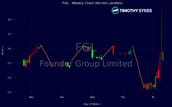
Technically, TAL is in a short‑term bullish phase. This week’s progression from 11.70 to a 12.40 close shows steady higher lows and higher closes, with no intraday breakdowns below prior opens, confirming buyers in control. Five‑minute candles show persistent dip‑buying around 12.00–12.10 with higher volume on up‑moves than on pullbacks, signaling aggressive accumulation. A practical trading level is 12.00: above it, the long bias is intact; a decisive break and hold below 11.70 would invalidate the near‑term uptrend.
Near‑term fundamental catalysts are limited, with no major new policy headlines, so price is primarily driven by sector rotation and sentiment toward Chinese education. Versus global Consumer Staples, TAL remains higher risk and more cyclical; versus education peers, its cash‑rich, low‑debt profile is superior. Support sits at 11.70, resistance at 13.00. My 6–12 month base‑case target is 14.00, assuming stable regulation and modest growth in new business lines.
More Breaking News
Quick Financial Overview
TAL Education Group (TAL) is trading in a controlled uptrend on the weekly chart, with price moving from around $11.70 to roughly $12.40 in recent weeks. That climb is steady, not explosive, which usually points to accumulation rather than pure speculation. Weekly candles show higher closes and no heavy rejection wicks, suggesting buyers have been willing to step up on dips.
On the intraday 5-minute chart, TAL holds a tight band between about $12.20 and $12.45, with the close pinned near the top of that range. That kind of compression after a grind higher often leads to a breakout move, but direction is not guaranteed. Volume is not provided, so traders have to lean more on price structure: higher lows through the day and very shallow pullbacks into the close show that sellers could not push the stock back down.
From a fundamentals angle, TAL Education Group shows revenue of roughly $3.01B and trades around 2.24 times sales and 1.78 times book value. A P/E near 13.18 is not extreme for this space, especially with a strong balance sheet behind it. Cash and short-term investments of about $3.24B against total liabilities of roughly $2.16B give the company flexibility, and a long-term debt and capital lease load near $278M looks manageable. Returns are mixed, with return on assets negative at about -4.39% and return on equity around -6.02%, but a reported 1-year ROIC near 25.51% suggests recent capital deployment has been more efficient.
Conclusion
TAL Education Group: Range Dynamics And Risk Levels
For traders, the story in TAL right now is a steady grind higher into a tight consolidation band. Weekly structure shows a constructive base from the $11.70 area up into the low $12s, with no obvious signs of aggressive selling. That kind of controlled ascent, paired with a flat intraday range, often sets up clean breakout or breakdown trades once fresh momentum hits.
The balance sheet for TAL Education Group is a clear positive: more than $3.23B in cash and short-term investments against $2.16B in total liabilities creates a real cushion. At the same time, negative return on assets and equity remind traders that profitability remains a work in progress, even if the current P/E and price-to-sales ratios look reasonable. This mix usually means one thing: the stock can move sharply when sentiment flips, because the fundamental base is solid but the market is still debating earnings power.
For active traders, key levels are the recent intraday highs near $12.45 on the upside and the weekly support zone back toward $12.00–$12.10 on the downside. Tight risk management around those levels is critical. As millionaire penny stock trader and teacher Tim Sykes says, “The goal is not to win every trade but to protect your capital and keep moving forward.” As I tell my students, “Your edge in names like TAL does not come from predicting the future, it comes from defining your risk, respecting your levels, and letting the market prove you right or wrong fast.”
This is stock news, not investment advice. Timothy Sykes News delivers real-time stock market news focused on key catalysts driving short-term price movements. Our content is tailored for active traders and investors seeking to capitalize on rapid price fluctuations, particularly in volatile sectors like penny stocks. Readers come to us for detailed coverage on earnings reports, mergers, FDA approvals, new contracts, and unusual trading volumes that can trigger significant short-term price action. Some users utilize our news to explain sudden stock movements, while others rely on it for diligent research into potential investment opportunities.
Dive deeper into the world of trading with Timothy Sykes, renowned for his expertise in penny stocks. Explore his top picks and discover the strategies that have propelled him to success with these articles:
- Penny Stocks Trading Guide
- Best Penny Stocks Under $1 to Buy Today
- Top 8 Penny Stocks to Watch on Robinhood
Once you’ve got some stocks on watch, elevate your trading game with StocksToTrade the ultimate platform for traders. With specialized tools for swing and day trading, StocksToTrade will guide you through the market’s twists and turns.
Dig into StocksToTrade’s watchlists here:




Leave a reply