
Stellantis N.V. stocks have been trading up by 15.94 percent amid strong electric vehicle momentum and upbeat investor sentiment.
Key Takeaways For STLA Traders
- Stellantis plans to hire several hundred additional engineers across Europe and the U.S. to support dozens of new models as part of its turnaround plan, after showcasing more than 60 vehicles and nine concept cars at the Paris auto show.
- Key groups in the European Parliament reached a provisional agreement on a softer auto emissions framework requiring an 87.5% reduction in emissions by 2035 with the remaining 7.5% offset via measures like green steel, easing the previously expected complete internal-combustion-engine ban and supporting major automakers including Stellantis.
- Stellantis is partnering with UK startup Wayve, Nvidia, and the French government to integrate Wayve’s AI driver and Nvidia’s technology with Stellantis’ L4‑ready platforms to deploy autonomous vehicles in France and potentially across the EU.
- Stellantis’ European registrations rose 4.7% in September to 139,582 units, but this lagged the broader EU market’s 9.3% increase as the region continues shifting toward battery‑electric vehicles.
- RBC Capital cut its price target on Stellantis from EUR 5 to EUR 4 while reiterating a Sector Perform rating, signaling tempered upside expectations without changing the relative sector stance.
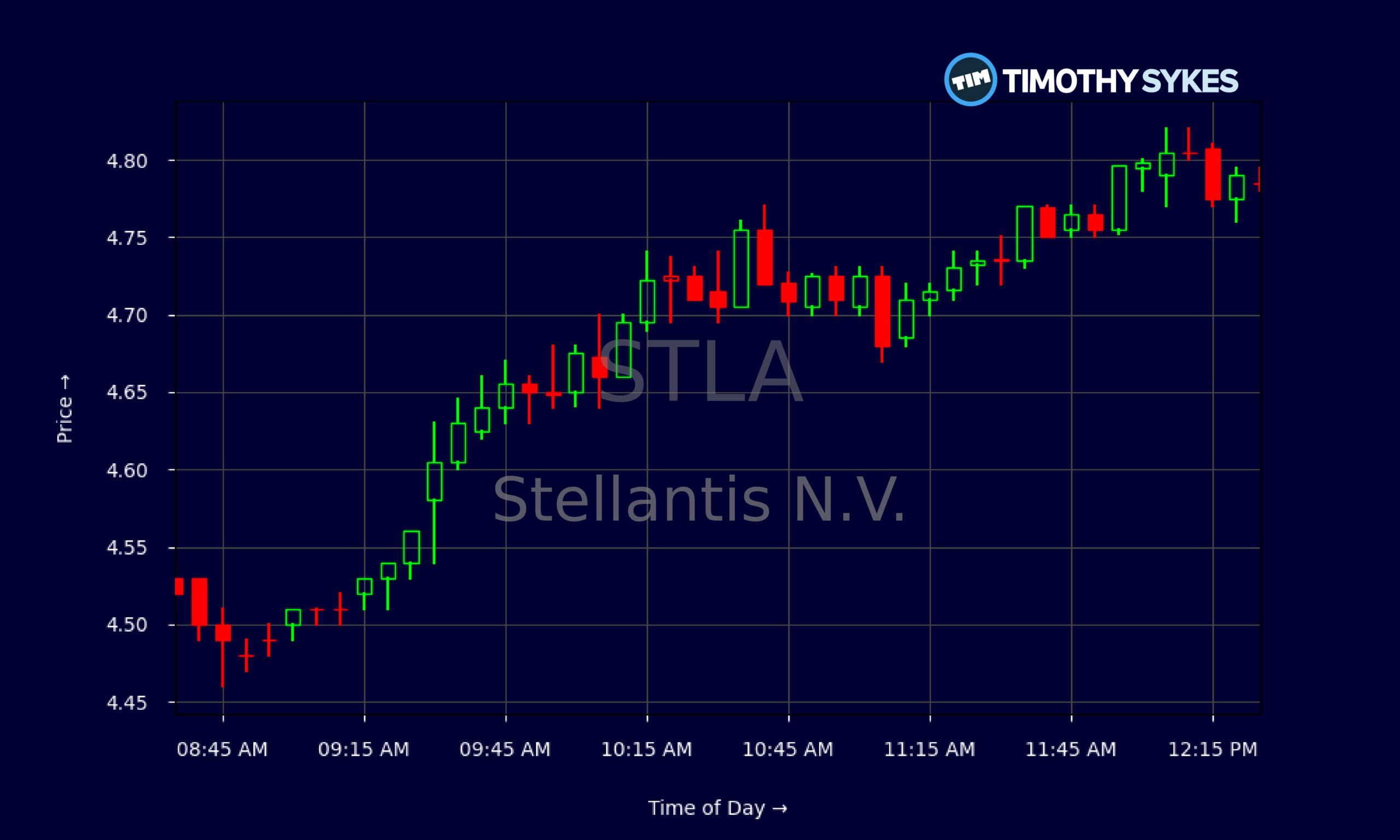
Live Update At 12:32:41 EDT: On Wednesday, October 28, 2026 Stellantis N.V. stock [NYSE: STLA] is trending up by 15.94%! Discover the key drivers behind this movement as well as our expert analysis in the detailed breakdown below.
Quick Financial Overview
STLA has traded like a coiled spring this month. The stock dipped toward the mid‑$4s earlier in October but has now pushed back to around $4.80, marking one of its strongest closes in weeks. The daily chart shows a clear short‑term uptrend: a base forming near $4.20–$4.30, followed by higher lows and a sharp push from $4.14 on 2026/10/27 to $4.80 on 2026/10/28.
Intraday, STLA’s 5‑minute chart backs up that strength. The stock grinded higher through the morning, then held the $4.75–$4.82 zone for more than an hour. That tells traders that dip buyers are stepping in quickly and supply at the highs is getting absorbed rather than slammed.
More Breaking News
Fundamentally, Stellantis is still trading like a deep‑value auto name. With revenue near $153.5B and an enterprise value of about $38.05B, the implied price‑to‑sales around 0.07 and price‑to‑book near 0.21 suggest the market is very cautious on STLA’s long‑term returns. Return on capital over the last year is negative, and leverage is meaningful, with a 3.6 ratio and long‑term debt a little above $30B. Traders are paying pennies on the dollar for a giant balance sheet and global footprint, then betting the turnaround actually sticks.
Why Traders Are Watching STLA Right Now
This week, STLA isn’t just drifting with the macro tape — there is real story flow behind the move. Stellantis is in the middle of a high‑stakes turnaround, and the latest headlines show both strategic offense and lingering execution risk.
On the offensive side, Stellantis is hiring hundreds of engineers across Europe and the U.S. to fuel its product pipeline. Management tied this push to a turnaround plan and to the more than 60 vehicles and nine concept cars it just showcased at the Paris auto show. For traders, this says one thing: STLA is not just cutting costs and riding old platforms; it is spending to refresh metal and software, which is what ultimately moves units and margins.
At the same time, the regulatory backdrop in Europe has turned less hostile. Key groups in the European Parliament backed a softer emissions framework — an 87.5% cut by 2035, with the final 7.5% handled by things like green steel, not a hard internal‑combustion ban. For Stellantis and STLA traders, that eases the risk of stranded ICE assets and buys flexibility to balance hybrids, EVs, and cleaner combustion tech rather than sprint blindly into a pure‑EV corner.
On the tech front, Stellantis is teaming up with Wayve, Nvidia, and the French government to deploy L4‑ready autonomous vehicles in France. That keeps STLA in the autonomous driving conversation instead of being written off as an “old auto” laggard. It is early, and the revenue impact will not show up overnight, but narrative matters in this market.
The wrinkles: STLA’s European registrations grew 4.7% in September to 139,582 units, but the broader EU market gained 9.3%. Stellantis is gaining, yet losing share as the region tilts faster toward battery‑electric vehicles. In North America, Ram heavy‑duty output is being trimmed by about 7% on weaker demand and high diesel prices — not a body blow to Stellantis, but a reminder that key profit pools are cyclical.
Layer on RBC Capital’s price‑target cut from EUR 5 to EUR 4 with a Sector Perform rating, and you get the mixed picture: strong strategic moves, but the sell side still wants proof in the numbers.
Conclusion
For active traders, STLA right now is a classic “story meets setup” name. The daily chart shows momentum turning back up into the company’s Q3 2026 earnings release on 2026/10/28, which Stellantis has flagged with a webcast and presentation. That date is the next hard catalyst where the turnaround narrative, the emissions relief tailwind, and the autonomous push either start to show in margins and cash flow — or they don’t.
Under the hood, Stellantis still looks like a cheap, complex machine: roughly $195.2B in assets, more than 248,000 employees, heavy debt, and a book value that the market is heavily discounting. The hiring spree in engineering, the L4 autonomous program with Wayve and Nvidia, and the softer EU rules all point toward a more manageable transition path. Meanwhile, moves like extending Dodge Durango taillamp warranties show STLA working to protect brand equity, even if that adds some warranty cost.
But none of that removes trading risk. STLA is lagging EU market growth, trimming Ram heavy‑duty production, and dealing with cautious broker views. As Tim Sykes always stresses, “trade like a sniper, not a machine gun.” As millionaire penny stock trader and teacher Tim Sykes, says, “Small gains add up over time; focus on building wealth gradually, not chasing jackpots.”. For STLA, that means respecting the uptrend, knowing your levels, and being ready to cut fast if the Q3 numbers on 2026/10/28 fail to confirm the hype. This analysis is for educational and research purposes only, not investment advice.
This is stock news, not investment advice. Timothy Sykes News delivers real-time stock market news focused on key catalysts driving short-term price movements. Our content is tailored for active traders and investors seeking to capitalize on rapid price fluctuations, particularly in volatile sectors like penny stocks. Readers come to us for detailed coverage on earnings reports, mergers, FDA approvals, new contracts, and unusual trading volumes that can trigger significant short-term price action. Some users utilize our news to explain sudden stock movements, while others rely on it for diligent research into potential investment opportunities.
Dive deeper into the world of trading with Timothy Sykes, renowned for his expertise in penny stocks. Explore his top picks and discover the strategies that have propelled him to success with these articles:
- Penny Stocks Trading Guide
- Best Penny Stocks Under $1 to Buy Today
- Top 8 Penny Stocks to Watch on Robinhood
Once you’ve got some stocks on watch, elevate your trading game with StocksToTrade the ultimate platform for traders. With specialized tools for swing and day trading, StocksToTrade will guide you through the market’s twists and turns.
Dig into StocksToTrade’s watchlists here:





Leave a reply