

Pyxis Oncology Inc. surged after promising clinical trial news, and stocks have been trading up by 9.4 percent.
What Traders Need To Know
- Q2 loss of ($0.40) per share missed the ($0.35) consensus, but fresh financing pushed the Pyxis Oncology Inc. cash runway out to Q2 2027.
- Management is guiding to key MICVO clinical readouts in recurrent/metastatic head and neck cancer starting this fall and into Q4, including combination data with pembrolizumab.
- Upcoming presentations at three major healthcare investment conferences will spotlight MICVO, which holds FDA Fast Track Designation in head and neck squamous cell carcinoma.
- A recent Form 4 showed an insider or major holder ownership change in PYXS, though the filing does not specify whether it was a buy, sale, grant, or vesting event.

Weekly Update Aug 31 – Sep 04, 2026: On Sunday, September 06, 2026 Pyxis Oncology Inc. stock [NASDAQ: PYXS] is trending up by 9.4%! Discover the key drivers behind this movement as well as our expert analysis in the detailed breakdown below.
Healthcare industry expert:
Analyst sentiment – neutral
Pyxis Oncology (PYXS) is a high-risk, early-clinical oncology developer with negligible revenue ($0.39M in Q2) and structurally extreme losses (EBIT margin roughly -780%, ROE about -180%). Cash burn remains heavy (operating cash flow -$18.2M in Q2), but recent equity financing lifted cash and equivalents to ~$33M, supporting runway into mid-2027. Balance sheet is equity‑funded (D/E ~1.6, current ratio 1.3) with modest working capital. Valuation (P/S ~23x, P/B ~9.5x) prices in substantial future success despite zero commercial visibility.
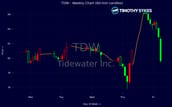
Technically, PYXS has broken out from the low‑$3s, with a weekly progression from $3.24 close to $3.90, showing persistent higher highs and higher lows. The spike from $3.38 to $3.75–3.90 on expanding volume confirms a short-term bullish trend driven by event anticipation and speculative flows. A clear actionable level is $3.40: above it, bias remains long with upside toward $4.25–4.50; sustained trade back below $3.40 would signal failed breakout and favor a tactical exit or short bias for traders.
Near term, the key catalysts are MICVO clinical readouts in recurrent/metastatic head and neck cancer starting this fall and combination data with pembrolizumab into Q4, plus increased visibility from multiple investor conferences. The widened loss versus consensus is consistent with biotech peers but fundamentals remain weaker than healthcare and biotech benchmarks, which generally have better cash efficiency and pipeline diversification. Given binary clinical risk and elevated valuation, PYXS is a speculative trading buy only above $3.40, with support at $3.10 and resistance at $4.50.
More Breaking News
Quick Financial Overview
Pyxis Oncology Inc. sits in classic high-burn, high-upside biotech territory. The latest quarter showed total revenue of only about $0.4M, while research and development plus overhead drove a net loss of roughly $25.3M, or ($0.40) per share. Margins are sharply negative on every profitability ratio, which is normal for a development-stage biotech but still a reminder that PYXS is a pure execution story around its pipeline, led by MICVO.
On the balance sheet, cash and equivalents of around $18.9M and total cash and short-term investments near $33.0M are the key numbers. Management’s new financing extends the cash runway into Q2 2027, giving several years of funding for clinical work despite an operating cash outflow of about $18.2M this quarter. Leverage is modest but real, with total debt to equity around 1.56 and a current ratio of about 1.3, so continued access to capital markets remains important.
The tape shows traders already leaning into the story. Weekly closes have stepped up from roughly $3.27 toward $3.90 over recent sessions, while an intraday spike from about $3.53 to over $4.00 before settling near $3.89 signals strong momentum and active profit-taking. Valuation looks rich on traditional metrics, with a price-to-sales ratio above 23 and price-to-book near 9.5, but in this kind of name price tends to track data and catalysts more than backward-looking multiples.
Conclusion
Pyxis Oncology Inc. is trading like a classic event-driven biotech: weak earnings optics offset by improving liquidity and an increasingly visible lead asset. The extended runway into Q2 2027 reduces near-term financing risk and lets the MICVO program breathe, even as current returns on equity and assets remain deeply negative. For traders, that setup means fundamental red ink, but a cleaner window to trade around data and conference headlines.
The key near-term watch items are clear. First, the MICVO clinical readouts in recurrent/metastatic head and neck cancer starting this fall and running into Q4, including combination data with pembrolizumab. Second, how the stock reacts around the three upcoming healthcare conferences where PYXS will be front and center with its Fast Track-designated asset. Price-wise, the recent push from the low-$3 area to just under $4 shows where momentum buyers are stepping in, while any rejection above $4 could mark a short-term ceiling.
For educational purposes, traders should treat PYXS as a catalyst vehicle rather than a balance-sheet compounder. As millionaire penny stock trader and teacher Tim Sykes, says, “Consistency is key in trading; don’t let emotions dictate your trades.” That discipline matters even more in event-driven names like this, where headlines and volatility can easily shake traders out of their plans. As I tell my students, “In names like PYXS, you are trading the calendar and the chart, not the income statement—respect the risk, size small, and let the catalysts, not hope, drive your plan.”
This is stock news, not investment advice. Timothy Sykes News delivers real-time stock market news focused on key catalysts driving short-term price movements. Our content is tailored for active traders and investors seeking to capitalize on rapid price fluctuations, particularly in volatile sectors like penny stocks. Readers come to us for detailed coverage on earnings reports, mergers, FDA approvals, new contracts, and unusual trading volumes that can trigger significant short-term price action. Some users utilize our news to explain sudden stock movements, while others rely on it for diligent research into potential investment opportunities.
Dive deeper into the world of trading with Timothy Sykes, renowned for his expertise in penny stocks. Explore his top picks and discover the strategies that have propelled him to success with these articles:
- Penny Stocks Trading Guide
- Best Penny Stocks Under $1 to Buy Today
- Top 8 Penny Stocks to Watch on Robinhood
Once you’ve got some stocks on watch, elevate your trading game with StocksToTrade the ultimate platform for traders. With specialized tools for swing and day trading, StocksToTrade will guide you through the market’s twists and turns.
Dig into StocksToTrade’s watchlists here:




Leave a reply