
MaxLinear Inc stocks have been trading up by 11.25 percent after upbeat analyst coverage signaled improving growth prospects.
Key Takeaways Traders Need To Know
- Shares of MXL recently jumped 9.9% to $93.77, signaling strong buying interest even without a clear single-session catalyst.
- The company launched its Puma 9 DOCSIS 3.1+/4.0 SoC, targeting 30–50% customer-premises equipment cost cuts while adding Wi‑Fi 8, Edge AI, DDR5, and post‑quantum security.
- A second new platform, Topaz, brings an AI‑ready PON home gateway SoC for 10G+ fiber and Wi‑Fi 8, with OEMs Askey and Gemtek already designing around it.
- MXL is showcasing Topaz and its MaxAI 2.0 software at Network X 2026, pitching edge AI, autonomous diagnostics, and software‑defined access.
- Q3 2026 earnings for MaxLinear are due 2026/10/22, a key date for traders watching how Puma 9 and Topaz translate into orders and guidance.
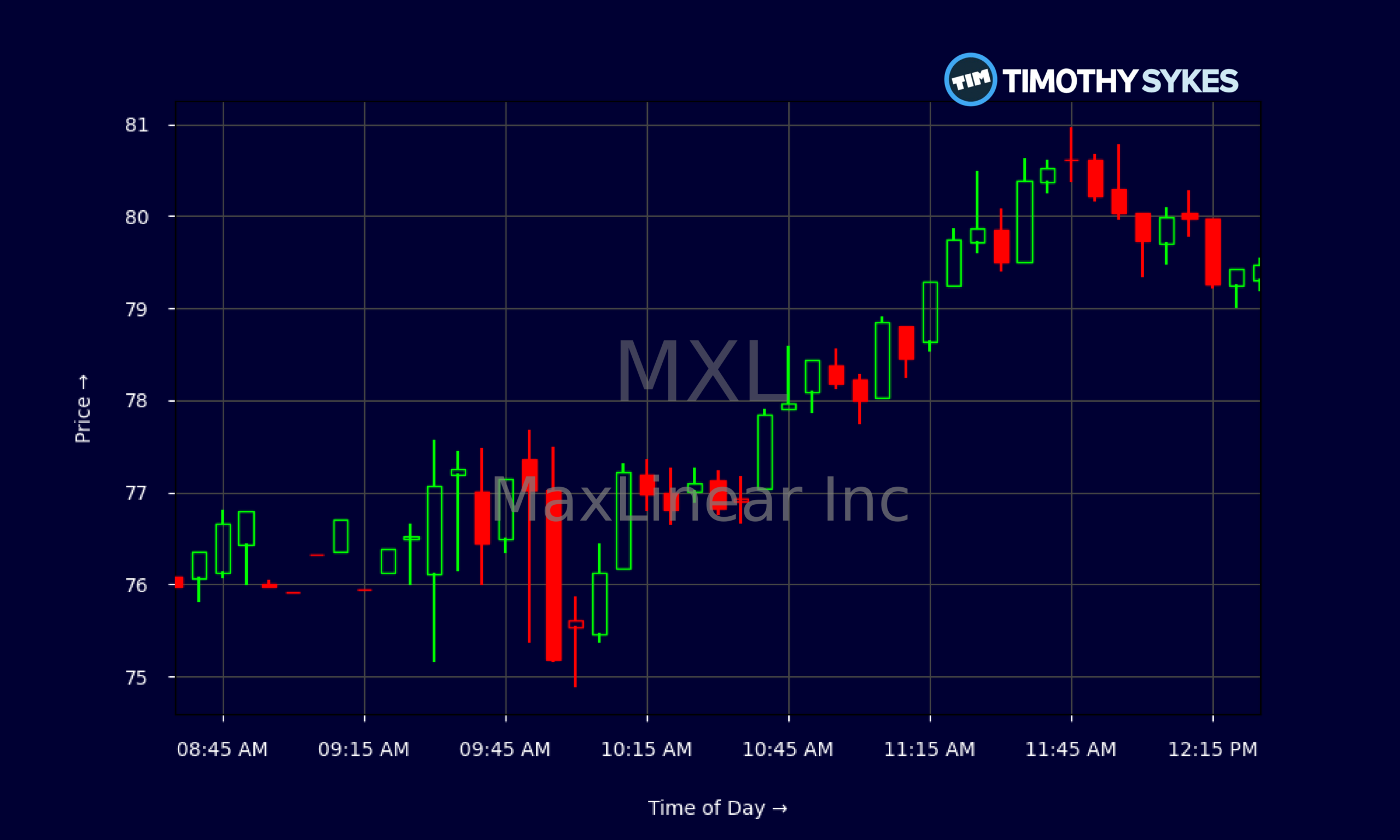
Live Update At 12:32:10 EDT: On Monday, October 19, 2026 MaxLinear Inc stock [NASDAQ: MXL] is trending up by 11.25%! Discover the key drivers behind this movement as well as our expert analysis in the detailed breakdown below.
Quick Financial Overview
MaxLinear, trading under ticker MXL, has been acting like a classic momentum name on the chart while its core financials still look in turnaround mode. Revenue over the last year came in around $467.6M, but longer‑term trends show pressure, with three‑year revenue down roughly 17% and five‑year revenue slightly negative. Profitability is still weak. MXL’s EBIT margin sits around -10.6%, and net margins are near -18%, so this is not a “steady compounder” story. It is a growth and recovery setup.
Despite that, gross margin is a solid 57.5%, which tells traders the core chip portfolio still carries pricing power. The problem is overhead and scale, not demand for the silicon itself. Returns on equity and assets are negative, and traditional valuation metrics like P/E are not useful here. Instead, the stock trades rich to sales and book, with price‑to‑sales above 15x and price‑to‑book near 18x. That premium means the market is clearly paying up for the MXL broadband and AI narrative.
More Breaking News
On the balance sheet, debt looks manageable with total debt‑to‑equity around 0.29 and a current ratio of 1.8, giving MXL room to execute. Cash flow is modest but positive, with recent free cash flow near breakeven and operating cash flow improving. For active traders, this is a name where the story, product cycle, and chart momentum matter more than trailing earnings.
Why Traders Are Watching MXL’s AI-Ready Broadband Push
The technical setup around MXL is being reinforced by a powerful product story. The stock recently spiked 9.9% to $93.77, and that move came alongside a steady drumbeat of new chip launches that align with some of the strongest themes in tech: multi‑gigabit broadband, AI at the edge, and security.
The new Puma 9 platform is central to that narrative. MaxLinear says Puma 9 supports DOCSIS 3.1+ and 4.0, delivers Wi‑Fi 8, and bakes in Edge AI and DDR5 memory support. For cable operators, the headline is cost and future‑proofing. Puma 9 targets 30–50% reductions in customer‑premises equipment costs, while letting operators deploy DOCSIS 4.0‑ready gateways today and unlock full features later with software. That kind of capex efficiency is exactly what large cable players want, and traders know a design win cycle here can snowball.
On the fiber side, MXL launched its Topaz PON home gateway SoC. Topaz is pitched as AI‑ready for 10G+ fiber with Wi‑Fi 8 and AI‑enabled broadband services. Importantly, OEMs Askey and Gemtek are already designing products with Topaz, which gives the story early validation. The platform combines fiber access, packet processing, AI/ML acceleration, post‑quantum crypto readiness, and power management in a single chip. For carriers and device makers, that can cut system complexity, lower bill‑of‑materials cost, and shorten time‑to‑market — all strong selling points that can translate into pricing power for MaxLinear.
MXL is also working the ecosystem angle. At Network X 2026, the company is highlighting the Topaz platform and its MaxAI 2.0 software, emphasizing embedded inferencing, autonomous diagnostics, and software‑defined access in partnership with RG Nets and Bridgecom. That pushes MaxLinear beyond just “a chip supplier” and toward a broader edge‑AI broadband platform story, which markets tend to reward with higher multiples.
For short‑term traders, this cluster of launches offers clear trading catalysts. Any new design wins or carrier announcements tied to Puma 9 or Topaz can trigger sharp moves. Longer term, the question is whether these platforms turn MXL into a consistent beneficiary of the global broadband upgrade and AI‑at‑home trend.
Conclusion
Right now MXL sits at the crossroad of a high‑beta chart and a high‑conviction product cycle. The daily chart shows a big run from the mid‑$80s to above $100 this month, then a pullback into the high‑$70s and low‑$80s. That kind of swing tells traders there is real momentum and real volatility. The intraday tape around $79–$80 shows tight consolidations and quick pushes, classic behavior when a stock is resetting after a strong move.
Underneath the price action, MaxLinear is still cleaning up its income statement, with negative operating margins but strong gross margins and a manageable balance sheet. The real driver in this phase is narrative. Puma 9 and Topaz give MXL exposure to DOCSIS 4.0 cable upgrades, 10G fiber rollouts, Wi‑Fi 8, and AI at the network edge, all wrapped in a security story with post‑quantum cryptography. That is a lot of hot money buzzwords in one ticker.
The near‑term date to circle is 2026/10/22, when MaxLinear reports Q3 2026 numbers and hosts its conference call. Traders will want to hear about early orders, design‑in momentum, and how quickly Puma 9 and Topaz can scale into revenue. As Tim Sykes likes to say, “The market rewards prepared traders, not lazy gamblers.” As millionaire penny stock trader and teacher Tim Sykes, says, “Cut losses quickly, let profits ride, and don’t overtrade.” For MXL, that means doing the work now — studying the chart, understanding the product cycle, planning entries and exits — so you are ready when the next headline hits. This article is for educational and research purposes only and is not advice for any kind of trading.
This is stock news, not investment advice. Timothy Sykes News delivers real-time stock market news focused on key catalysts driving short-term price movements. Our content is tailored for active traders and investors seeking to capitalize on rapid price fluctuations, particularly in volatile sectors like penny stocks. Readers come to us for detailed coverage on earnings reports, mergers, FDA approvals, new contracts, and unusual trading volumes that can trigger significant short-term price action. Some users utilize our news to explain sudden stock movements, while others rely on it for diligent research into potential investment opportunities.
Dive deeper into the world of trading with Timothy Sykes, renowned for his expertise in penny stocks. Explore his top picks and discover the strategies that have propelled him to success with these articles:
- Penny Stocks Trading Guide
- Best Penny Stocks Under $1 to Buy Today
- Top 8 Penny Stocks to Watch on Robinhood
Once you’ve got some stocks on watch, elevate your trading game with StocksToTrade the ultimate platform for traders. With specialized tools for swing and day trading, StocksToTrade will guide you through the market’s twists and turns.
Dig into StocksToTrade’s watchlists here:





Leave a reply