

Lufax Holding Ltd faces heightened pressure as regulatory crackdowns intensify, and its stocks have been trading down by -12.6 percent.
What Traders Need To Know
- Lufax Holding is changing its American Depositary Share ratio on the NYSE to a 1-for-10 reverse ADS split, moving from 1 ADS for 2 ordinary shares to 1 ADS for 20.
- The reverse ADS split aims to raise the per-ADS trading price but does not change the company’s total market value or the underlying business economics.
- Existing ADSs will be automatically exchanged or surrendered based on how they are held, while the ordinary shares of Lufax Holding Ltd remain unchanged by the ratio shift.

Weekly Update Sep 28 – Oct 02, 2026: On Sunday, October 04, 2026 Lufax Holding Ltd stock [NYSE: LU] is trending down by -12.6%! Discover the key drivers behind this movement as well as our expert analysis in the detailed breakdown below.
Finance industry expert:
Analyst sentiment – negative
Lufax (LU) sits in a challenged but asset-rich position within Chinese consumer finance. 2023 revenue of roughly $33.3 billion supports substantial scale, yet profitability metrics and ROA/ROE are effectively zero, signaling a business still digesting credit-cycle and regulatory hits. The balance sheet is solid: total assets of $237 billion versus equity of $92 billion imply moderate leverage (about 2.6x), with long-term debt only $5.7 billion and long-term debt-to-capital of 8%, plus sizable cash and restricted cash exceeding $50 billion.
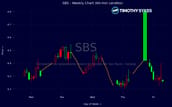
Technically, LU is in a clear short-term downtrend. The step-down from 1.26 to 1.19 and then a sharp slide to a 1.02–1.05 range confirms persistent selling pressure. Intraday 5‑minute candles recently show weak bounces with heavier volume on down bars, indicating distribution rather than accumulation. The actionable level is 1.05: below it, continuation shorts are favored with tight risk control; above 1.10 on convincing volume, aggressive traders can target a rebound toward 1.20.
The 1‑for‑10 reverse ADS split is an explicit effort to lift the share price and preserve NYSE listing, not to improve fundamentals. Within Finance and Credit Finance benchmarks, LU trades at deep value metrics (P/S 0.27, P/B 0.07) that reflect market skepticism about earnings quality and growth. Near term, resistance sits at 1.20 and support at 1.00; risk‑reward skews negatively. My verdict: avoid or underweight until sustained profitability and credit quality improvement materialize.
More Breaking News
Quick Financial Overview
Lufax Holding Ltd is pushing through a 1-for-10 reverse ADS split on the NYSE, changing each ADS from representing 2 ordinary shares to 20. This is a technical move meant to lift the quoted ADS price, often to align with listing standards or improve optics. The company states that overall market capitalization and the economics of Lufax Holding Ltd do not change, so traders should see this as a capital-structure adjustment, not a fundamental shift.
Price action into the change has been weak. The weekly data show the stock trading down from around $1.26 to about $1.04 over a few sessions between 2026/09/28 and 2026/10/02, with a sharp drop especially visible near the end of that window. Intraday, a 5-minute candle moving from $1.20 down to near $1.02 highlights heavy downside pressure and likely selling into the event, which is common when a reverse split is announced in a beaten-down name.
On the fundamental side, Lufax Holding Ltd still shows scale. Revenue is roughly $33.29B with a price-to-sales ratio near 0.27 and price-to-book close to 0.07, which tells traders the market is deeply discounting the balance sheet. Book value per share is about 92.11, backed by total assets near $237.02B, net loans around $129.69B, and cash plus restricted cash that together exceed $50B. Leverage, with a ratio of 2.6 and long-term debt near $5.65B, looks manageable on paper, but very low market multiples signal market concern about growth, asset quality, or regulatory risk.
Conclusion
Lufax Reverse ADS Split Reshapes Near-Term Trading Setup
For traders, the 1-for-10 reverse ADS split is the key near-term catalyst in LU. The change boosts the quoted ADS price but does not repair weak recent price action, which slid from roughly $1.26 to about $1.04 over the latest weekly window and even tagged near $1.02 intraday. That pattern shows clear selling pressure and possible fatigue among holders ahead of the capital-structure adjustment.
At the same time, the financial data behind Lufax Holding Ltd point to a large, asset-heavy platform trading at very low multiples, with price-to-sales around 0.27 and price-to-book about 0.07. That disconnect is what makes LU a trader’s stock right now: cheap on paper, but priced as if the market does not trust the loans, earnings power, or policy backdrop. The reverse ADS split can briefly change liquidity, attract short-term momentum, and reset price levels on the screen, but it does not fix fundamentals.
For LU, traders should treat post-split price action as a clean new chart, watch how volume behaves around the higher per-ADS quote, and respect the risk that any bounce can fade fast if sellers step back in. As I tell my students, “Reverse splits don’t make a broken story whole, but they can create sharp, short-lived opportunities for traders who come in with a plan and strict risk limits.” In volatile post-split environments like this, discipline matters even more; as millionaire penny stock trader and teacher Tim Sykes, says, “Consistency is key in trading; don’t let emotions dictate your trades.”
This is stock news, not investment advice. Timothy Sykes News delivers real-time stock market news focused on key catalysts driving short-term price movements. Our content is tailored for active traders and investors seeking to capitalize on rapid price fluctuations, particularly in volatile sectors like penny stocks. Readers come to us for detailed coverage on earnings reports, mergers, FDA approvals, new contracts, and unusual trading volumes that can trigger significant short-term price action. Some users utilize our news to explain sudden stock movements, while others rely on it for diligent research into potential investment opportunities.
Dive deeper into the world of trading with Timothy Sykes, renowned for his expertise in penny stocks. Explore his top picks and discover the strategies that have propelled him to success with these articles:
- Penny Stocks Trading Guide
- Best Penny Stocks Under $1 to Buy Today
- Top 8 Penny Stocks to Watch on Robinhood
Once you’ve got some stocks on watch, elevate your trading game with StocksToTrade the ultimate platform for traders. With specialized tools for swing and day trading, StocksToTrade will guide you through the market’s twists and turns.
Dig into StocksToTrade’s watchlists here:




Leave a reply