

Equifax Inc. stocks have been trading up by 11.62 percent following upbeat consumer data trends boosting credit-report demand
Key Takeaways For EFX Traders
- Wall Street banks have trimmed Equifax (EFX) price targets into a roughly $170–$213 band but still keep mostly Buy, Overweight, or Outperform ratings with mean targets near $195–$210.
- Analysts highlight high 30‑year mortgage rates above 7% and softer consumer lending as pressure points on Equifax’s mortgage‑linked revenue heading into the 2026/10/20 Q3 earnings release.
- Regulatory risk from a potential FHFA shift to a bi‑merge mortgage credit model is flagged as a longer‑term overhang on EFX’s mortgage business.
- Rapid adoption of Equifax’s VantageScore 4.0, backed by FHFA approval and a $1 pricing strategy through 2028, is emerging as a key growth driver.
- New offerings like Mortgage Score Select, Mortgage Ultimate, and an expanded Mastercard Open Finance partnership push EFX deeper into mortgage workflow and open‑banking data.
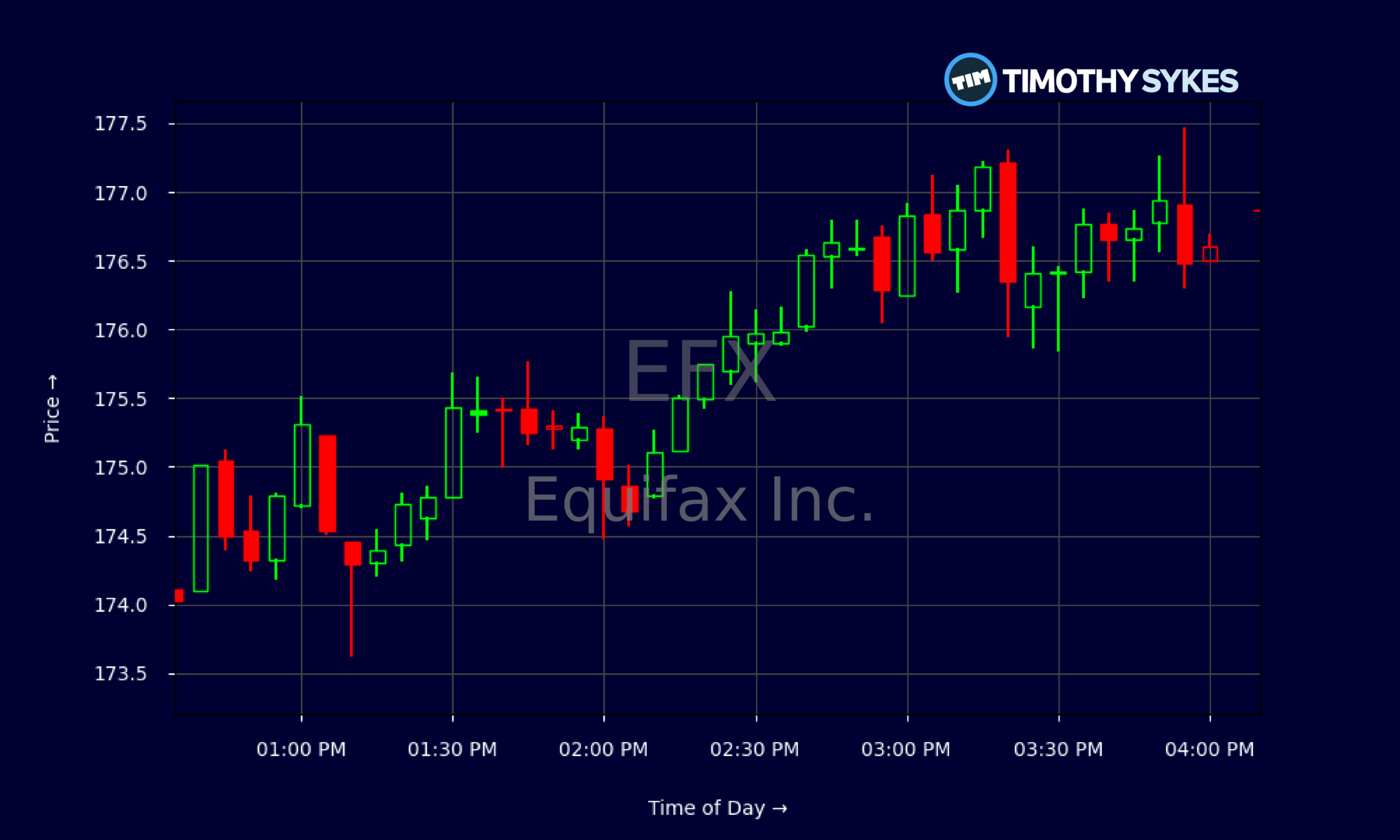
Live Update At 16:47:22 EDT: On Tuesday, October 20, 2026 Equifax Inc. stock [NYSE: EFX] is trending up by 11.62%! Discover the key drivers behind this movement as well as our expert analysis in the detailed breakdown below.
Quick Financial Overview
EFX has been on a strong multi‑week climb. From late September closes near $137, Equifax rallied to about $176.54 on 2026/10/20. That is a sharp move, and it tells traders money is rotating back into the name even as headlines focus on rate and regulatory risk.
The latest session shows EFX opening at $166.11 and grinding higher all day, topping out at $177.80 and closing near the highs. Intraday, the 5‑minute chart is a stair‑step trend: higher lows, controlled pullbacks, and steady bids between $174 and $177. That’s persistent demand, not a one‑and‑done squeeze.
Fundamentally, Equifax prints solid numbers. Revenue runs around $6.07B annually, with an EBIT margin near 18% and EBITDA margin close to 29.6%. Gross margin near 79.6% shows strong pricing power in its data products. A P/E near 25.6 and price‑to‑sales around 2.7 put EFX in quality‑compounder territory, not a penny‑stock flyer.
More Breaking News
Debt is meaningful — total debt‑to‑equity of 1.25 and current ratio of 0.6 — so this is not a balance sheet you ignore. But Equifax throws off healthy cash: recent quarterly operating cash flow of about $339.8M and free cash flow around $204.8M give EFX room to fund new products, pay a dividend, and still manage leverage.
Why Traders Are Watching EFX Into Earnings
EFX is sitting at the crossroads of macro pain and structural change, which is exactly where active traders should pay attention.
On the cautious side, almost every big bank on the Street has cut numbers. Bank of America trimmed its Equifax target from $210 to $200 and modestly shaved Q3 estimates, pointing straight at mortgage weakness as 30‑year rates stay above 7%. RBC cut from $194 to $177 and Mizuho from $210 to $185, both warning about softer consumer lending and regulatory pressure. Jefferies is down at $170. That cluster tells you the easy upside on EFX is gone for now.
But look at the fine print. BofA, RBC, Mizuho, Deutsche Bank, Morgan Stanley — they still sit at Buy, Overweight, or Outperform on Equifax. Consensus remains overweight with average targets generally around the mid‑$190s and in some cases near $210. Even after the reset, the Street’s mean target still stands well above the recent $170s tape.
That tension is where trading opportunity lives. Analysts are clearly pricing in macro and FHFA bi‑merge risk, yet they continue to treat EFX as a long‑term compounder. Morgan Stanley even argues that AI‑disruption fears and punishment for any organic growth wobble are “largely priced in.” For traders, that means a miss or cautious guide may sting, but the downside shock could be more muted than headlines suggest.
At the same time, Equifax is not standing still. Management is pushing hard into new mortgage and data rails that are already showing traction. VantageScore 4.0 is gaining rapid adoption across the mortgage industry, helped by FHFA approval for Fannie Mae and Freddie Mac loans. EFX is turbo‑charging that uptake with a $1 pricing strategy extended through 2028, effectively buying share while helping lenders cut costs.
On top of that, Equifax rolled out Mortgage Score Select, letting lenders choose between VantageScore 4.0, Classic FICO and, later, FICO 10T, or even pull files without a score, with a 24‑hour $1 repull option. In a coming multi‑score world — with FHA set to accept VantageScore 4.0 in 2027 — that flexibility is a serious defensive and offensive tool for EFX.
The Mortgage Ultimate platform pushes further, promising a largely automated income and employment verification workflow using The Work Number and Network Verification Services, with a targeted 95% fulfillment rate and commercial availability in early 2027. That’s higher‑margin, stickier software‑style revenue layered on top of bureaus.
Then there’s open banking. Equifax is deepening its collaboration with Mastercard Open Finance, adding consumer‑permissioned cash‑flow analytics and payment‑risk insights that can be combined with traditional Equifax credit data. That positions EFX squarely inside the cash‑flow underwriting and fintech trend, widening its opportunity beyond classic credit files.
Put it all together and you get a mixed but tradable setup into the 2026/10/20 Q3 earnings call: recalibrated expectations, visible macro and regulatory overhangs, but a real product roadmap that speaks to long‑term relevance.
Conclusion
For active traders, EFX right now is about balancing the chart against the backdrop.
Technically, Equifax has broken out from the mid‑$130s to the high‑$170s over a few weeks, riding a clean trend of higher highs and higher lows. The 5‑minute tape from the latest session shows controlled intraday dips getting bought, not chased — that’s often institutional interest, not just retail noise.
Fundamentally, cash flow is strong, margins are healthy, and the business is clearly pivoting toward new scoring models, workflow automation, and open‑banking data. At the same time, leverage is real, mortgage volumes are under pressure, and FHFA’s bi‑merge proposal hangs over EFX’s legacy mortgage franchise. Price‑target cuts into the $170–$213 band, with Jefferies at $170 on the low side and firms like Rothschild & Co Redburn still above $210, map out a wide risk‑reward tunnel.
Heading into the 2026/10/20 earnings release, Equifax traders should be watching three things: how management talks about mortgage revenues with rates above 7%, what they say about FHFA and the multi‑score regime, and any updated data on VantageScore 4.0, Mortgage Ultimate, and the Mastercard Open Finance partnership. As Tim Sykes likes to say, “The market rewards preparation, not prediction.” As millionaire penny stock trader and teacher Tim Sykes, says, “There is always another play around the corner; don’t chase just because you feel FOMO.”. With EFX, the edge goes to traders who study the trend, understand the catalysts, and are ready to cut losses fast if the story breaks.
This is stock news, not investment advice. Timothy Sykes News delivers real-time stock market news focused on key catalysts driving short-term price movements. Our content is tailored for active traders and investors seeking to capitalize on rapid price fluctuations, particularly in volatile sectors like penny stocks. Readers come to us for detailed coverage on earnings reports, mergers, FDA approvals, new contracts, and unusual trading volumes that can trigger significant short-term price action. Some users utilize our news to explain sudden stock movements, while others rely on it for diligent research into potential investment opportunities.
Dive deeper into the world of trading with Timothy Sykes, renowned for his expertise in penny stocks. Explore his top picks and discover the strategies that have propelled him to success with these articles:
- Penny Stocks Trading Guide
- Best Penny Stocks Under $1 to Buy Today
- Top 8 Penny Stocks to Watch on Robinhood
Once you’ve got some stocks on watch, elevate your trading game with StocksToTrade the ultimate platform for traders. With specialized tools for swing and day trading, StocksToTrade will guide you through the market’s twists and turns.
Dig into StocksToTrade’s watchlists here:





Leave a reply