

Can-Fite Biopharma Ltd stocks have been trading up by 20.97 percent on strong sentiment from its latest clinical trial progress
Key Takeaways
- Can-Fite BioPharma submitted a Phase 2 Piclidenoson protocol to Bambino Gesu Children’s Hospital in Rome for first-in-indication testing in Lowe syndrome, a rare genetic kidney disease with no disease-modifying therapies.
- The planned Piclidenoson study is a small, open-label Phase 2 trial in 5 adults at Bambino Gesù Children’s Hospital aimed at proof-of-concept efficacy and safety data for future regulatory talks and a possible registration path.
- Piclidenoson already runs in Phase 3 programs for psoriasis, while Can-Fite’s broader pipeline features Namodenoson in late-stage HCC and MASH trials and CF602 for erectile dysfunction, giving CANF multiple late-stage shots on goal.

Live Update At 08:32:16 EDT: On Wednesday, September 02, 2026 Can-Fite Biopharma Ltd stock [NYSE American: CANF] is trending up by 20.97%! Discover the key drivers behind this movement as well as our expert analysis in the detailed breakdown below.
Quick Financial Overview
CANF trades like a classic small-cap biotech — low revenue today, big optionality tied to clinical news. Recent annual revenue sits around $674,000, with a steep negative pretax margin, showing Can-Fite Biopharma Ltd is still firmly in the cash-burn, R&D-heavy stage. For traders, that means headlines matter more than current sales.
On the balance sheet side, CANF carries roughly $9.1M in total assets and about $5.4M in equity as of 2024/12/31. Cash and equivalents of about $4.8M plus total current assets near $8.98M give the company a working capital cushion of about $6.93M. With total liabilities around $3.68M and long-term debt modest, leverage looks contained for now.
Valuation-wise, CANF shows a price-to-sales ratio near 16.8 and price-to-book around 1.2, which is typical for a micro-cap biotech where traders are paying for future potential, not current earnings. Return on equity and return on assets are deeply negative, reminding traders this is a development story, not a cash machine.
More Breaking News
In short, CANF’s financial profile reinforces the obvious: the chart and catalysts, not legacy fundamentals, will drive trading decisions.
Why Traders Are Watching CANF Now
CANF grabbed fresh attention after Can-Fite BioPharma Ltd filed a Phase 2 clinical study protocol for Piclidenoson in Lowe syndrome at Bambino Gesu Children’s Hospital in Rome. This is first-in-indication work in a rare kidney disorder that currently has no approved disease-modifying therapy. That alone is the kind of phrase — “no approved therapy” — that wakes up biotech-focused traders.
The planned Phase 2 trial in Lowe syndrome is intentionally small: 5 adult patients, open-label, focused on proof-of-concept. CANF is not trying to do a massive, fully powered pivotal trial out of the gate. Instead, the company is aiming for early efficacy and safety signals that could support regulatory conversations and shape a potential registration strategy. For traders, that means the bar for initial data is often about direction, not perfection.
This Lowe syndrome push doesn’t live in isolation. Piclidenoson is already in Phase 3 for psoriasis, so CANF is effectively leveraging an existing asset into a new orphan-like niche. Add Namodenoson in late-stage trials for hepatocellular carcinoma (HCC) and MASH, plus CF602 for erectile dysfunction, and you get a pipeline with several late-stage shots. That diversification helps CANF because the market doesn’t have to hang everything on a single Lowe syndrome readout.
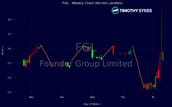
You can see the market reacting in the tape. Daily data show CANF closing near $3.21–$3.58 over recent sessions, then jumping to $3.29 on 2026/09/01. Intraday on the news day, premarket action took CANF from a prior close around $3.23 up as high as $4.93 before settling in the low $4s. That’s a sharp range expansion and classic news-driven momentum — exactly what short-term traders hunt.
Conclusion
CANF is behaving like a textbook catalyst-driven biotech play. The Phase 2 Piclidenoson trial in Lowe syndrome gives Can-Fite Biopharma Ltd a new rare-disease angle with clear unmet need and a defined early goal: proof-of-concept data that can anchor talks with regulators. For active traders, that creates a clean narrative — small trial, binary-style upcoming data, and a chance for sharp repricing around headlines.
At the same time, CANF is not a one-trick ticker. Piclidenoson’s ongoing Phase 3 psoriasis work, Namodenoson in late-stage HCC and MASH, and CF602 targeting erectile dysfunction all feed into a broader clinical story. That pipeline breadth matters when you’re judging whether a low-float biotech breakout has staying power or is just a one-day wonder. The balance sheet, with modest liabilities and several million dollars in cash, buys CANF time to keep advancing these assets, though the company is still clearly in loss-making mode.
For traders, the key is to treat CANF like any volatile biotech catalyst: map the levels, respect liquidity, and know your exit before you enter. As Tim Sykes likes to remind his students, “The market doesn’t care about your opinions, only your discipline — always have a trading plan and cut losses quickly.” As millionaire penny stock trader and teacher Tim Sykes, says, “The goal is not to win every trade but to protect your capital and keep moving forward.”. CANF’s Lowe syndrome move is a solid case study in that mindset — big upside potential, but only for those who manage risk with cold precision.
This is stock news, not investment advice. Timothy Sykes News delivers real-time stock market news focused on key catalysts driving short-term price movements. Our content is tailored for active traders and investors seeking to capitalize on rapid price fluctuations, particularly in volatile sectors like penny stocks. Readers come to us for detailed coverage on earnings reports, mergers, FDA approvals, new contracts, and unusual trading volumes that can trigger significant short-term price action. Some users utilize our news to explain sudden stock movements, while others rely on it for diligent research into potential investment opportunities.
Dive deeper into the world of trading with Timothy Sykes, renowned for his expertise in penny stocks. Explore his top picks and discover the strategies that have propelled him to success with these articles:
- Penny Stocks Trading Guide
- Best Penny Stocks Under $1 to Buy Today
- Top 8 Penny Stocks to Watch on Robinhood
Once you’ve got some stocks on watch, elevate your trading game with StocksToTrade the ultimate platform for traders. With specialized tools for swing and day trading, StocksToTrade will guide you through the market’s twists and turns.
Dig into StocksToTrade’s watchlists here:




Leave a reply