


The 2025 stock market crash showed how quickly volatility, panic, and uncertainty can wipe out years of gains. Traders who treated risk management as optional learned hard lessons about discipline and adaptability. This crash wasn’t just about losses—it was about understanding that markets punish complacency and reward preparation.
You should read this article on the stock market crash 2025 because it explains the warning signs, key triggers, and recovery scenarios that every trader and investor needs to understand.
I’ll answer the following questions:
- What unique features defined the 2025 crash?
- Which global markets were most affected?
- How quickly did recovery occur?
- Did commodities outperform during the crash?
- How did trader sentiment shape the rebound?
- Should I sell my stocks if I believe a market crash is imminent?
- Could another market crash happen again?
- What can traders do to prepare for similar shocks?
Let’s get to the content!
Table of Contents
- 1 Detailed Stock Market Crash Timeline and Phases
- 2 Key Lessons Learned from the 2025 Stock Market Crash
- 3 Potential Causes Behind the 2025 Stock Market Crash
- 4 Market Reactions Across Asset Classes During and After the Crash
- 5 Future Outlook and Market Recovery Prospects
- 6 Key Takeaways
- 7 Frequently Asked Questions
- 7.1 How does a bear market change trading tactics compared to a crash?
- 7.2 What should beginners know about investing versus trading when volatility rises?
- 7.3 How do jobs data and the consumer price index influence banks, mortgages, and loans?
- 7.4 How do higher rates affect revenue growth and expected return after a shock?
Detailed Stock Market Crash Timeline and Phases
The 2025 stock market crash unfolded in phases that tested both traders and investors. The pre-crash period was marked by stretched valuations, speculative bubbles in technology stocks, and rising political tension around tariffs. By early April, President Trump’s announcement of sweeping new tariffs set off fears of a global trade war.
The immediate sell-off was severe. On April 3, the Nasdaq Composite fell more than 1,600 points, the S&P 500 lost nearly 5%, and the Dow Jones shed over 4,000 points in two days. The CBOE Volatility Index (VIX) spiked to its highest level since 2020, signaling extreme market panic. Over $6 trillion in equity value was erased in 48 hours.
As I’ve taught students for years, these phases show how markets can swing violently from euphoria to fear, leaving unprepared traders trapped. By late June, after a temporary pause on tariffs and new trade deals, the S&P 500 and Nasdaq not only recovered but hit new highs—proving again that crashes often precede fast rebounds.
Pre-Crash Warning Signals and Market Red Flags

The pre-crash period was full of warning signs that many ignored. High Shiller CAPE ratios, stretched forward P/E valuations, and speculative bubbles in AI-driven tech stocks suggested the market was priced for perfection. When the Federal Reserve hesitated to cut interest rates despite slowing GDP growth and weaker labor market data, tension increased.
Consumer spending was weakening, credit costs were rising, and job growth was slipping under 100,000 per month. These were not minor cracks—they were signals of fragility in the economy. Add in political shocks, such as escalating tariffs, and the setup for a downturn was clear.
As a trader, I always stress the importance of watching not just price action but also fundamentals like earnings trends, consumer demand, and unemployment reports. The warning signs before April 2025 weren’t hidden. The mistake was assuming the stock market could keep rallying despite them.
You need to know these signs! Here’s what I’m watching now…
httpv://www.youtube.com/watch?v=shorts/gHXw8MT7gH4?vl=ta
Sudden Decline Phase of the 2025 Crash
The sudden decline phase was fast and brutal. Within hours of tariff announcements, liquidity dried up and automated trading systems amplified the sell-off. This created a cascading effect where forced selling and margin calls accelerated losses in equities, bonds, and even some commodities.
Tech giants like Nvidia, Tesla, and Apple led the decline as speculative valuations collapsed. These stocks had carried the S&P 500 and Nasdaq for years, so their drop pulled the entire market down. Traders who lacked stop-losses or hedges saw their portfolios lose value in days.
This phase was a reminder of a principle I’ve taught for years: markets move faster than most traders expect. Once panic sets in, there’s no time to build a plan—you either already have one or you get crushed by the decline.
If you want to stay ahead of the markets—and protect yourself when sudden crashes hit—you need a platform that gives you real-time data.

When it comes to trading platforms, StocksToTrade is first on my list. It’s a powerful day and swing trading platform with real-time data, dynamic charting, and a top-tier news scanner. I helped to design it, which means it has all the trading indicators, news sources, and stock screening capabilities that traders like me look for in a platform.
Grab your 14-day StocksToTrade trial today—it’s only $7!
Key Lessons Learned from the 2025 Stock Market Crash
The 2025 crash taught traders that volatility is not an exception but a feature of the stock market. It exposed the danger of overconfidence, reliance on inflated valuations, and ignoring policy risk. For traders, it reinforced the value of preparation, risk management, and adaptability.
One clear lesson is that the Federal Reserve, interest rates, and government policies can move markets just as much as company earnings. Traders who kept cash ready and respected risk were able to act during the rebound phase, while others stayed paralyzed by losses.
Over two decades of teaching, I’ve seen the same pattern repeat: crashes separate disciplined traders from emotional ones. Those who cut losses quickly and adapt to new conditions survive and often thrive, while others get wiped out waiting for certainty that never comes.
Role of Policy Uncertainty in Triggering Volatility
Policy uncertainty played a central role in triggering volatility during the crash. The sudden tariff hike was not just an economic move—it was a political shock that rattled Wall Street and global investors. When President Trump’s administration followed with mixed messages about pauses and negotiations, markets whipsawed in response.
The Federal Reserve, led by Jerome Powell, also became a factor. Traders feared that sticky inflation and slow rate cuts could push the economy toward stagflation. Bond yields spiked unexpectedly, suggesting that the Treasury market was no longer seen as a safe haven. This confusion about policy direction magnified risk and kept volatility high.
I’ve always told traders: never underestimate government policies. Tariffs, interest rates, and fiscal bills can matter more than earnings in the short term. The 2025 crash proved again that policy uncertainty can create sell-offs even in strong companies with solid fundamentals.
Trader Strategies for Navigating Volatile Market Conditions
Trader strategies for navigating volatility focus on preparation, not prediction. Stop-loss orders, smaller position sizing, and hedging tools like options or inverse ETFs can make the difference between survival and destruction.
In April 2025, traders who respected risk management rules were able to cut losses quickly and even find opportunities in oversold stocks. Those who chased “cheap” shares without a plan often watched them get cheaper. Having cash ready allowed disciplined traders to take advantage of the rebound by June, when markets regained all their losses.
Over the years, I’ve taught that volatility is not something to fear if you treat it as part of your plan. The crash reinforced that the best traders don’t try to predict the exact top or bottom. They react strategically, cut losses fast, and let opportunities come to them.


Historical Comparisons to Earlier Global Market Crashes
The 2025 crash echoed earlier crises in both speed and impact. The dot-com bubble of 2000, the 2008 financial crisis, and the 2020 pandemic crash all showed how fast markets can unravel when valuations are high and uncertainty strikes.
In 2000, speculation in tech stocks inflated a bubble that burst once reality caught up with expectations. In 2008, weak fundamentals in banking and credit triggered a global financial crisis. In 2020, an external shock—the pandemic—caused panic selling across all assets. The 2025 crash combined elements of all three: speculative tech valuations, financial stress in bonds, and a political shock from tariffs.
As I’ve always taught, studying history helps traders understand patterns of panic and recovery. Crashes repeat the same psychology: greed, denial, fear, then rebound. The details change, but the cycle doesn’t.
Potential Causes Behind the 2025 Stock Market Crash
The causes behind the 2025 crash were layered. Tariffs sparked the initial panic, but the setup had been building for months. High valuations, slowing GDP growth, weaker labor market data, and speculation in AI stocks made the market fragile.
The bond market also played a role. After an initial flight to safety, yields rose as investors lost confidence in U.S. debt, questioning fiscal stability under Trump’s policies. This created stress across global securities markets.
Over years of trading, I’ve seen that no crash has one single cause. It’s usually a mix of overvaluation, speculation, policy missteps, and loss of confidence. In 2025, all these factors came together to trigger a fast and violent sell-off.


Geopolitical Trade Tensions and Global Policy Shocks
Geopolitical trade tensions were the direct trigger of the crash. When Trump announced new tariffs on all imports, including higher rates on Chinese goods, fears of a global trade war escalated. Supply chains were already strained, and investors anticipated rising costs for companies and consumers.
Global policy shocks amplified the effect. Other countries threatened retaliation, while the U.S. Treasury faced rising borrowing costs. These tensions hit Wall Street hard, with sectors like technology and manufacturing facing immediate valuation resets.
I’ve always taught that traders must respect geopolitical risk. Markets don’t just trade on company profits—they trade on confidence in governments and global cooperation. The 2025 crash showed how fast tariffs, sanctions, or political moves can spark panic and sell-offs across equities, bonds, and currencies.
Rising Bond Yields and Interest Rate Pressures
Rising bond yields and interest rate pressures added fuel to the fire during the crash. Initially, investors fled to bonds for safety, but yields soon spiked as confidence in U.S. fiscal policy faltered. Concerns over inflation and high government debt pushed Treasury yields higher, undermining the safe-haven status of bonds.
This shift hit capital markets hard. Higher yields increased borrowing costs for companies, raised mortgage and loan rates, and pressured valuations in stocks. Suddenly, the cost of capital jumped while earnings outlooks weakened—a combination that drives sharp corrections.
I’ve taught my students for years that interest rates and yields are not background noise—they are core drivers of asset pricing. In 2025, ignoring the bond market’s warning signs left many traders exposed when equities collapsed.
Speculative Bubbles in High-Growth Sectors
Speculative bubbles in high-growth sectors, particularly AI-driven technology, magnified the 2025 crash. For months, companies with little or no earnings were trading at valuations that assumed endless growth. When negative earnings reports and insider warnings surfaced, the bubble deflated quickly.
Nvidia, Palantir, and other AI-linked stocks lost significant value as traders realized profits were years away. The Nasdaq, heavily weighted toward tech, fell hardest, dragging the broader market down with it. Investors who had piled into these names out of FOMO saw painful losses.
Speculation is not new. I’ve seen traders chase “hot sectors” without understanding risk, from dot-com stocks in 2000 to cannabis and crypto years later. The lesson is always the same: bubbles burst, and the traders who ignore fundamentals are left holding shares that no longer match reality.
Market Reactions Across Asset Classes During and After the Crash
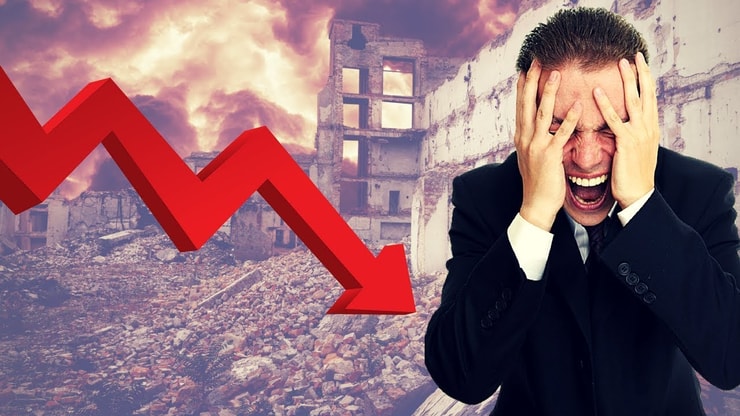
The market reaction during the 2025 crash was broad and violent across asset classes. Equities saw massive losses, bonds flipped from safe havens to sources of stress, and currencies moved sharply as investors sought stability.
After the initial panic, markets rallied once policy shifted. A temporary pause on tariffs and hints of Federal Reserve rate cuts gave traders a catalyst for recovery. By June, equities had regained all their losses, showing again that markets often overreact before finding balance.
Over decades of trading, I’ve seen that panic never stays confined to one market. When confidence breaks, it spreads to stocks, bonds, currencies, and commodities. Understanding these links helps traders anticipate where capital might move next.
Equity Index Losses and Sector-Level Declines
Equity index losses were extreme during the crash. The Dow lost over 4,000 points in two days, the S&P 500 shed nearly 5%, and the Nasdaq dropped 1,600 points in one session. The sell-off wiped out trillions in equity value, sparking fears of a recession.
Sectors tied to growth and speculation fell hardest. Technology, especially AI and semiconductor stocks, saw the biggest declines. Manufacturing and consumer stocks also suffered as tariffs threatened profits and higher prices for goods. Defensive sectors like healthcare held up better but still posted losses.
As I’ve taught for years, broad indices like the S&P 500 are only as stable as their leading sectors. When overvalued leaders fall, entire benchmarks crash with them. That’s why traders must always understand sector exposure, not just index levels.
Commodities and Safe-Haven Investment Performance
Commodities and safe-haven assets showed mixed performance during the crash. Gold surged nearly 25% as traders fled to hard assets, proving once again that it remains a hedge against uncertainty and inflation. Oil prices were volatile, with tariff fears raising concerns about demand.
Treasuries, usually the safe haven of choice, were less reliable this time. Yields spiked due to fiscal fears, weakening bonds as a defensive play. This unusual reaction showed that in 2025, even safe assets carried risk when confidence in government debt faltered.
In my years teaching traders, I’ve stressed that diversification is not just about owning different stocks—it’s about having exposure to asset classes that perform differently during crises. The 2025 crash reinforced that lesson in real time.
Currency Market Shifts During the Crash
Currency markets shifted sharply during the crash as investors searched for stability. The U.S. dollar fell about 10% early in the year, reflecting doubts about U.S. fiscal strength and the Federal Reserve’s policy path. This made foreign exchange another source of volatility instead of a safe anchor.
Other currencies like the Japanese yen and Swiss franc gained as traders rotated into traditional havens. Meanwhile, emerging market currencies suffered steep losses, pressured by fears of capital flight and slowing global GDP growth. These shifts complicated the crisis by making cross-border trade and debt repayment more expensive for many countries.
I’ve always taught that traders must respect currency risk. Even if you trade only U.S. stocks, currency movements affect corporate earnings, trade balances, and global capital flows. The 2025 crash proved again that FX markets are integral to understanding broader financial shifts.
Future Outlook and Market Recovery Prospects
Traders should explore forward-looking scenarios for both opportunities and risks. The market recovery after the 2025 crash showed how quickly equities can rebound when policy shifts and sentiment changes. But volatility is likely to remain high, and structural shifts are still playing out. Balancing benefits, proof, and positioning is key to preparing for the next phase.
Short-Term Market Recovery Scenarios
Short-term recovery scenarios over the next 6–12 months depend on policy responses and earnings trends. If the Federal Reserve cuts interest rates as expected and inflation moderates, equities could continue to recover. Corporate earnings, however, may face pressure from higher costs, slowing consumer spending, and weaker GDP growth.
Sector rotation is likely, with capital moving away from speculative tech toward value stocks, financials, and companies with strong balance sheets. Traders who respect these shifts can find opportunities while avoiding crowded trades that fueled the last bubble.
Long-Term Structural Market Shifts
Long-term structural shifts go beyond temporary crashes. Technological innovation, demographic trends, and fiscal policies will reshape markets after 2025. AI, automation, and robotics may change corporate earnings models, while aging populations and immigration policies will affect the labor market and GDP growth.
Government debt and fiscal deficits could reshape the bond market, making it less of a safe haven than in the past. For traders, this means adapting strategies to account for long-term uncertainty in both equities and fixed income.
Investor Positioning and Risk Management
Investor positioning and risk management remain the most important lessons from the crash. Diversification across assets, holding cash reserves, and using hedging tools like options are not luxuries—they are necessities in volatile markets.
Balancing growth opportunities with protection strategies helps traders capture gains without being wiped out by sudden downturns. History shows that another crash can happen again, but traders who respect risk never need to fear the next sell-off.
Key Takeaways
- The 2025 crash was triggered by tariffs but amplified by high valuations, speculation, and policy uncertainty.
- Equities, bonds, and currencies all showed stress, proving that no asset class is immune during a crisis.
- Traders who prepared with risk management and cash reserves were positioned to benefit from the recovery.
- Policy decisions from the Federal Reserve and government will remain central drivers of volatility going forward.
Market crashes are tailor-made for traders who are prepared. Stock markets thrive on volatility, but it’s up to you to capitalize on it. Stick to your plan, manage your risk, and don’t let FOMO drive your decisions.
Opportunities are fast and unpredictable, but with the right strategy, you can make them work for you.
If you want to know what I’m looking for—check out my free webinar here!
Frequently Asked Questions
How does a bear market change trading tactics compared to a crash?
A bear market stretches losses over time, so your analysis must focus on trend confirmation and preserving capital for higher-probability setups. Expect weaker return potential from momentum breakouts and lean more on mean-reversion rules with tight risk. Treat every bounce as guilty until proven otherwise, because lower highs are the default path in a bear market.
What should beginners know about investing versus trading when volatility rises?
Investing targets multi-year compounding in diversified investments, while trading manages shorter windows with strict risk and faster feedback. In high volatility, both approaches hinge on honest analysis of drawdowns and realistic return expectations. If you choose investing, scale in slowly and stress-test allocations; if you choose trading, size down and cut losses first.
How do jobs data and the consumer price index influence banks, mortgages, and loans?
When jobs growth weakens and the consumer price index runs hot, banks price more risk into mortgages and loans. Higher borrowing costs hit consumers and small businesses first, which can slow spending and tighten credit. Tight credit cycles often reinforce risk-off behavior in markets until employment and inflation stabilize.
How do higher rates affect revenue growth and expected return after a shock?
Rising rates increase the hurdle rate, which can slow revenue growth for rate-sensitive companies that rely on external funding. Lower multiples often follow, reshaping expected return math for both investing and trading strategies. In that environment, balance sheets matter more than stories, and cash flow beats promises.

Leave a reply