




Rules are an important part of life. They help us establish meaningful boundaries.
When it comes to penny stocks, trading rules are everything. Personally, I try to keep things simple. I follow the same trading rules I teach all my students.
If you want to get good — really good — at the following rules, apply for the Trading Challenge today. It’s hard work. It might be the hardest thing you’ve ever done. But as some of my students will tell you, it can potentially turn out to be the smartest thing you’ve ever done.
Table of Contents
- 1 17 Stock Trading Rules
- 1.1 #17 Stick to Your Trading Plan
- 1.2 #16 Always Use a Stop Loss
- 1.3 #15 Keep Trading in Perspective
- 1.4 #14 Treat Trading Like a Business
- 1.5 #13 Develop a Trading Methodology Based on Facts
- 1.6 #12 Protect Your Trading Capital
- 1.7 #11 Never Risk More Than You Can Lose
- 1.8 #10 Track Everything
- 1.9 #9 Pay Attention to Volume
- 1.10 #8 Don’t Put Too Much Stock in Promoters
- 1.11 #7 Get Out of Trades When They Don’t Go Your Way
- 1.12 #6 Be Able to Go Both Long and Short
- 1.13 #5 Focus on Risk-Reward
- 1.14 #4 Never Fall in Love With a Stock
- 1.15 #3 Don’t Let Your Ego Get in the Way
- 1.16 #2 Every Trade Is a Lesson
- 1.17 #1 Cut Your Losses Quickly
- 2 The Bottom Line
17 Stock Trading Rules
In this post, I’m counting down to #1. Kinda like Letterman used to do with his Top 10 lists. I have a few more than him here … but hey, this is important information. Here we go.
#17 Stick to Your Trading Plan

This is a high-level, big-picture, and strategic trading rule. The reason so many people fail at trading is that their preparation sucks. Preparation is key. So how do you prepare?
Aside from studying like crazy …
You make a plan.
Now, I know there are probably people reading this, thinking, “Cool. Make a plan. How do I do that? And what should be in my plan?”
Those are all good questions and beyond the scope of this post. Check out Pennystocking Framework Part Deux and Trader Checklist Part Deux for more on how to plan your trade.
A better option is to join the Trading Challenge. It’s a badass trading education and where you can learn how to create a trading plan.
The key, and this is huge, is to stick to your plan.
#16 Always Use a Stop Loss
A stop loss can protect you from losing more than your planned risk capital. In other words, assuming you made a trading plan, you know how much you’re willing to lose on a trade. You have a predetermined exit point.
But I want to clarify something: I don’t use electronic stop losses just like I don’t use market orders. I use mental stop losses as a trading rule.
This is super important, so pay attention. If you’re in a trade and it goes wrong, you want to get out, right? But what if there’s a panic? What if the price falls 50% in 10 minutes? You want out, right?
Think of it like this: Say you set an electronic stop loss as part of the trade. What happens if the stock falls so fast your order isn’t executed when the stop loss is triggered?
Eventually it gets executed — but as a market order. In other words, your order is executed at the market price, which might be nowhere near your trigger.
With a mental stop loss, if the price is dropping fast, you can change your exit price by the smallest amount necessary to close your position. You can allow for some slippage. It seems like you’re losing more that way, but it can save you a wad of cash in a fast-moving trade.
So, use a stop loss — but make sure it’s a mental stop loss. And understand there might be slippage and that’s OK. Stick to your trading plan. A small loss in a fast-moving trade is better than getting decimated because you have a market order in place.
Big caveat: If you can’t be at your laptop during the trade, and it suits your trading strategy, it might be good to set an electronic stop loss. It’s not the way I trade, but there are legitimate reasons for doing it.
It’s all perspective, right?
#15 Keep Trading in Perspective
The best of the best in any field are not perfect. Think about baseball for a second. Even if you hate baseball you might know that a great batter gets a hit about 30% of their at-bats. That means they fail more than two-thirds of the time.
Here’s another example: NBA-legend Michael Jordan’s career field-goal percentage was 49.7%. His career three-point field-goal percentage was 32.7%. We’re talking about arguably the greatest basketball player of all time.
Of course, there’s a lot more to basketball than shooting, and there’s a lot more to baseball than hitting. Just like there’s a lot more to trading than how many trades you win or lose.
The skills I teach my students are skills that can last a lifetime. Keep trading in perspective. Keep your emotions out of it as much as possible. Be prepared for wins and losses. Don’t expect every trade to work perfectly.
Do this instead …
#14 Treat Trading Like a Business
Even if you decide to trade part-time while holding down a full-time job, you need to treat it like a business. If you don’t take it seriously you’re not likely to study up. So treat it like a business in every sense.
What would you do if you decided to start a business on the side? Would you just start throwing money at something and hope for the best? There are plenty of people who do that and fail miserably. There are too many traders who get absolutely decimated doing it.
How do you treat trading like a business? Think of it like this: If you start a business you expect to incur expenses. Plus, most businesses take several years to turn a profit.
Then there are tax liabilities, long hours, stress, uncertainty … and a laundry list of other things to consider.
Trading is a business. Treat it like one. Respect it — which is another way of saying respect yourself and your hard-earned cash enough to approach trading like a professional. Be willing to do what others aren’t prepared to do.
#13 Develop a Trading Methodology Based on Facts
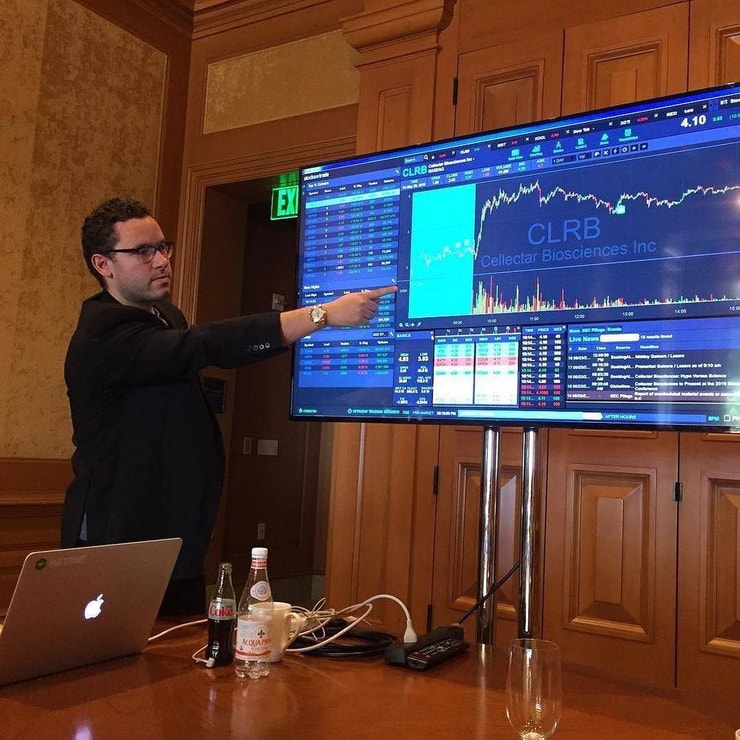
Sometimes I want to scream at the top of my lungs when I see the scam artists and garbage out there.
Don’t look for some unicorn, mystical, magical, genie-in-a-bottle trading method. It doesn’t exist. You don’t have to be a genius to do this. I’m not that good at math, I’m not that smart, and I don’t have some link with the cosmos that helps me trade successfully.
How do I do it, then? I study like mad. I play it safe, and I look at patterns that have happened in the past to see if they’re happening again. I look for facts instead of looking for something that’s not there. I follow this set of trading rules.
Where can you find facts? Do your research. Study the charts. Look at the SEC filings. Read the news about a stock. And please … if you get information from a chat-room or a press release, don’t follow it blindly. Do more research.
I wasn’t gonna mention this, but it’s sorta funny so I’m throwing it out there. I recently read this article suggesting a high percentage of Americans can’t tell the difference between fact and opinion. Funny and totally scary at the same time.
I don’t mean to be derogatory about people. I just want you to get this clear in your mind because the market is unforgiving. It will destroy you if you try to trade based on anything other than facts. Even with facts you’re gonna lose some trades.
#12 Protect Your Trading Capital
It’s impossible to trade a blown-up account. What do I mean? If you lose all your money because you didn’t follow your plan and had no risk management system in place, then you’re out.
Sure, you could save more money and top off your account for another try. But how many times can you do this, from a psychological perspective?
How do you protect your trading capital? Make a plan and stick to it (trading rule #17). Use a mental stop loss (trading rule #16). Pay attention to the next rule, as well.
Heck, this entire list of trading rules can help you protect your trading capital. Print it out and put it up on your wall. Read it every day.
#11 Never Risk More Than You Can Lose
You want to hear one of the dumbest things any wannabe trader could ever do?
Here goes …
One of the dumbest things anyone can do is to trade with their rent money, mortgage payment, food money, or any other cash they need to live. I’ve heard of people doing it — not a good idea.
But it’s not just the basics. Don’t ‘borrow’ money from another part of your life for trading. Never risk more than you can lose. Period.

Also, don’t use leverage to trade. I never trade a leveraged account. The closest I come is when I short stocks and that’s different. I’ll get to that in trading rule #6.
Part of your trading plan will be risk management. One of my students wrote a killer book (I wrote the forward) called “The Complete Penny Stock Course.” It has some great information about risk management.
I would be doing you a disservice if I didn’t mention the Trading Challenge again. As one of my students, you’ll create your own risk management system and learn about position sizing. Plus, you’ll have access to a mentor who can help you understand appropriate levels of risk.
#10 Track Everything
Remember, it’s said that somewhere around 90% of traders fail. It’s because of a lack of preparation and a lack of being meticulous.
My star student, Tim Grittani, tracks every trade he uses with spreadsheets. All of my top students do this. They track everything and follow trading rules — they are meticulous.
Why track everything?
It’s how you learn and how you measure. How else will you know what percentage of your trades are successful? Which setup is your best, most successful setup? What about your worst?
What would happen if you dropped your least successful setup and focused on your most successful setup?
I hope this makes sense. Track everything. Keep a trading journal and also keep a spreadsheet with information on every trade. Over time this will become one of your most valuable resources.
#9 Pay Attention to Volume
If there’s not enough trading volume you can get stuck in a trade. There has to be enough action for the stock to stay liquid. If you have a position of 10,000 shares but you can’t sell it, you’re stuck.
Simple, right? So for me, anything under 50,000 shares is too illiquid. Even that’s low.
Ideally, I look for stocks trading one million, or even two to three million shares on the day. That way, if I have a position of 10,000 shares, I’m a small fraction of the market.
You don’t want to be more than 1% of the volume being traded that day. If you’re more than that, and things go the wrong way, you can get heavy slippage trying to exit your position.

#8 Don’t Put Too Much Stock in Promoters
Puffed-up press releases can promise massive gains … but if it sounds too good to be true, it probably is.
Promoters get paid to promote stocks. It’s their job. Your job as a trader is to study, prepare, build your knowledge, then become a self-sufficient trader. Part of your job is to understand the role of stock promoters. They aren’t your friends.
Does this mean you should never pay attention to their promotions? As much as I’d like to say you should completely ignore them, they’re a part of the penny stock landscape. You need to know what they do, how they do it, and how it affects price action.
Then, and only then, can you use the information to your advantage.
When you read something like this:
“Using a proven system which has led to gains of 2,987% in his personal portfolio, investment wonder kid [insert name of scam-artist stock guru] is sharing the 3 best stocks you MUST own for the biggest profit opportunities.”
Know this:
The likelihood of any of those stocks making those kinds of returns is probably lower than winning the lottery. You might as well toss your cash in the toilet. It’s BS!
But what if you were to make a play on the inevitable fall when the pumped-up stock comes crashing back to earth? See what I mean? If you know what they do, how they do it, and what happens when a stock gets pumped — that’s valuable information.
#7 Get Out of Trades When They Don’t Go Your Way
Don’t hang out in a trade when it doesn’t go your way. Get the hell out! This trading rule goes along with #3 and #1 coming up.
This one can be difficult. Sometimes you’re early in a trade. Your trading thesis is right, but you already closed your position because it went the wrong way first. The problem is that then you second guess yourself. Don’t do that!
I can’t tell you how many trades I’ve made where if I’d just held on a little longer the trade would be a good one. But you know what? There are more — a lot more — where if I hadn’t cut losses quickly I would’ve gotten smacked in the face, wiped out, decimated …
It’s part of your risk management. This trading rule protects you. You can save more in avoiding losses than what you’d gain by staying in a trade gone wrong. This one takes self-discipline. Don’t overlook it. There will always be another trade.
#6 Be Able to Go Both Long and Short
In my early days of trading, I didn’t know anything about shorting stocks. Shorting is a more advanced strategy. My advice is to join the Trading Challenge and study hard. You’ll learn how to short, but first, you’ll learn how to go long.
Going long means you open a position expecting the stock price to go up. When it goes up, you sell for a profit. This is what most people think of when they first consider becoming a trader.
Short selling is different. You expect the price to go down. You borrow shares from your broker and sell them right away. Then, assuming the price drops, you buy shares at the lower price to pay back the broker. Your profit is the difference between the shares you sold and the shares you bought.
Sounds cool, right? Except you can lose more than your original stake if the price goes up and you have to cover the difference by purchasing the shares at a higher price.
I believe you should be able to go both long and short. Being versatile in this way means you can play in different types of markets. You can take advantage of those pump-and-dumps and morning panics.
But you need to study and practice paper trading with StocksToTrade.
#5 Focus on Risk-Reward
With penny stocks, it’s not just “what’s my risk?” It’s also “can this news keep spiking this stock?” It’s risk vs reward.
What’s the potential downside and what’s the potential upside?
No stock is ever worth throwing in the towel on your risk. I miss so many run-ups because I’m unwilling to chase. Once you start chasing, once you throw your risk measurement out the window, you can’t protect your downside.
That brings me to my next trading rule …
#4 Never Fall in Love With a Stock
That penny stock you think is gonna be the next Microsoft? I’ve got a hot tip for you: it’s not. Most of these companies will ultimately fail. That’s why they’re listed on the OTC markets or priced so low.
Look, we all want to find the next big thing. But get real — you’re a trader (or becoming a trader) to create a lifestyle for yourself. The chance that you’ll stumble on the next big thing, the ‘one-stock retirement plan,’ is like zero percent.
By all means, find interesting companies with cool product ideas. But don’t buy and hold that stock hoping it will go from $1 to $50. That’s just asking for trouble.
Does it happen? Yes, of course. But in the meantime, you could be trading and building your account instead of hoping.
Hope is not a trading strategy. Well, it kinda is … but it’s a losing strategy.
#3 Don’t Let Your Ego Get in the Way
This goes along with trading rule #4:
Ego is your enemy. Approach trading like a Zen master.
Seriously. Find some peace in the process: Stick to your plan and get out when it’s appropriate.
If you let your ego get in the way, you’ll make trades you should never go near. You’ll stay in positions hoping for something to change. You’ll chase trades either to feel the adrenaline rush or with the hope of getting even. Stop that. That’s bad.
#2 Every Trade Is a Lesson
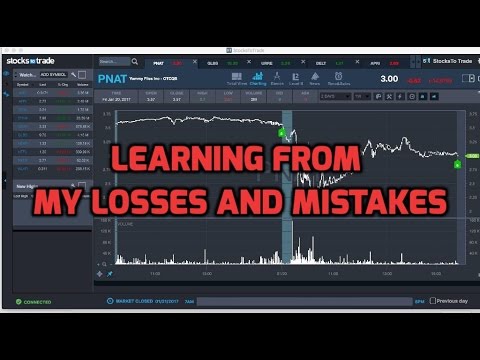
It’s a hard fact: You will lose some trades.
So what should you do when you lose? Figure out what happened. Learn the lesson. What about when you win? Same thing: What happened, why was the trade successful?
Keep a trading journal. It will become your record of the ‘how and why’ of every trade you make. It will also help you become a self-sufficient trader much faster.
If you haven’t started trading a live account yet but you are paper trading, start your journal now.
#1 Cut Your Losses Quickly
This has always been and will be my number-one trading rule. Cut losses quickly. This is paramount!
Recently I made three trades with the same stock (Nasdaq: MRIN). The first trade went perfect and I made a profit of $2,847. I made a video lesson about it — you should check it out.
The next day I traded the stock again but it didn’t do what I expected. Instead, it was a loss of $330. The same day I tried again: another loss of $196.
My point? I cut losses quickly when the trade went the wrong way. The profit from the good trade was much bigger than the small losses. Protect yourself!
Want to learn how to put everything from this post into action? The Trading Challenge is an incredibly comprehensive course. From planning your trades to how to cut losses quickly, it’s full of potentially life-changing information.

Plus, you’ll get access to live webinars, recordings of past webinars, and a great community of traders. A Trading Challenge mentor will help you develop your skills.
Imagine the freedom of being able to travel the world and trade from your laptop …
The Bottom Line
These 17 vital penny stock trading rules should always be in your mind as you trade. You want to get where these rules are second nature. Meticulous competence.
My suggestion: Print this out and review it daily. At the very least, bookmark it and review these trading rules every day until they make complete sense. Then go deeper and apply for the Trading Challenge.
Seasoned traders: What are your trading rules? New traders: Which of these rules are you willing to commit to memory today? Let me know in the comments. I love to hear from you!

Leave a reply